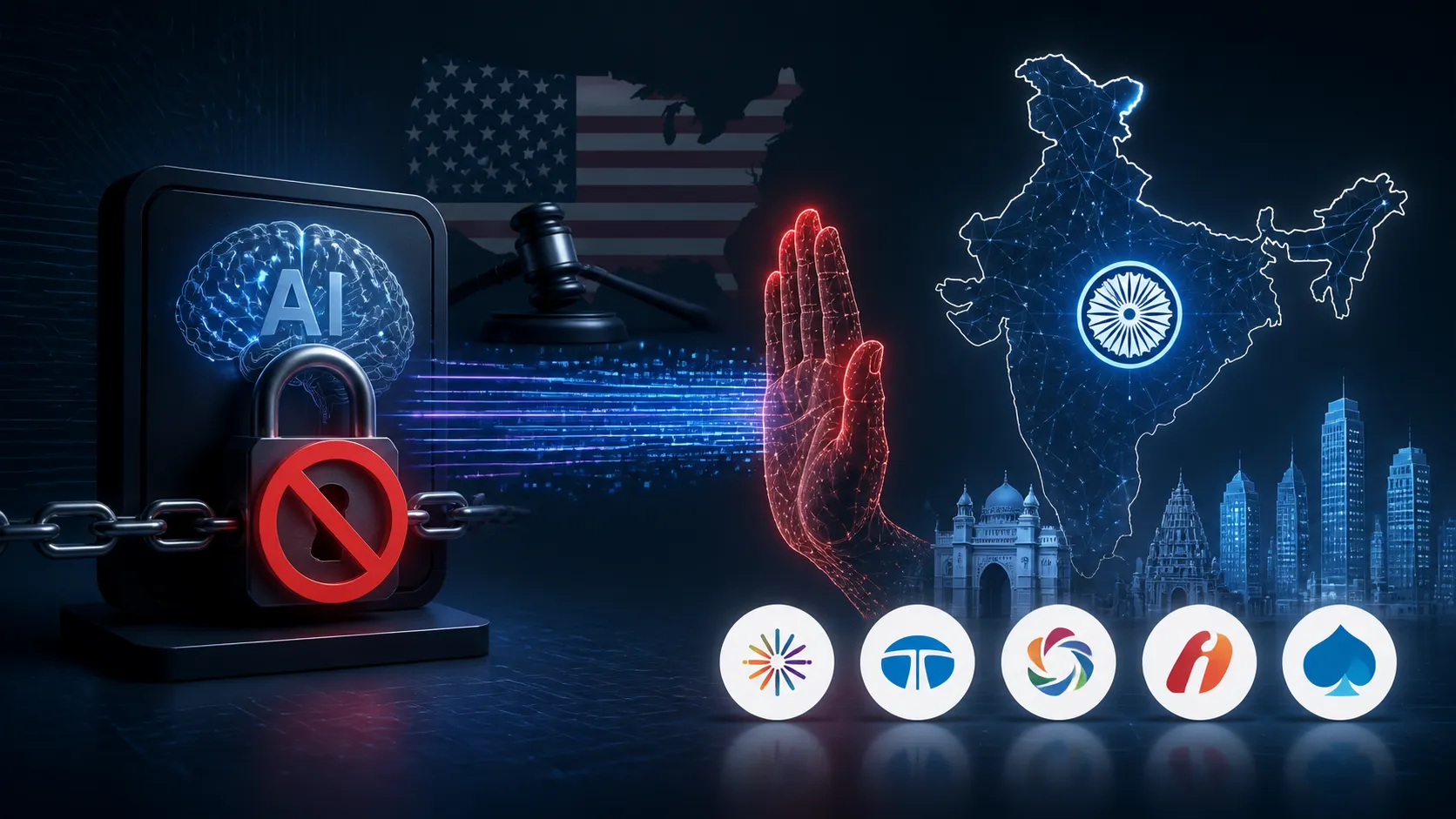
June 15, 2026, (Inside AI) — Anthropic abruptly suspended access to its latest AI models after a US government directive, igniting global debate over technological dependence. The move blocked all users, including Americans, from Fable 5 and Mythos 5, two models built on the Mythos Preview architecture. The order, issued by the Commerce Department, cited national security export controls and barred any foreign national from accessing the systems, even Anthropic’s own staff abroad.
The shutdown rippled far beyond Silicon Valley. In India, it reignited urgent calls for sovereign AI and self-reliant infrastructure. Founders, investors, and policy thinkers flooded social platforms with reactions, framing the event as a watershed moment for the country’s tech trajectory.
A Wake-Up Call for Self-Reliance
Sridhar Vembu, founder of Zoho, declared globalization dead and urged India to chart its own course. He pushed for adoption of smaller open-source models, including Chinese alternatives, while cautioning against massive government spending on GPU-heavy frontier models. Zoho, he said, is pursuing cost-efficient R&D paths that demand patience.
Pratyush Kumar, CEO of Sarvam AI, framed the incident as proof that nations and companies must control their AI destinies. He argued that sovereign AI means building and improving systems within national perimeters, not just consuming foreign tech. The ban, he noted, should spur more engagement with the sovereignty imperative.
Investors See a Tipping Point
Aakrit Vaish of Activate called the decision a material shift. He admitted he had long warned of a hypothetical US switch-off, but never expected it so soon. Sovereign AI, he wrote, has morphed from narrative to the biggest business opportunity of this era. He plans to steer portfolio companies toward open models to reduce reliance on a few frontier providers.
Mohandas Pai, former Infosys executive, demanded a national mission with far larger funding. He proposed an annual 50,000 crore fund for deep tech and AI, plus a 200,000 crore guarantee fund for hyper cloud, hardware, and chips. India’s existing IndiaAI Mission, approved in 2024 with Rs 10,371 crore over five years, he dismissed as too slow and small.
Hemant Mohapatra of Lightspeed countered that talent and GPU access, not just capital, are the real bottlenecks. Training a GPT-class trillion-parameter model could cost $250 million in compute alone, with all-in expenses reaching $500-600 million. He stressed that firms like Mistral and Sarvam scaled capital gradually as models gained traction, but early-stage constraints remain acute.
Policy Experts Reframe the Debate
Samir Saran of the Observer Research Foundation noted a shift in export controls. The new frontier isn’t chips or code, he said, but people. Foreign nationals, even lab employees, were locked out overnight. He warned that data sovereignty negotiations must harden, because leverage lies with whoever holds the switch. The focus, he insisted, should be on capability, not mere access.
The Anthropic episode underscores a fractured AI landscape. While Europe and the UK see it as a dependency alarm, India’s response reveals a growing consensus: the time for homegrown alternatives is now. Whether through open-source adoption, lean R&D, or state-backed mega-funds, the debate has moved from theory to urgent action.