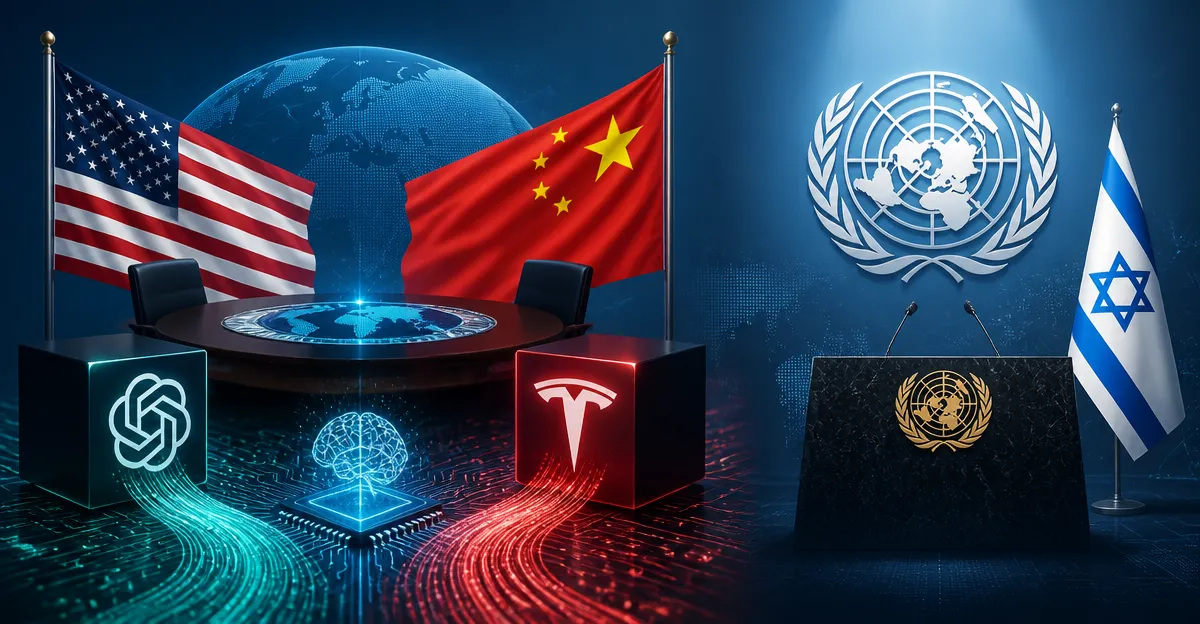
September 24, 2026, (Inside AI) — President Donald Trump and Chinese President Xi Jinping will meet Thursday at Joint Base Andrews in Maryland, with artificial intelligence governance and trade topping a crowded agenda that also includes rare earth minerals, Taiwan, and the war with Iran. The summit, confirmed after both leaders arrived Tuesday, marks the first face-to-face talks since their October 2025 meeting in South Korea, where they announced a tariff truce set to expire in November.
For the AI industry, the stakes are enormous. The two nations are locked in a race for dominance in chips, models, and military applications. Yet experts caution that any agreement on AI is likely to be symbolic at best, given the deep mistrust and competitive pressures on both sides.
"Managing the development of artificial intelligence is a potential area for cooperation," according to a statement from the White House. But the same statement acknowledged that "intense competition in the field between the countries is likely to limit the scope for anything beyond symbolic agreements."
The meeting comes as Washington and Beijing spar over export controls on advanced semiconductors, data flows, and AI safety standards. In recent months, the US has tightened restrictions on chip exports to China, while Beijing has poured billions into domestic AI champions. Both sides have accused the other of using AI for disinformation and cyberattacks.
Trade remains the most immediate concern. Markets will watch for signs that the tariff truce, announced after the South Korea summit, will be extended beyond November. The truce paused billions in tariffs on goods ranging from electronics to agricultural products. Its expiration could disrupt global supply chains and hit AI hardware manufacturers hard.
Rare earths are another flashpoint. Washington wants Beijing to ease shipments of rare earths and critical minerals used in high-tech applications, including AI chips and defense systems. China controls a vast share of global rare earth processing, giving it leverage. Some experts say Trump has taken a less combative approach than usual ahead of the meeting because of China's outsize control over these materials.
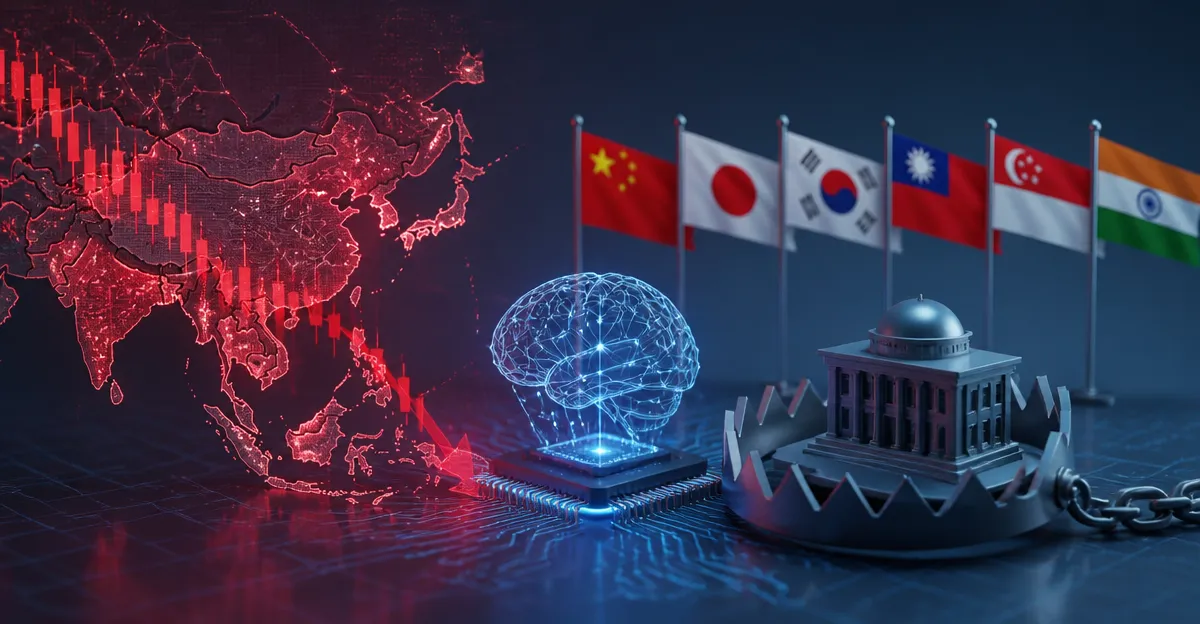
Taiwan looms large. US allies in Asia have grown increasingly concerned that in order to lock in economic wins, Trump may be tempted to soften Washington's support for Taiwan, the democratically governed island claimed by China. Trump has said that during his May visit to Beijing, Xi pressed him on US arms sales to Taiwan. Any shift in US policy could embolden Beijing and unsettle allies in Tokyo, Seoul, and Canberra.
The war with Iran adds another layer. Washington sees Xi as able to exert pressure on Iran to make concessions to end the war started by the US and Israel. So far, Xi has shown little inclination to do so. Reuters last month reported that Beijing is selling billions of dollars' worth of goods to Iran through a sanctions-evasion scheme. China's foreign ministry says it is not aware of such a scheme.
On AI, the two leaders may discuss setting up a bilateral dialogue on safety and risk reduction. But analysts doubt that will produce binding commitments. "The US and China are in a strategic competition that spans technology, military, and economic domains," said a senior fellow at a Washington think tank who spoke on condition of anonymity. "AI is central to that competition. Cooperation is possible on narrow issues like pandemic preparedness or climate modeling, but not on core AI capabilities."
Indeed, both nations are racing to develop artificial general intelligence, with massive investments in compute, data, and talent. The US has restricted exports of advanced chips and chipmaking tools to China, while China has accelerated its own chip production and AI research. The result is a bifurcated tech ecosystem that could slow global innovation and raise costs.
The summit also takes place against a backdrop of rising military tensions. The US has accused China of aggressive behavior in the South China Sea and around Taiwan. China has criticized US arms sales to Taiwan and military patrols in the region. AI-enabled systems, from autonomous drones to cyber tools, are increasingly part of the standoff.
Netanyahu to deliver UN speech
Meanwhile, Israeli Prime Minister Benjamin Netanyahu is set to deliver a speech at the United Nations, where he is expected to address the war with Iran and regional security. His remarks will be closely watched for any sign of escalation or de-escalation.
For now, all eyes are on Maryland. The Trump-Xi summit could set the tone for US-China relations for months to come. But on AI, the most transformative technology of the era, expectations remain low. Both sides seem content to compete rather than cooperate, and that may be the most telling outcome of all.

Sofia spent years studying how machines parse human language before pivoting to cover the systems now rewriting it. She reads technical papers the way others read news and looking for what the numbers are actually saying beneath the headlines.