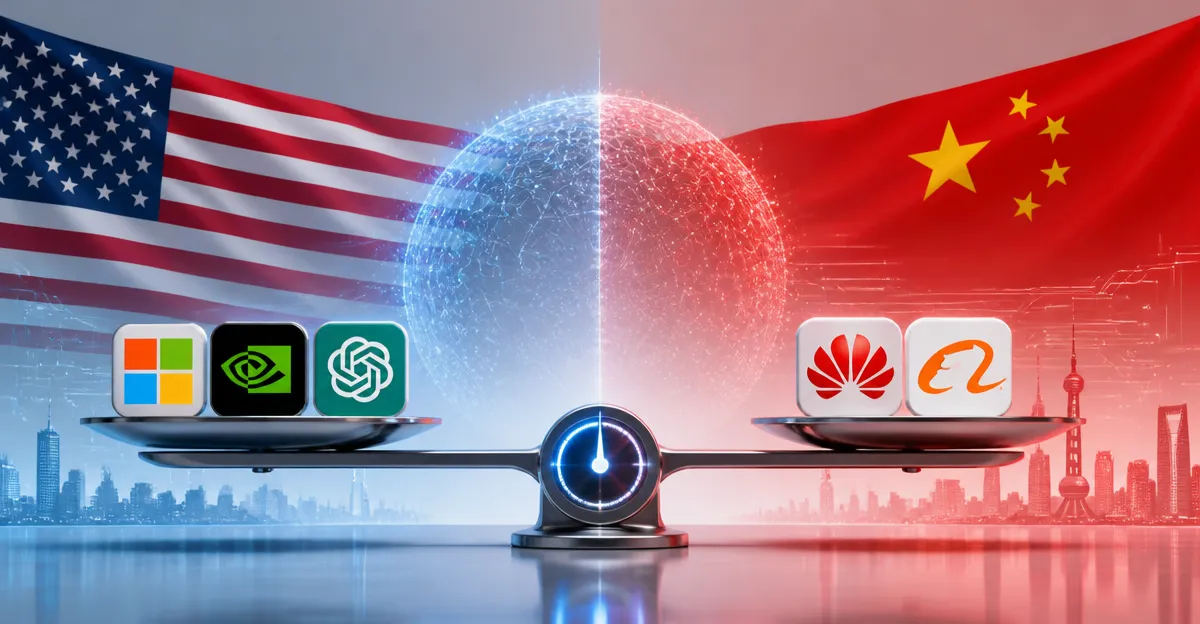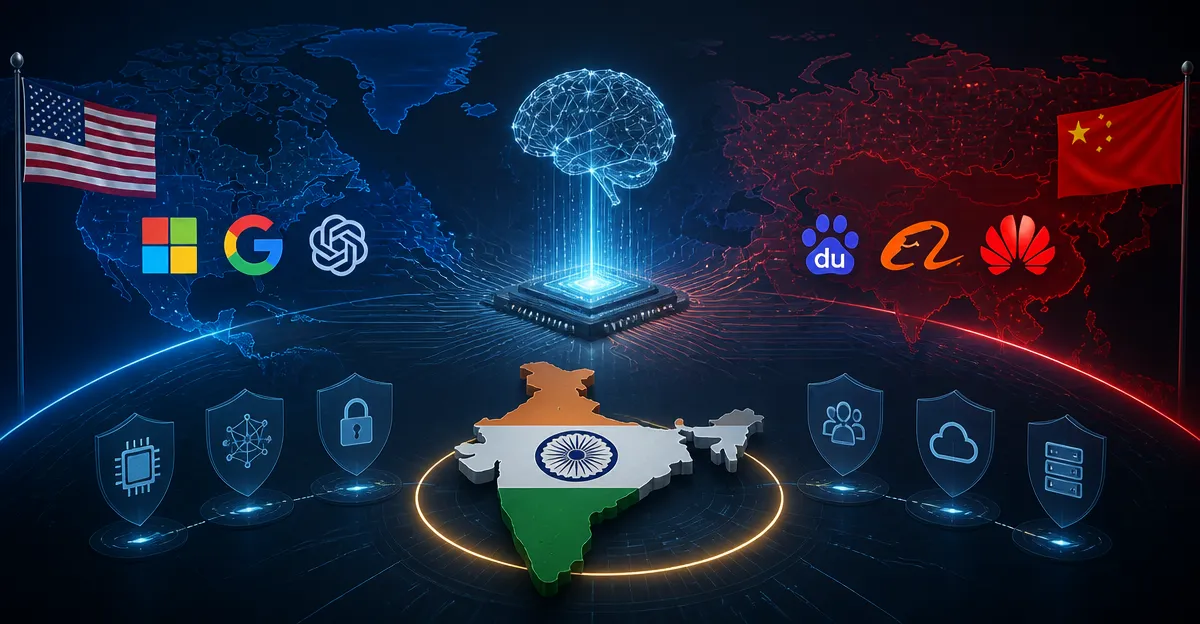
September 22, 2026, (Inside AI) — President Xi Jinping of China and President Donald Trump will meet in Washington on Thursday to open a formal bilateral dialogue on artificial intelligence and its risks, a move that follows Xi's appearance at the BRICS summit in Delhi less than two weeks ago. The meeting is their third in under 10 months, and it signals that AI has moved from a technical subject to a core element of great-power statecraft.
The Washington talks will center on trade balances and export controls, but AI is now embedded in the agenda. The two leaders are expected to discuss safety guardrails, incident notification systems, and the strategic stability implications of frontier models. The dialogue builds on a channel that began in November 2023 at Woodside, California, when President Joe Biden and Xi agreed to talk about AI risks. A year later in Lima, the two leaders affirmed that humans, not artificial intelligence, must control decisions on the use of nuclear weapons.
That principle was modest but important. It established a baseline for future talks. Under Trump, however, AI diplomacy has become more transactional and more competitive. Discussions on safety are now entangled with disputes over advanced chips, export controls, rare earths, tariffs, computing power, and the race to develop frontier models.
When Trump met Xi in Beijing in May, the two discussed possible AI guardrails, but no formal arrangement followed. After talks in New York last weekend between US Treasury Secretary Scott Bessent and He Lifeng, Washington said the two sides had considered a standing AI dialogue and a notification system for incidents with national-security consequences.
Such a mechanism could eventually resemble a crisis-management channel. In a crisis, the first requirement is not agreement on the entire technological order. It is the ability to establish what has happened, whether it was accidental or deliberate, and who is responsible.
Although Washington and Beijing have been discussing AI for three years, their approaches remain divergent. The US wants a framework to manage the risks posed by powerful models and their military applications. China worries that discussions on safety could become another instrument for preserving American technological advantages or legitimising restrictions on Beijing's access to advanced computing. The two also disagree on open-source models, data governance, state regulation, and the legitimacy of export controls. A grand AI bargain between Trump and Xi is not at hand. What they are seeking is a narrower understanding on strategic stability in the AI age.
For India, this mixture of competition and collaboration between Washington and Beijing might be discomfiting, but it is also familiar. During the Cold War, the US and the Soviet Union competed and cooperated in the nuclear and space domains. Even as they engaged in a fierce struggle for technological and geopolitical advantage, they negotiated rules to reduce mutual risks. Those rules inevitably affected the rest of the world.
India faces three difficult questions. The first is how to navigate the technological contest between Washington and Beijing. India is part of the US-led Pax Silica initiative on technology and supply chains. This follows naturally from its deep integration with the American digital and AI ecosystem. Unsurprisingly, Delhi has stayed out of China's WAICO amid enduring security problems and mutual distrust. Yet, as a BRICS member, India cannot avoid the rhetoric on AI shaped by China, the forum's dominant power.
Second, India's emphasis on making AI work for developing societies found considerable resonance at the Delhi AI summit earlier this year. But China's deeper capabilities in computing, infrastructure, hardware, and advanced models allow it to offer the so-called Global South a wider package of technological cooperation.
Third, Delhi will worry that a US-China dialogue initially focused on strategic stability could eventually become an effort to set rules for everyone else. Beyond the fear of an AI condominium is the concern that strategic stability between the two leading powers might produce discriminatory technology controls against others. The history of the nuclear order gives India ample reason for caution. Yet, US-China geopolitical rivalry and the competition for markets could not only limit such collusion but also create some leverage for emerging technological powers such as India.
India's successful engagement with AI will ultimately depend less on sweeping declarations about technological sovereignty than on its capabilities in computing power, semiconductors, models, research, capital, and human talent. Given the current gap between India's capabilities and those of America and China, Delhi's immediate imperative is clear: Deepen cooperation with trusted partners while building indigenous technological strength at home.