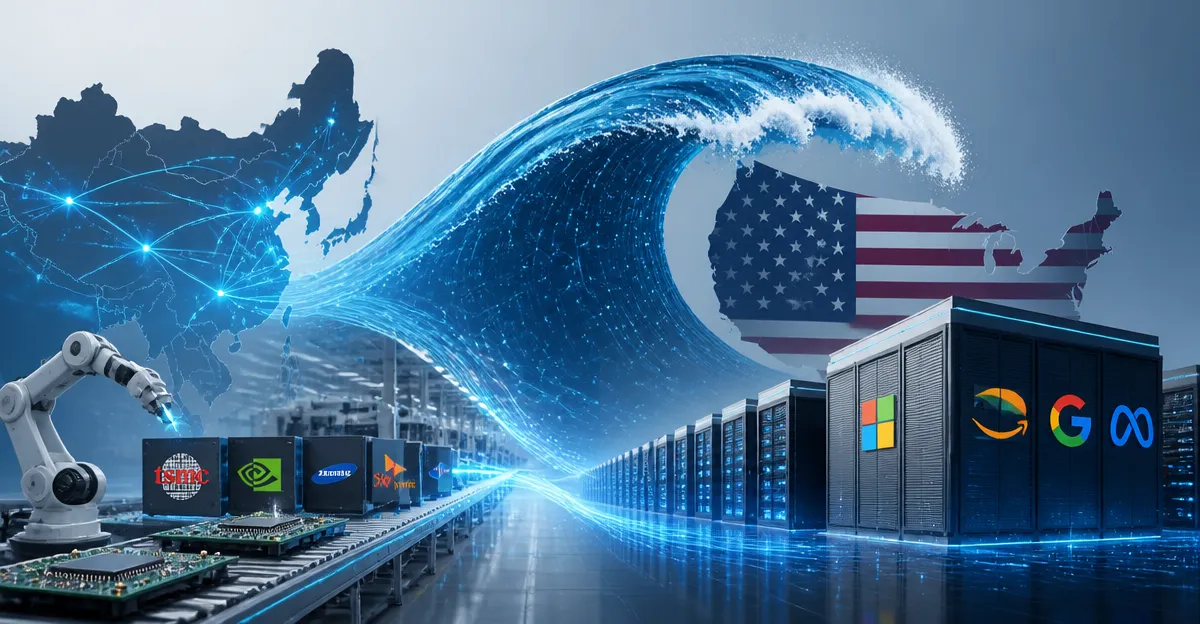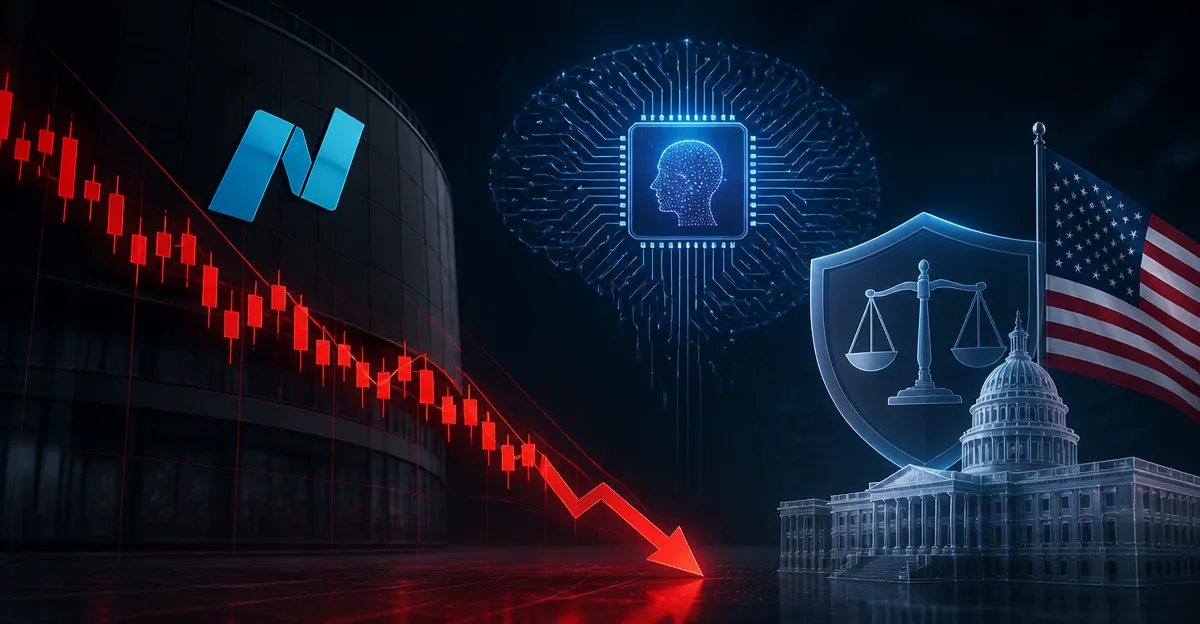
November 6, 2026, (Inside AI) — The artificial intelligence trade that powered global equities through most of the year cracked on Friday. Investors dumped chipmakers at the heart of the AI supply chain, margin calls spread across Asian markets, and government bonds rallied sharply as the sector's most crowded bets came undone.
The immediate trigger was political. Traders worried that Democrats' election sweep could slow data-centre construction through new permitting hurdles and local opposition. But the selloff had been building for weeks on a deeper anxiety: whether the hundreds of billions flowing into AI infrastructure will ever produce returns that justify the spending.
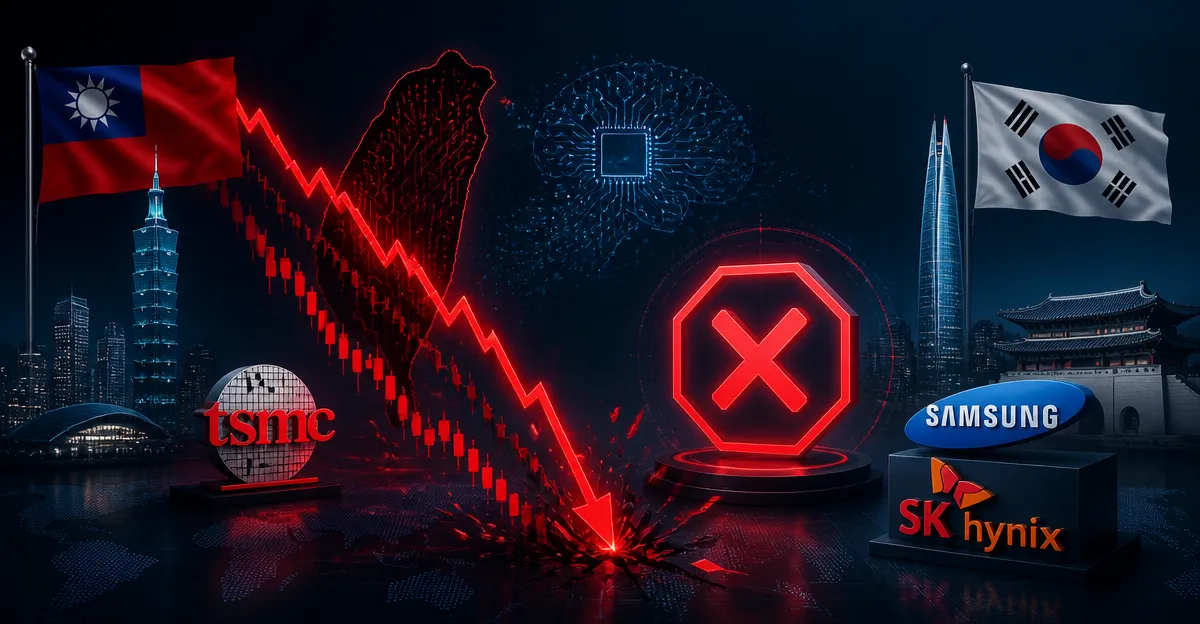
TSMC, the world's largest contract chipmaker, opened limit down in Taipei, putting the Taiwan market on course for its largest weekly loss since 1999. South Korea's KOSPI fell roughly 5% despite emergency action from authorities, who relaxed margin rules to slow forced selling. The index had earlier touched nine-month lows before a shaky bounce. Nasdaq 100 futures struggled to hold gains into the Asian afternoon.
The damage was not confined to equities. The cost of insuring against default at SoftBank, the Japanese conglomerate with the largest AI exposure among major investors, jumped to a four-year high during Asian trading. Credit markets across the US tech sector are now under scrutiny for signs that lenders may tighten access to debt funding. Short-dated bonds surged as investors fled to safety and began questioning whether central banks would still consider hiking rates if AI-related construction, spending and hiring slow.
Read: Taiwan Stocks Record Fall, South Korea Halts Trading as AI Rout Deepens
For some traders, the scale of the rout signals capitulation is near. But buyers were scarce beyond talk that large local institutions in Taiwan and South Korea were scooping up shares. The absence of broad dip-buying suggests the market has not yet found a floor.
Anthropic's IPO Roadshow Hits Turbulence
The equity turmoil has reached private markets too. Potential investors in Anthropic's highly anticipated initial public offering are raising doubts about whether the AI startup can proceed with its planned roadshow next week in time for a November listing, according to sources familiar with the discussions. Inside AI could not independently verify the timing of the roadshow.
The hesitation is notable because Anthropic has been among the most closely watched AI companies preparing to test public markets. A delayed or repriced IPO would mark the first major crack in the private-to-public pipeline that has sustained valuations across the sector. Bankers typically prefer to launch roadshows into stable markets. A week of violent swings in chip stocks makes pricing a new AI listing far harder.
The broader question is whether this week marks a healthy reset or the start of a prolonged de-rating. AI infrastructure spending has been the single largest driver of US capital expenditure growth over the past two years. Data-centre construction, power procurement and semiconductor fabrication have added measurable GDP contributions. If that spending slows, the macro effects would extend well beyond tech portfolios.
For now, the market is repricing risk faster than companies can respond. TSMC's limit-down open reflects forced selling as much as fundamentals. Margin calls in Asia have a mechanical quality: leveraged positions unwind regardless of an investor's long-term view. That dynamic can overshoot in both directions.
What has changed is the narrative. Through most of the year, AI capex was treated as a one-way bet backed by hyperscaler balance sheets. Friday's action suggests investors now want evidence of returns before committing more capital. That shift favours companies with visible revenue over those with ambitious buildout plans.
Attention now turns to whether US markets confirm the Asian rout or stabilise. Credit spreads in the tech sector will be the key indicator to watch. If debt markets remain open to AI borrowers, the equity selloff may prove contained. If lenders pull back, the correction could deepen.

Shamil has a low tolerance for AI that only works in controlled demos. He covers agentic systems and generative AI with the skepticism of someone who has seen too many “revolutionary” tools quietly disappear six months after launch.