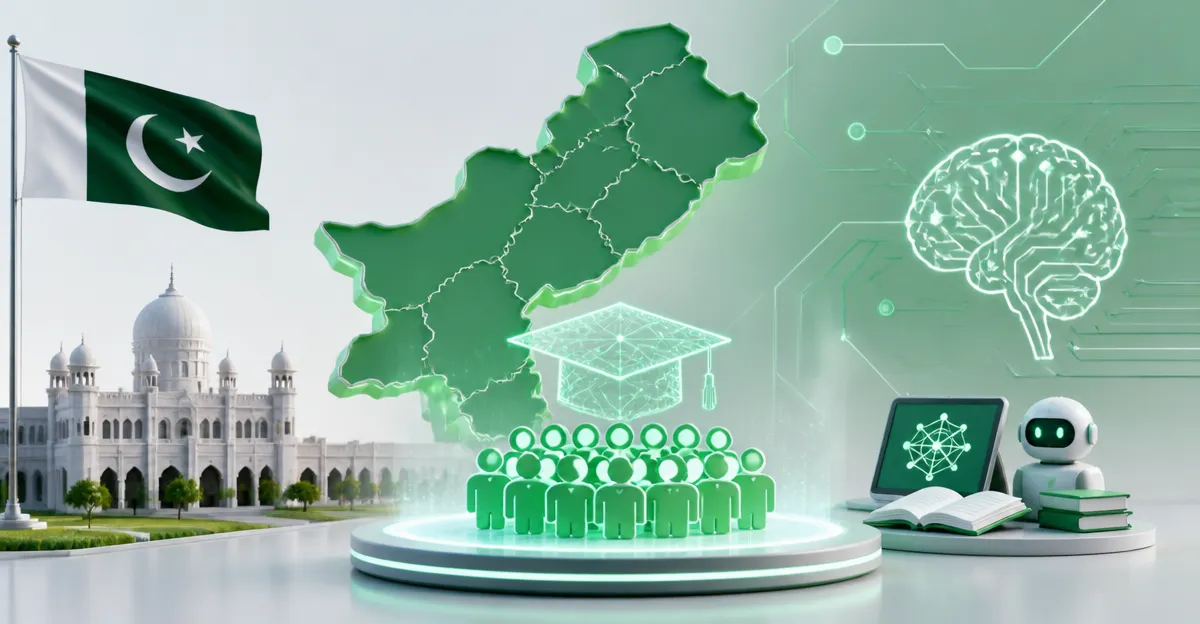
September 26, 2026, (Inside AI) — Punjab's provincial government has launched an ambitious plan to train 160,000 teachers in artificial intelligence under its AI Curriculum and Training Initiative. The program, announced at a launch ceremony in Punjab, aims to embed AI skills across the province's education sector.
The initiative was unveiled by Ali Dar, Advisor to the Punjab Chief Minister on AI, who said the training would also benefit thousands of students. The program seeks to introduce AI into school curricula and equip educators with modern skills, according to an official statement.
"This initiative aims to introduce AI into the education curriculum and train teachers according to the latest standards," Ali Dar, Advisor to the Punjab Chief Minister on AI, said at the launch. He added that the province's AI-focused syllabus would create better learning and career opportunities for students.
The launch ceremony brought together representatives from the School Education Department, PECTAA, PMIU-PESRP, UNICEF, and the Office of AI. Discussions focused on how artificial intelligence is reshaping teaching and learning, and how to prepare the workforce for those changes.
Read: UN Chief Calls for Global AI Risk Framework in Final Assembly Address
Punjab's move reflects a growing global trend of governments integrating AI into public education. But the scale of the teacher training effort is notable. Training 160,000 educators is a massive logistical undertaking, requiring sustained funding, infrastructure, and follow-through. Similar initiatives in other regions have often stalled due to lack of devices, unreliable internet, or insufficient teacher buy-in.
The province has not disclosed a timeline or budget for the training. It also remains unclear how the program will address disparities between urban and rural schools, where access to technology and electricity can be inconsistent.
Ali Dar's office did not respond to questions about the curriculum's content or whether teachers would receive certification. Inside AI could not independently verify these details.
Critics of such programs argue that without robust evaluation, AI training can become a box-ticking exercise. A 2025 report from UNESCO warned that many digital education initiatives fail to measure classroom impact. Punjab's initiative will need clear metrics to prove it is more than a headline.
Still, the involvement of UNICEF suggests an emphasis on child safeguarding and inclusive design. UNICEF has previously supported digital learning in Pakistan, focusing on equitable access. That partnership could help mitigate risks around data privacy and algorithmic bias in schools.
The program's success will depend on whether teachers can translate training into daily lessons. AI literacy is not just about using tools; it involves understanding ethics, limitations, and societal effects. Whether Punjab's curriculum covers these dimensions is unknown.
Read: Spanish PM Sanchez says AI industry cannot be self-regulated
For now, the government frames the initiative as a step toward a future-ready workforce. "Equipping teachers with modern AI skills will help promote the technology across Punjab," Ali Dar said. The coming months will reveal whether that vision translates into classrooms.