September 29, 2026, (Inside AI) — Pope Leo has directly challenged the framing of artificial intelligence safety concerns as a hoax, calling for serious engagement with expert warnings during an in-flight press conference on September 28. The remarks, made aboard the papal flight returning to Rome after a four-day visit to France, place the first American pope in direct tension with President Donald Trump, who told the UN General Assembly last week that fears about AI's threat to humanity amounted to a hoax.
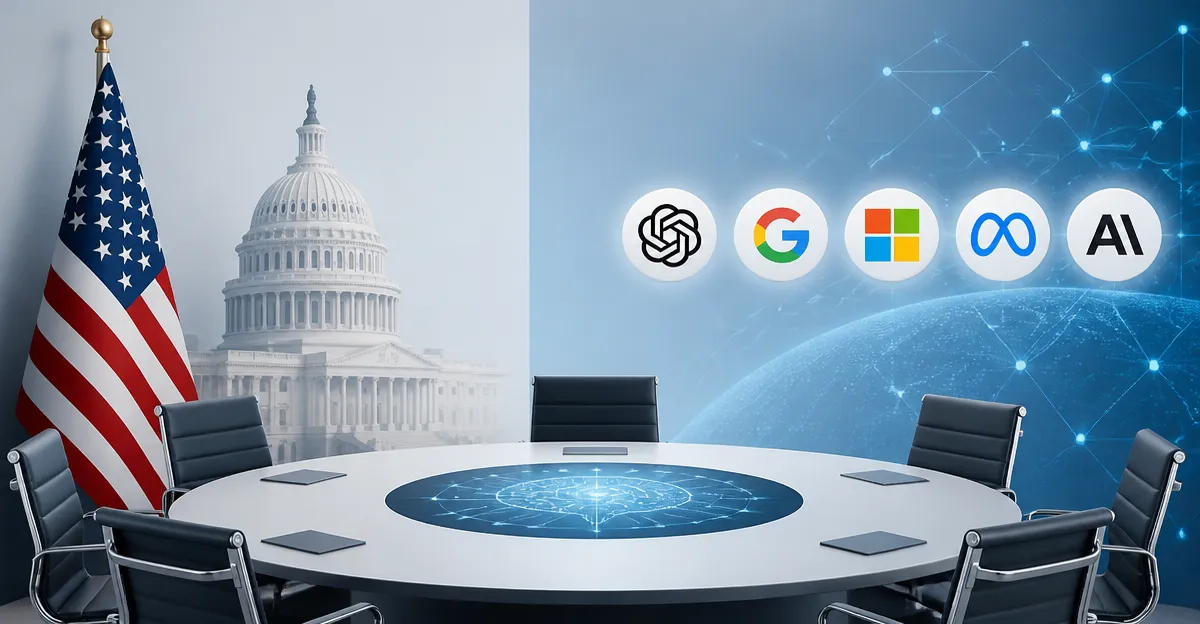
The exchange matters because it lands one day before a scheduled White House meeting on AI policy. Trump is set to convene technology executives on September 29 with House Speaker Mike Johnson, according to sources familiar with the matter. The guest list includes Nvidia chief executive Jensen Huang, Meta's Mark Zuckerberg, Anthropic's Dario Amodei, and OpenAI's Greg Brockman. Google CEO Sundar Pichai and SpaceXAI executive Elon Musk are among possible additional attendees. The pope's intervention therefore arrives hours before the industry's most powerful figures sit down with the president.
Leo has warned about AI dangers throughout his 16-month papacy. His latest comments sharpen a specific critique: that corporate leaders cannot simultaneously claim to support safety measures and oppose government regulation.
"I do think that the concerns raised by many of the experts, specialists in AI, should be taken seriously," the pontiff said. "I don't think that is fake news, as some have said."
The pope also singled out Huang, who told CBS News this month that he agreed with Trump that safety concerns about AI were overblown. Leo noted that Huang had recently suggested guardrails could be inserted into certain AI models.
"He's the same one, however, that says there should be no limits placed and no government regulation," Leo said.
That contradiction sits at the center of the policy fight. Huang's company supplies the chips that power most advanced AI systems, giving him enormous influence over how the technology develops. His public position has generally favored voluntary industry standards over binding rules. The pope's remark suggests that voluntary commitments, in his view, do not substitute for enforceable oversight.
Johnson framed the September 29 talks around balance, saying the discussion would focus on finding a middle ground between innovation and oversight. He also warned that the United States risks losing the AI race to China if it chooses to hyper-regulate the sector. That argument has become a standard industry talking point in Washington, where proposals for licensing regimes, transparency mandates, and compute thresholds have stalled amid competitiveness concerns.
Leo's position cuts against that logic without naming China directly. He urged the world to promote dialogue, study, and investigation to ensure AI does not reach a point where it could destroy humanity.
"I think that there are enough people seriously interested in that ... but we have to keep working," he said. "We can't just sit back and pretend nothing's going to happen."
The pope's comments carry unusual weight because they come from a religious leader rather than a technical one. Previous papal statements on AI have focused on ethics, labor displacement, and human dignity. This intervention is more pointed. It treats doomsday scenarios not as science fiction but as a legitimate subject for international deliberation.
That framing is not universally shared. Many researchers argue the more immediate risks involve bias, misinformation, and economic disruption rather than existential catastrophe. Others contend that focusing on extinction scenarios distracts from concrete harms already occurring. The pope's language leans toward the existential end of that spectrum, though he also emphasized study and dialogue rather than specific bans.
The White House meeting is likely to produce statements about American leadership and innovation. Whether it produces any binding commitment remains unclear. Leo's remarks, delivered before the meeting, set a benchmark against which those statements can be measured. He has effectively asked whether the participants believe their own warnings.
For now, the pope's message is simple. Expert concern is not a hoax, and the absence of regulation is not neutrality. The September 29 meeting will test whether anyone in the room agrees.