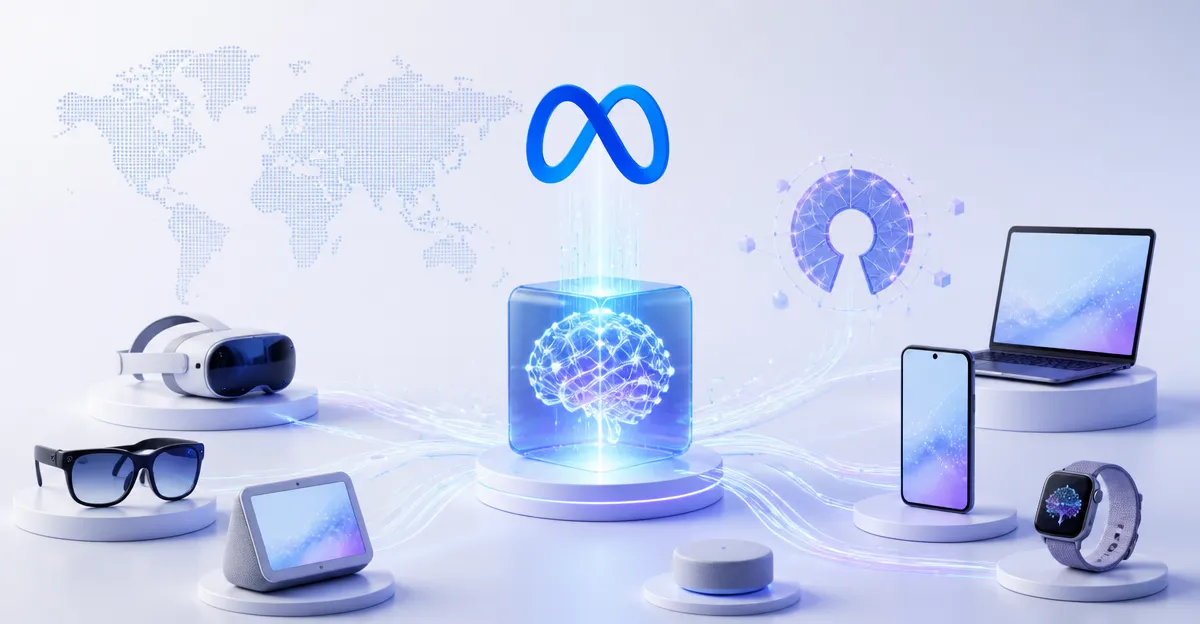
[October 3, 2026], (Inside AI) — Meta is pushing its Muse AI agent beyond phones and into the physical world with a new open-source initiative called Muse Gadgets. The project, announced this week, invites developers to build custom hardware powered by Muse, using off-the-shelf components like ESP32 boards and Raspberry Pi.
The move signals Meta's ambition to embed its AI assistant into everyday objects, from e-ink displays to smart home hubs. It also underscores a broader industry shift: AI companies are racing to find new form factors for their models, moving beyond chatbots to tangible devices that can sense and act in the real world.
At the heart of Muse Gadgets is a simple proposition: give makers the tools to connect Muse to displays, buttons, sensors, and actuators. Meta provides software development kits (SDKs) for ESP32 and Linux, along with open-source firmware. Developers can program a board to show reminders on a color e-ink screen or plug Muse into an HDMI stick for a larger display.
"Muse gadgets are open-source devices you build yourself. Program an off-the-shelf ESP32 board or set up a Raspberry Pi with our SDKs, then connect Muse to your displays, buttons, sensors, actuators, and whatever else you've got lying on your workbench," the company said on the Muse Gadgets website.
Meta has also built its own reference device, the Muse Home Link. This small USB-C-powered gadget connects Muse to a home Wi-Fi network and compatible smart-home devices. According to Meta, community-built skills can let Muse turn on lights, control TVs, or send documents to printers. The company has manufactured 5,000 Home Link units, according to Nat Friedman, head of product at Meta Superintelligence Labs. These devices are being offered free to active Muse subscribers in the United States, one per subscriber while supplies last.
Friedman added that Meta is providing open-source firmware and a Linux SDK to encourage experimentation. The Muse Gadgets website also offers an ESP32 Device SDK, enabling connections to displays, audio components, and sensors.
The initiative follows the introduction of Muse Charm, a keychain-sized AI device unveiled by Meta CEO Mark Zuckerberg at this year's Meta Connect event. Muse Charm features a fingerprint sensor and a small screen displaying the Muse avatar, allowing users to interact with the AI without unlocking a phone. Zuckerberg said the device is slated to ship in time for the December holiday season, though pricing has not been announced.
Meta's push into open-source hardware for AI is unusual. Most major tech companies keep their AI ecosystems closed, preferring to control both software and hardware. By contrast, Meta is betting that a community-driven approach can accelerate innovation and surface unexpected use cases. The strategy mirrors the company's earlier success with open-source AI models like Llama, which fostered a broad developer community.
However, Muse Gadgets remains primarily a developer and maker initiative. Meta has not indicated whether it will turn the project into a broader consumer hardware platform. Still, the devices created by the community could provide Meta with valuable insights for future products.
The timing is notable. As AI assistants become more capable, the race is on to find the best interface. Smart speakers, wearables, and ambient computing devices are all vying for attention. Meta's move could pressure rivals like Google and Amazon to open up their own AI hardware ecosystems or risk losing developer mindshare.
For now, Muse Gadgets is a sandbox. But it's a sandbox with strategic intent. By empowering makers, Meta hopes to seed a new generation of AI-powered devices that keep users within its ecosystem. Whether that translates into commercial success remains to be seen, but it's a bold experiment in open innovation.