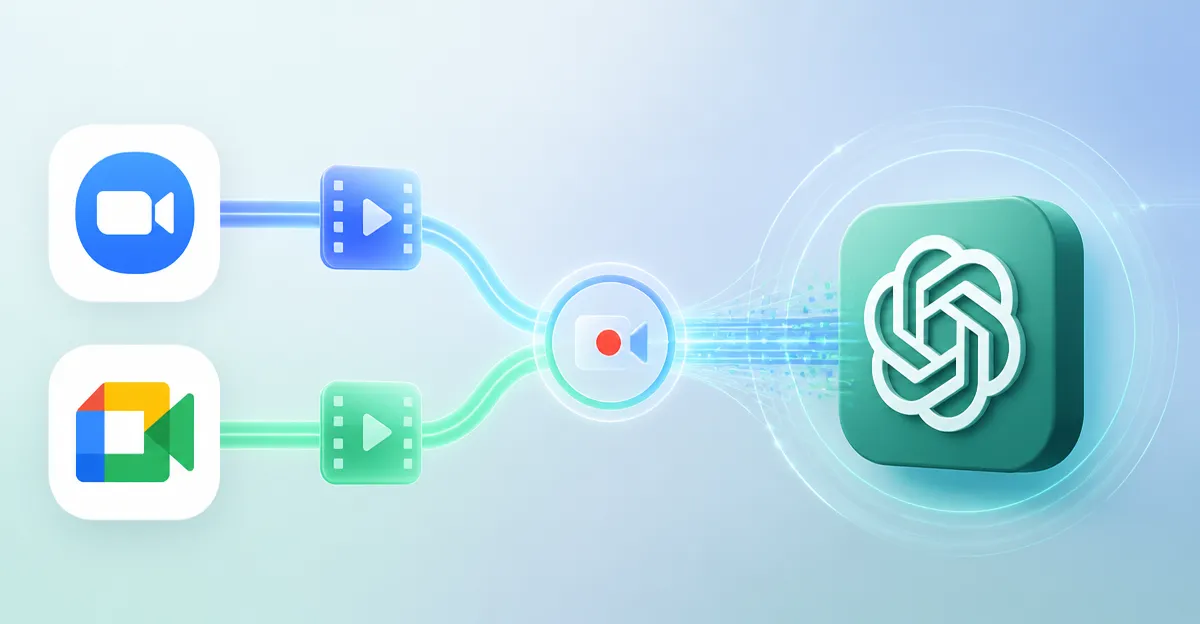
October 7, 2026, (Inside AI) — OpenAI has expanded ChatGPT's capabilities to include audio file uploads, enabling users to transcribe and analyze pre-recorded meetings from platforms like Zoom, Google Meet, and Microsoft Teams. The feature, rolled out on October 6, allows paid subscribers to upload audio files directly into the chat interface, where ChatGPT generates transcripts, summaries, and actionable follow-ups. This move addresses a critical gap for professionals who rely on virtual meetings but lack efficient ways to extract value from recordings.
The update builds on OpenAI's Record Mode, introduced in June 2025, which captured live audio on macOS and mobile devices. While Record Mode handled real-time meetings, it couldn't process existing recordings. The new audio upload feature fills that void, supporting MP3, MP4, M4A, WAV, and WebM files. Users on Plus, Pro, Team, Business, Enterprise, and Edu plans gain access at no extra cost. Processing is swift: a five-minute file typically completes in under a minute, according to OpenAI.
How ChatGPT Turns Meetings Into Actionable Text
Uploading a recording is straightforward. Users click the paperclip icon or drag the file into the chat. ChatGPT then leverages OpenAI's Whisper model to transcribe the audio. Beyond a raw transcript, the system produces a structured summary with discussion points and action items. From there, users can convert the output into emails, project plans, or meeting minutes. This workflow could save hours for teams that manually review calls.
The feature also distinguishes between multiple speakers, a capability inherited from Record Mode. Users can rename speaker labels after processing, improving clarity in transcripts. Record Mode sessions are now capped at four hours, up from previous limits. For pre-recorded calls, the upload feature supports common formats, making it compatible with exports from Zoom, Google Meet, and Teams.
Read: OpenAI Launches ChatGPT Images 2.5 with 50% Faster Generation
Privacy remains a key concern. OpenAI states that audio files are deleted automatically after transcription. Only the text transcript persists in chat history. For Business, Enterprise, and Edu workspaces, transcripts are excluded from model training by default. Plus and Pro users can opt out through settings. These safeguards aim to address enterprise worries about data leakage.
Accuracy varies. The feature works best in English, though OpenAI says other languages are improving. The company cautions users to verify important details. Background noise, accents, and overlapping speakers can degrade transcription quality. Users must also comply with local recording consent laws, which differ by region.
OpenAI's move intensifies competition in the AI productivity space. Rivals like Google and Microsoft have integrated similar transcription tools into their ecosystems. Google Meet offers live captions and transcripts, while Microsoft Teams provides transcription for meetings. However, ChatGPT's ability to transform transcripts into structured outputs like emails or project plans differentiates it. This aligns with OpenAI's broader push to make ChatGPT a central hub for knowledge work.
The feature's launch follows a trend of AI assistants absorbing tasks once handled by specialized software. Otter.ai and Rev.com, which focus on transcription, may face pressure. ChatGPT's integration into existing workflows could reduce the need for separate subscriptions. For businesses, the appeal lies in consolidating tools and reducing manual effort.
Record Mode remains in beta on macOS, with Windows support promised soon. The audio upload feature, however, is available across all paid plans immediately. OpenAI has not disclosed usage limits or potential rate caps. Users should monitor performance for large files or complex audio.
As AI assistants evolve, the line between meeting tools and general-purpose chatbots blurs. ChatGPT's new capability underscores a shift toward multimodal, context-aware systems. For now, professionals can test the feature and judge whether it delivers on its promise. OpenAI's blog post provides setup instructions and best practices.
Read: Anthropic merges Claude chat and Cowork into one interface, adds document tools
In a related development, OpenAI continues to refine Whisper, its speech recognition model. The company has not announced plans to extend audio uploads to free users. For enterprises, the feature could streamline compliance and knowledge management. But adoption will depend on trust in OpenAI's data handling. The coming months will reveal whether this update becomes a staple or a niche tool.