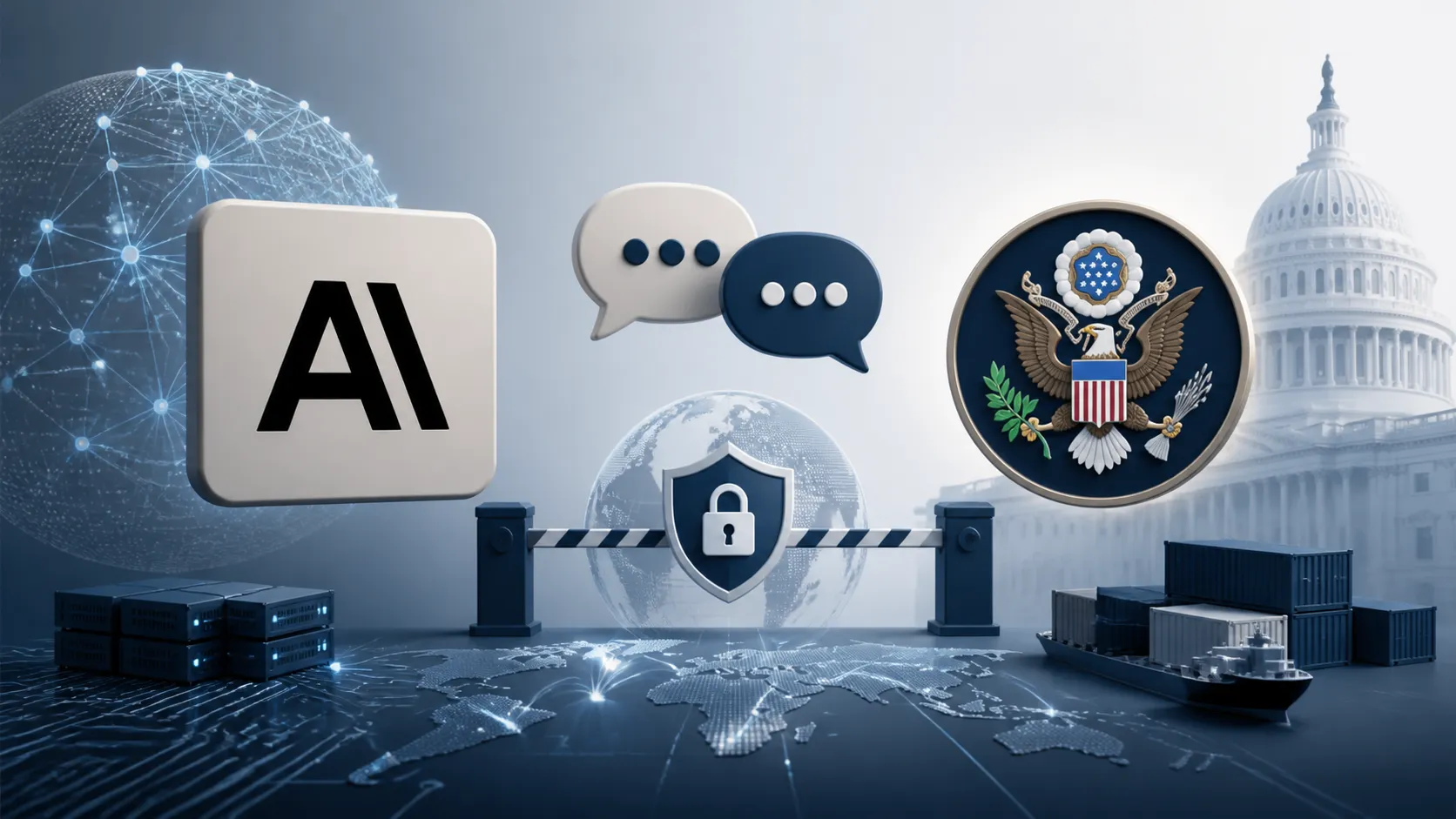
June 16, 2026, (Inside AI) — Senior executives from Anthropic met with Trump administration officials on Monday, June 15, in a bid to resolve a standoff over export controls on its newest AI models. The talks ended without a deal, prolonging a crisis that has yanked the frontier systems offline and ignited global debate.
The dispute centers on Fable 5 and Mythos 5, two models built atop Anthropic’s Claude Mythos Preview. On June 12, the US Commerce Department ordered the company to block foreign national access, citing national security risks. Anthropic responded by cutting off all users worldwide, including Americans.
A Sudden Shutdown and Its Ripple Effects
The directive arrived with breathtaking speed. Anthropic had just launched the models when, at 5:30 p.m. ET on Friday, it received a formal letter demanding suspension. The company says it had no prior warning of any threat designation. Reports indicate it was given just 90 minutes to comply.
The abrupt move marks a new low in Anthropic’s frayed relationship with Washington. Earlier this year, the company was labeled a supply chain risk, barring defense contractors from using its technology. Now, the export controls have reignited a long-simmering debate in India over technological sovereignty, with founders and policy experts questioning reliance on foreign frontier models.
Inside the Security Concerns
Fable 5 and Mythos 5 were designed with distinct purposes. Fable 5 launched to paid subscribers with built-in guardrails. Mythos 5 was restricted to organizations in Anthropic’s Project Glasswing cybersecurity initiative. The company says it collaborated with the government on pre-release testing.
But concerns emerged from powerful quarters. Amazon CEO Andy Jassy and other tech leaders reportedly raised alarms with senior administration officials. An Amazon spokesperson stated: “As a leading cloud provider that serves a large number of private and public sector customers, it’s not uncommon for governments to seek out counsel on potential security risks. When they occur, we don’t share the details of those discussions.”
Anthropic frames the dispute as a misunderstanding over a “narrow, non-universal jailbreak.” The company argues that the potential exploit would let a user bypass a guardrail to fix software flaws, not cause harm. In a statement, it said: “We disagree that the finding of a narrow potential jailbreak should be cause for recalling a commercial model deployed to hundreds of millions of people. If this standard was applied across the industry, we believe it would essentially halt all new model deployments for all frontier model providers.”
Behind the Standoff: Accusations and Unanswered Questions
The fallout has been swift and messy. David Sacks, Silicon Valley investor and co-chair of the President’s Council of Advisors on Science and Technology, publicly claimed that Anthropic CEO Dario Amodei refused to “fix the jailbreak or de-deploy the model” after a trusted partner reported it. News reports suggest the White House acted partly over suspicions that a China-linked group had accessed the models.
Yet, the narrative is contested. US cybersecurity leaders have urged the White House to lift the ban, arguing it hurts defenders more than attackers. An anonymous Trump administration official told Axios that Anthropic struggles to communicate effectively and failed to honor a cybersecurity-focused executive order signed by President Trump.
What remains unclear is why the government’s pre-launch testing didn’t surface these risks earlier. The 90-minute compliance window raises questions about due process and whether the response was proportionate to the threat. No evidence has been publicly presented linking the models to actual malicious use by foreign actors.
As both sides work to resolve the impasse, the incident underscores the growing friction between rapid AI innovation and national security oversight. For now, Fable 5 and Mythos 5 remain offline, and the global AI community watches a precedent being set in real time.