October 9, 2026, (Inside AI) — The S&P 500 sits near record highs as it approaches October 12, the four-year anniversary of its closing low in October 2022, a date that marked the start of the current bull market. The rally has been powered by an artificial intelligence spending boom that has reshaped corporate profits and economic growth. But the same engine driving the gains now poses the biggest risk to their durability.
The current run has delivered a 117% gain, making it the sixth-best-performing bull market since World War II, according to Ryan Detrick, chief market strategist at Carson Group. It ranks as the eighth-longest. By historical standards, four years is not old age for a bull market. The concern is not age but dependency.
AI has become the defining force behind the rally. ChatGPT launched about a month after the bull market began, and the ensuing capital spending wave has lifted earnings across the technology and communication services sectors. S&P 500 earnings are expected to rise more than 35% this year, boosted by hyperscaler spending on data centers. Oxford Economics estimates roughly one-third of recent US economic growth stems from AI, counting both direct infrastructure investment and the wealth effect from stock gains lifting consumer spending.
The market's concentration in a handful of AI-linked names has grown accordingly. The top 10 companies in the S&P 500 now account for about 40% of the index, up from about 28% in October 2022, according to J.P. Morgan Asset Management. Nvidia, whose AI chips made it the emblem of this era, has seen its market capitalization soar to $5.8 trillion from $286 billion four years ago, making it the world's most valuable company. Thirteen US companies now hold market values of at least $1 trillion, and all but two are in tech or carry significant AI exposure.
"The AI theme is the defining feature of this bull market," said Anthony Saglimbene, chief market strategist at Ameriprise. "What you're seeing in terms of the bull market four years in is, I think, the easy money around AI has been made ... as we get further into this bull market, there is just going to be more pressure on especially technology companies to prove that the spending that they're doing today is actually going to translate into the profits."
The concentration cuts both ways. It reflects genuine earnings strength, but it also means portfolios are exposed if the prevailing theme falls out of favor.
"It is a reflection of fundamental strength and earnings outperformance, but also it introduces some risks," said Angelo Kourkafas, senior global investment strategist at Edward Jones. "The risk of concentration is that if the prevailing theme goes out of favor, portfolios might feel it in an outsized way."
Rate Hikes And Yields Threaten The Rally
Macroeconomic headwinds add another layer of uncertainty. The Federal Reserve has pivoted back to rate hikes to bring down high inflation, a shift that could slow the economy. The last bear market, which bottomed in October 2022, coincided with a sharp rate-hiking cycle. Higher rates have also pushed the benchmark 10-year Treasury yield to around 5.2%, near its highest level in 24 years. Rising yields make bonds more competitive with equities and can pressure stock valuations.
Kourkafas said Edward Jones remains overweight equities but with less aggression than before, citing the growing appeal of fixed income.
"We still think that the bull market is not about to end ... but it makes sense to us to take some of the risk off the table," he said.
Political risk looms as well. Markets could turn volatile heading into next month's US midterm elections, adding a near-term layer of uncertainty on top of the AI concentration and rate concerns.
Not everyone sees age as a warning sign. Mark Hackett, chief market strategist for Nationwide, offered a different frame for thinking about the rally's maturity.
"Four years is not, by any stretch of the imagination, scary with regards to a bull market," he said. "They don't end of old age; they end from disease."
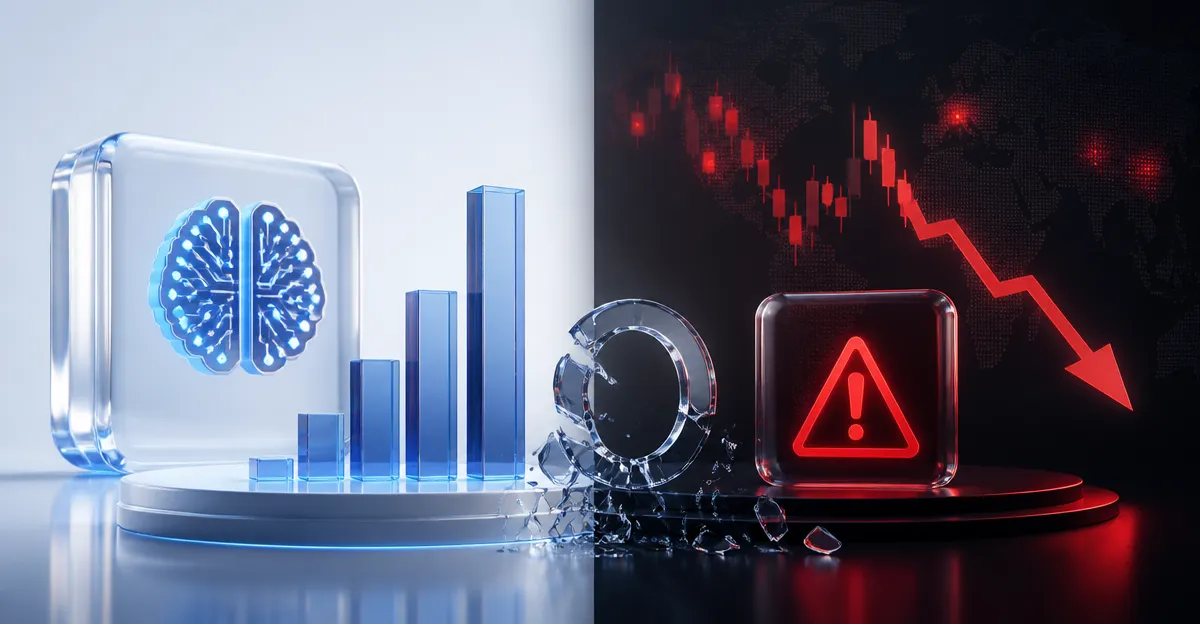
The question for investors now is what disease might look like. A slowdown in AI capital spending, a earnings miss from a major hyperscaler, or a sustained rise in yields could each test the market's foundation. For now, the AI trade remains intact, but the margin for error has narrowed. The next leg of this bull market will depend less on how long it has run and more on whether the profits promised by AI spending arrive on schedule.