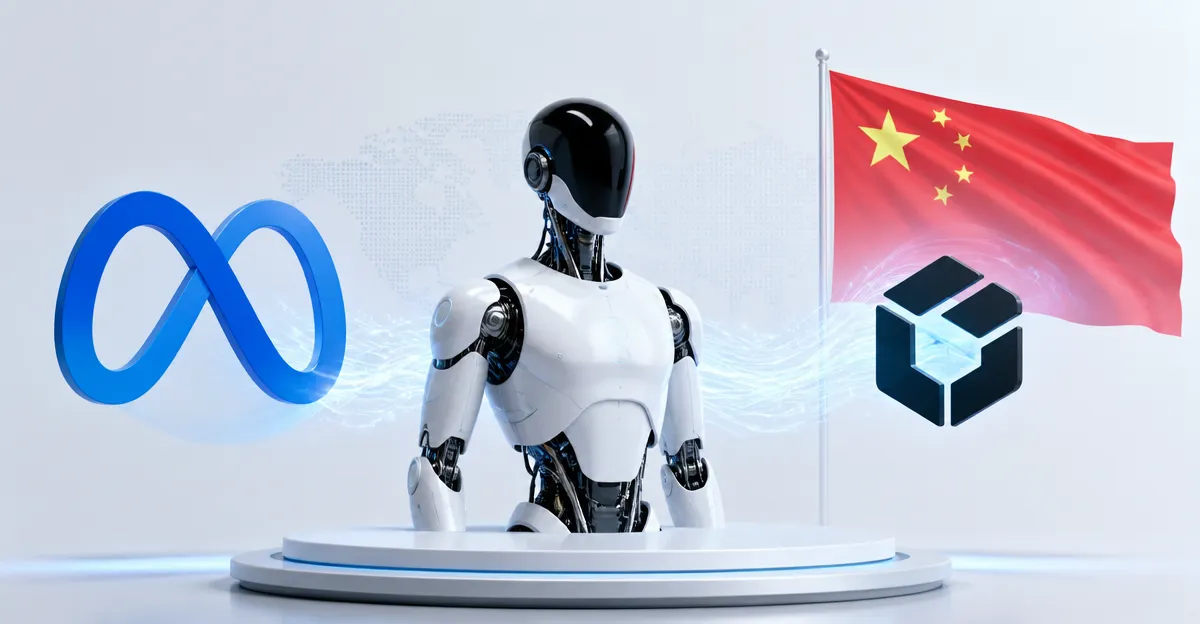
October 31, 2026, (Inside AI) — Meta has built a prototype humanoid robot in collaboration with Chinese startup Fourier and is already developing a second version, according to sources familiar with the initiative. The report, which Inside AI could not independently verify, signals Meta's expansion beyond software and AI models into physical robotics, a domain where Chinese firms have gained significant momentum.
The development comes as Meta intensifies its focus on artificial intelligence and embodied systems. Partnering with Fourier, a Shanghai-based robotics company known for its general-purpose humanoid robots, allows Meta to leverage existing hardware expertise while pursuing its own AI ambitions. The first prototype's existence and the ongoing work on a second version suggest Meta is moving quickly, though details about the robot's capabilities, intended use cases, and timeline remain undisclosed.
Meta's move into humanoid robotics is not entirely surprising. The company has invested heavily in AI research, including projects like Meta AI and the development of advanced machine learning models. However, hardware has traditionally been a challenging area for Meta, as evidenced by its mixed results with consumer devices like the Portal and its retreat from some hardware ventures. The partnership with Fourier could mitigate some of those risks by tapping into established robotics engineering.
Fourier, founded in 2015, has developed humanoid robots such as the GR-1, which is designed for tasks like rehabilitation and research. The company has attracted attention for its relatively low-cost approach to humanoid robotics, aiming to make these machines accessible for a range of applications. Meta's collaboration with Fourier aligns with a broader trend of U.S. tech giants seeking Chinese partners to accelerate hardware development, particularly in robotics where China has built a robust supply chain and expertise.
Read: China Humanoid Makers Face Challenge
The news also highlights the growing competition in the humanoid robot space. Tesla's Optimus, Boston Dynamics' Atlas, and Figure AI's humanoid robots have captured headlines, while Chinese companies like UBTech and Fourier have made strides in commercialization. Meta's entry could disrupt the landscape, given its resources and AI capabilities. However, the company has not publicly commented on the project, and it remains unclear whether this is a research endeavor or a step toward a commercial product.
Industry analysts note that humanoid robots require significant advancements in dexterity, mobility, and AI-driven control systems. Meta's expertise in computer vision and natural language processing could be valuable in these areas. Yet, the company faces challenges in hardware manufacturing and cost reduction, areas where Fourier's experience could prove crucial. The partnership may also raise questions about data sharing and intellectual property, especially given the cross-border nature of the collaboration.
Meta's previous hardware efforts, such as the Ray-Ban smart glasses, have been more successful, suggesting the company is learning to navigate the consumer hardware market. Humanoid robots, however, are a different beast, with longer development cycles and higher technical barriers. The second version in progress indicates iterative development, a common approach in robotics where prototypes evolve rapidly based on testing and feedback.
While the report is unconfirmed, it adds to the narrative of Meta as a company willing to explore beyond its core social media and advertising business. The move could also be seen as a response to competitors like Google, which has invested in robotics through its Everyday Robots project (now disbanded) and ongoing AI research. Meta's focus on the metaverse, which has waned in recent years, might be pivoting toward more tangible AI applications.
Read: China's Humanoid Robot Startups
As the humanoid robot market heats up, Meta's collaboration with Fourier could accelerate innovation and bring new capabilities to the field. However, the lack of official confirmation leaves many questions unanswered. The company's next steps, including potential demonstrations or announcements, will be closely watched by industry observers and investors alike.