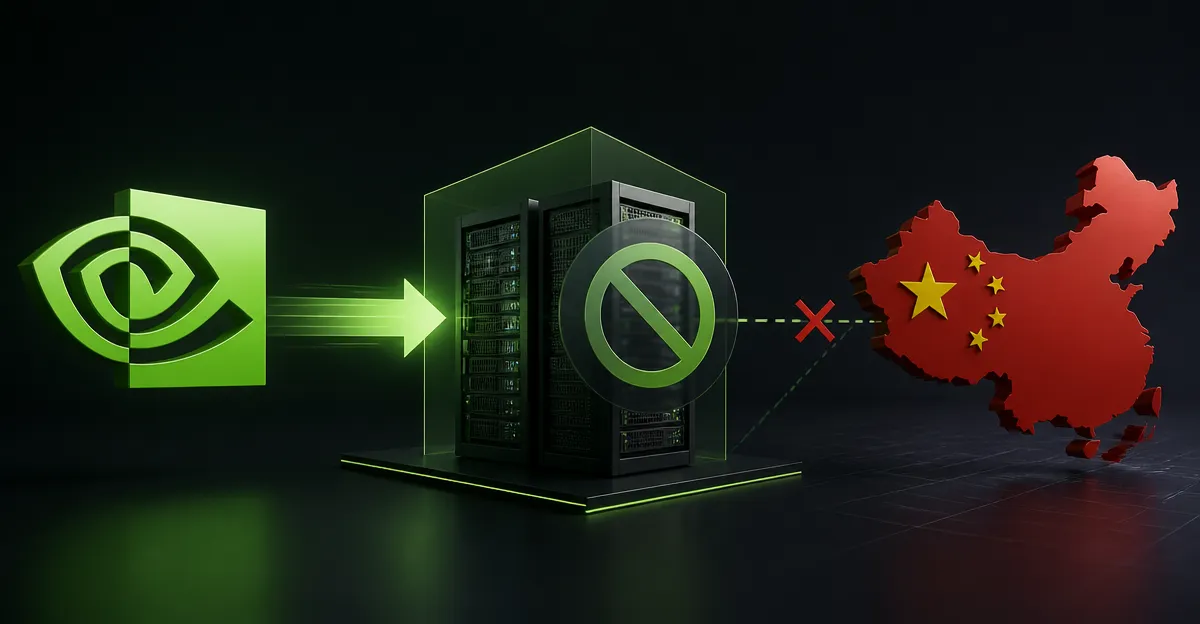
November 3, 2026, (Inside AI) — Nvidia has instructed its data center partners to reduce their exposure to Chinese customers, according to sources familiar with the matter. The directive, first reported by the Financial Times, marks a significant escalation in the company's efforts to navigate tightening U.S. export controls and growing geopolitical tensions. The order applies to partners that integrate Nvidia's chips into servers and other data center infrastructure, effectively extending compliance pressure beyond direct sales to Chinese entities.
The move signals Nvidia's proactive approach to aligning with U.S. regulations, which have progressively restricted the sale of advanced semiconductors to China. By pushing its partners to limit exposure, Nvidia aims to avoid potential violations and safeguard its access to critical U.S. government contracts and subsidies. The directive also reflects the company's recognition that the Chinese market, once a key revenue driver, is becoming increasingly risky amid heightened scrutiny.
This development comes as the U.S. government continues to tighten export restrictions on AI chips, citing national security concerns. Nvidia, which holds a dominant share of the global AI accelerator market, has seen its China revenue plummet from 26% of total sales in fiscal 2022 to around 10% in recent quarters. The company has repeatedly warned that further restrictions could harm its business, but it has also emphasized its commitment to compliance.
Partners Face Compliance Dilemma
Data center partners, including server manufacturers and cloud service providers, now face a difficult choice. Those that continue to serve Chinese customers risk losing access to Nvidia's latest GPUs, which are in high demand worldwide. On the other hand, cutting ties with Chinese clients could forfeit significant revenue streams. Industry analysts estimate that Chinese data center operators account for a substantial portion of global AI infrastructure spending, making the directive particularly painful for partners with established relationships in the region.
Read: Nvidia in Talks to Back Nscale's Anthropic Data Center with Billions in Credit
The directive is not entirely surprising given the evolving regulatory landscape. In October 2023, the U.S. Department of Commerce expanded export controls to cover more advanced AI chips, including Nvidia's A800 and H800, which were designed specifically for the Chinese market. Nvidia responded by developing new, compliant chips for China, but those efforts have been met with resistance from U.S. officials who argue that any advanced chip could be used for military purposes. The company has since shifted its strategy, focusing on markets outside China while lobbying for clearer guidelines.
This latest move by Nvidia underscores the broader trend of decoupling in the tech industry. As the U.S. and China compete for AI supremacy, companies are being forced to choose sides. Nvidia's directive to partners is a clear signal that the company prioritizes compliance and long-term relationships with the U.S. government over short-term gains in China. It also puts pressure on other chipmakers, such as AMD and Intel, to follow suit, potentially accelerating the fragmentation of the global semiconductor supply chain.
Nvidia's partners have not publicly commented on the directive, but sources indicate that some are already reviewing their China exposure. The company's move may also impact Chinese AI companies, which rely heavily on Nvidia's GPUs for training large language models. With access to advanced chips becoming more restricted, Chinese firms may need to accelerate their own chip development efforts or turn to domestic alternatives, which currently lag behind Nvidia's offerings in performance and efficiency.
Inside AI could not independently verify the report. Nvidia has not issued a formal statement, and the Financial Times cited people with knowledge of the matter who spoke on condition of anonymity.
The directive is likely to have far-reaching implications for the AI industry. It could slow the pace of AI innovation in China, widen the technology gap between the U.S. and China, and reshape global supply chains. It also raises questions about the role of private companies in enforcing government policies, especially when those policies have significant commercial consequences. As the Biden administration considers further restrictions, Nvidia's proactive stance may serve as a model for other tech firms navigating the complex terrain of export controls.
Read: NVIDIA Commits $1 Billion to US Science Over Five Years
For now, Nvidia's partners are left to weigh the risks and benefits of continued engagement with Chinese customers. The company's directive is a stark reminder that in the era of AI geopolitics, business decisions are increasingly intertwined with national security considerations. The coming months will reveal how partners respond and whether Nvidia's move will trigger a broader exodus from the Chinese market.

If a research paper dropped this week, Mahesh has already read it. He covers AI tools and vibe coding for builders who need to know what is worth their time and what is not.