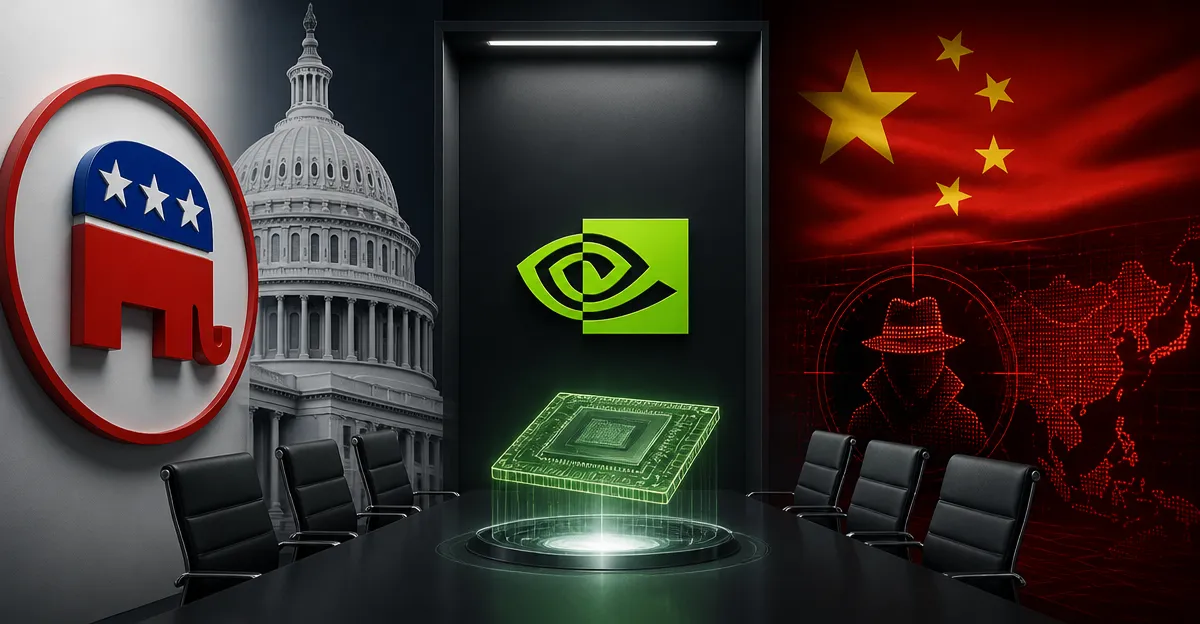
November 6, 2026, (Inside AI) — Top Republican lawmakers in the U.S. House of Representatives have formally requested that Nvidia CEO Jensen Huang appear before Congress this month to address allegations of a close relationship with a Chinese spy, according to sources familiar with the matter. The request follows a news report that raised questions about Huang's ties to an individual described as a Chinese intelligence operative.
The lawmakers are seeking a briefing on Nvidia's anti-espionage protocols and the company's handling of sensitive information. The move escalates scrutiny of the AI chip giant, which has faced increasing congressional attention over its business dealings with China and the national security implications of its technology.
The call for testimony comes amid heightened tensions between Washington and Beijing over advanced semiconductors, which are critical to AI development and military applications. Nvidia's chips are among the most sought-after components for AI systems, and the U.S. has imposed strict export controls to prevent them from reaching Chinese military end-users.
House Republicans have not publicly released the letter, but sources say it asks Huang to explain the nature of his relationship with the alleged spy and to detail any internal security measures Nvidia has in place to prevent foreign infiltration. The lawmakers also want to know whether the company has cooperated with U.S. intelligence agencies on the matter.
Nvidia has not yet responded to a request for comment. The company has previously said it complies with all applicable laws and regulations.
The allegations, if substantiated, could have significant implications for Nvidia's reputation and its ability to operate in the U.S. market. The company is already under pressure from lawmakers who argue that its chips should not be sold to any Chinese entities until stronger safeguards are in place.
Industry analysts note that the timing is particularly sensitive for Nvidia, which is set to report quarterly earnings later this month. Any congressional action could affect investor confidence and the company's stock price.
The request for a briefing is the latest in a series of congressional inquiries into the tech industry's ties to China. Earlier this year, lawmakers grilled executives from several semiconductor firms over their Chinese operations. The focus on Nvidia, however, is notable given its dominant position in the AI chip market and its high-profile CEO.
Huang, who has led Nvidia since 1993, is known for his public appearances and has been a vocal advocate for the company's technology. He has not previously been called to testify before Congress on security matters.
It remains unclear whether Huang will agree to appear voluntarily. Lawmakers could issue a subpoena if he declines, but such a move would be unusual for a CEO of a major corporation.
Read: White House Postpones Tech Advisers Meeting With Huang, Zuckerberg
The allegations of a spy relationship were first reported by a news outlet last week, citing anonymous sources. The report has not been independently verified by Inside AI. Nvidia has declined to comment on the specifics of the report.
The House Intelligence Committee and the House Committee on Foreign Affairs are among the panels that have expressed interest in the matter. A spokesperson for one of the committees said that "we take any allegation of foreign espionage seriously and will pursue all appropriate avenues to ensure the integrity of U.S. technology companies."
The Chinese Embassy in Washington did not immediately respond to a request for comment.
Nvidia's China Exposure Draws Fresh Scrutiny
Nvidia's business with China has been a flashpoint for years. The company derives a significant portion of its revenue from Chinese customers, but U.S. export controls have restricted sales of its most advanced chips. Nvidia has designed special versions of its chips for the Chinese market that comply with U.S. regulations, but critics argue that these chips still pose a security risk.
The spy allegations add a new dimension to the debate. If Huang is found to have had a relationship with a known spy, it could undermine trust in Nvidia's leadership and raise questions about the company's internal security culture.
Some national security experts say that the allegations should be thoroughly investigated before any conclusions are drawn. "It's important to distinguish between a casual acquaintance and a deliberate relationship," said a former intelligence official who spoke on condition of anonymity. "The facts matter, and we don't have them yet."
Others are more skeptical. "This is a serious allegation that goes to the heart of corporate governance," said a congressional aide. "The American people deserve to know whether the CEO of a company that makes the world's most advanced AI chips is compromised."
The call for a briefing also reflects broader concerns about foreign influence in the U.S. technology sector. Lawmakers have been pushing for stronger disclosure requirements for companies with ties to adversarial nations.
Nvidia's stock has been volatile in recent weeks, reflecting investor uncertainty about the company's future. The company's shares are up more than 200% this year, but any negative news could trigger a selloff.
The White House has not commented on the matter. The Commerce Department, which oversees export controls, declined to comment.
In the meantime, Nvidia is preparing for its earnings call, where Huang is expected to face questions from analysts about the allegations. The company may also use the opportunity to reassure investors about its security practices.
The request for a congressional briefing is a reminder that the tech industry is under increasing scrutiny from lawmakers on both sides of the aisle. As AI becomes more powerful, the stakes for national security are rising, and companies like Nvidia are finding themselves in the crosshairs.

Sofia spent years studying how machines parse human language before pivoting to cover the systems now rewriting it. She reads technical papers the way others read news and looking for what the numbers are actually saying beneath the headlines.