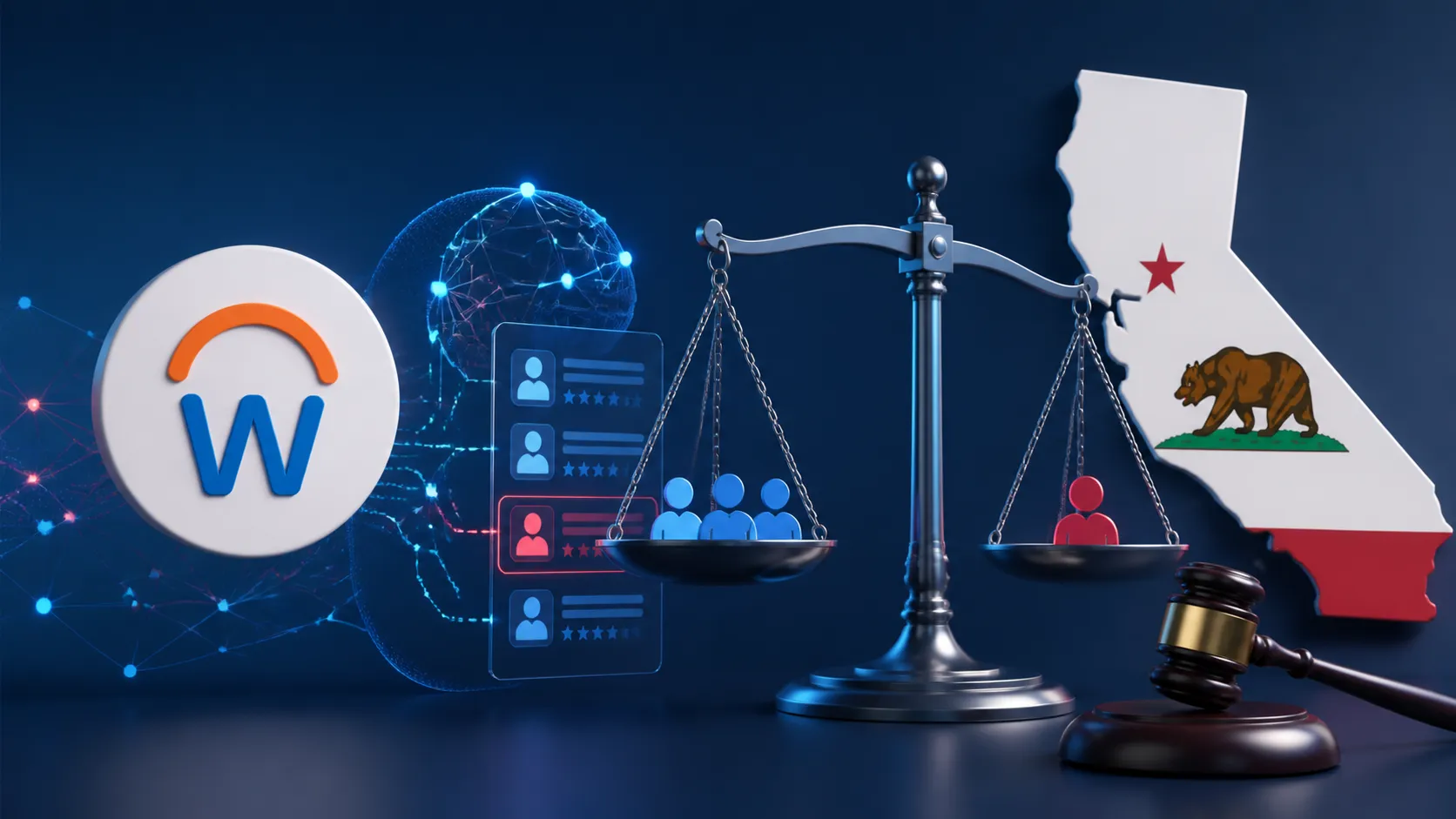
June 17, 2026, (Inside AI) — A federal judge in San Francisco signaled she will likely let a sprawling AI hiring bias lawsuit proceed against Workday under California law. The case targets algorithmic screening that plaintiffs say illegally weed out Black, older, and disabled applicants.
During a Monday hearing, U.S. District Judge Rita Lin challenged Workday’s argument that California’s Fair Employment and Housing Act cannot apply to out-of-state job screenings. The lawsuit claims Workday’s software discriminated thousands of times across major employers.
The Core Legal Clash Over California’s Reach
Workday’s attorney Kayla Grundy argued liability under FEHA depends on each customer’s lawbreaking. Lin pushed back, citing a 1994 state appeals court ruling that parties face direct liability for their own FEHA-regulated conduct.
“The court’s focus appeared to be on where the tortious conduct occurred. What am I missing?” Lin asked. Grundy contended insufficient California contacts exist when screening out-of-state applicants for out-of-state employers.
Read: United States Companies Face Rising AI Liability Despite Outsourcing Models
“When we’re talking about a case of this magnitude that implicates decisions across all states and potentially even internationally, there’s no reason that California … can assert itself as the premier law that would apply in all those circumstances,” Grundy said.
Lin earlier suggested Workday’s position seemed odd. “So the alternative then is for Workday to be subject to the laws of all 50 states and countries around the world, depending on which employer is deploying its software. Is that really what you’re saying?”
Why This Case Is a Landmark for AI Hiring
The proposed class action, first filed in 2023 by Derek Mobley, alleges he was rejected for over 100 jobs due to race, age, and disability. It has since expanded to three more named plaintiffs and broader claims under FEHA.
Over 80% of U.S. employers and nearly all Fortune 500 companies now use AI in hiring, surveys show. Yet litigation remains rare, partly because applicants often don’t know AI tools are used.
In 2024, Lin ruled Workday could be an employer under federal anti-discrimination laws because it performs screening functions customers normally handle. That first-of-its-kind decision set the stage for Monday’s hearing on state law.
Algorithmic Decisions Under the Microscope
Plaintiffs’ lawyer Roderick Cooks argued courts have long held companies liable for FEHA-regulated conduct within California. “We’re just trying to make Workday stand up for what it did within California as far as algorithmic decisionmaking (and) tool developing,” Cooks said.
Government agencies and advocates warn AI hiring tools can bake in bias if trained on skewed data. The Equal Employment Opportunity Commission previously said Workday must face bias claims, and a tutoring firm recently settled the agency’s first AI bias lawsuit.
Read: AI Seniorisation: How Entry-Level Jobs Are Raising the Bar in the US
Lin, a Biden appointee, did not say when she would rule. The case is Mobley v. Workday Inc, U.S. District Court for the Northern District of California, No. 3:23-cv-00770.
For Mobley: Lee Winston and Roderick Cooks of Winston Cooks. For Workday: Julie Totten, Kayla Grundy and Erin Connell of Orrick, Herrington & Sutcliffe.