November 22, 2026, (Inside AI) — Nepal's Prime Minister Balendra Shah, the 36-year-old rapper-turned-politician known as Balen Shah, arrives in New Delhi on Monday for his first bilateral foreign visit since taking office in March. He will meet Indian Prime Minister Narendra Modi for their first in-person talks, with artificial intelligence, energy trade, education, cricket, and a long-frozen border dispute all on the table.
The visit marks a sharp reversal for a leader who built his reputation on refusing exactly this kind of trip. Shah rose to power on the back of massive youth protests, promising a break from Nepal's old politics of patronage and dependence on regional powers. After taking office, he ordered ministers and officials to focus on domestic issues and issued a diktat: no foreign visits and no meetings with senior foreign officials unless the counterpart was a president or prime minister.
That rule had concrete consequences. When US envoy for South and Central Asia Sergio Gor visited Kathmandu in April and early May, Shah's office did not schedule a meeting. Around the same time, a visit by India's Foreign Secretary Vikram Misri was cancelled after Shah declined to meet him. Shah also said both India and Nepal had encroached on each other's territory and sought involvement from China and the UK to address the dispute, a move India strongly rejected.
The ice began to thaw in June, when Nepal's Foreign Minister Shishir Khanal and Rabi Lamichhane, chief of Shah's party, the Rastriya Swatantra Party (RSP), travelled to India. Those talks smoothed the path for Monday's meeting, which Nepali officials now frame as an acknowledgement of the need for continued engagement with India.
Read: Xi AI Supply Cooperation
The economic logic is hard to argue with. India is Nepal's largest trade, transit, and investment partner. Nepal enjoys duty-free access to the Indian market, and India receives about 80% of Nepal's goods exports. India is also the largest source of foreign investment in Nepal, accounting for almost one-third of total FDI.
Where AI Fits Into A Border Visit
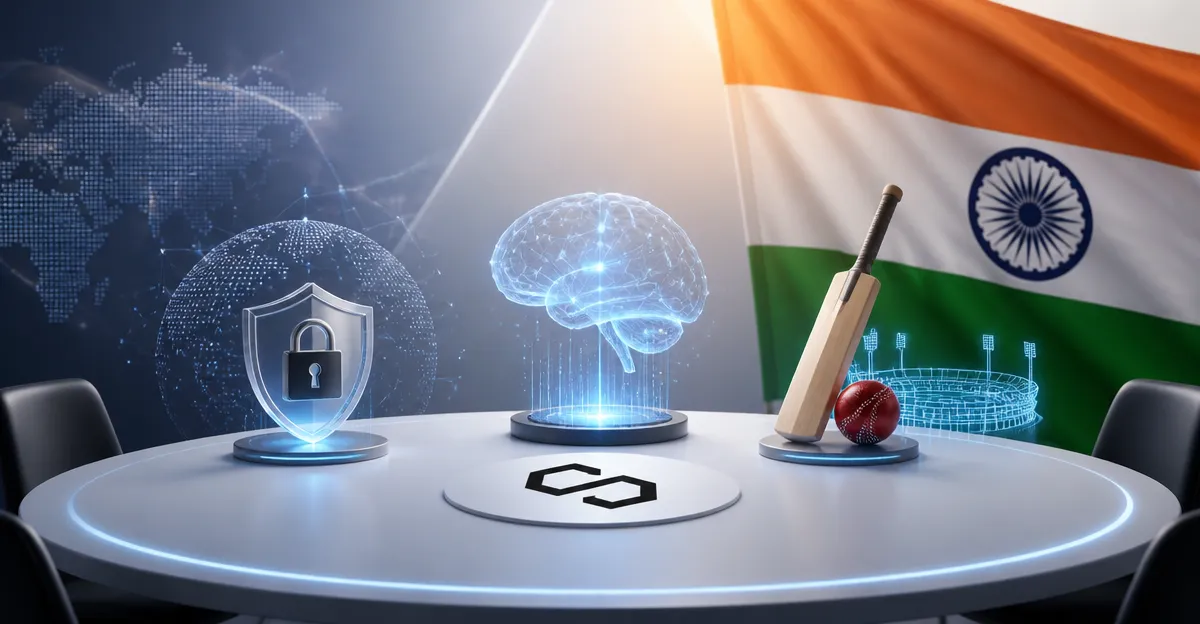
Among the agenda items, the technology track stands out. Since 2025, several Nepali startups have received training through the India-Nepal Startup Partnership Network (IN-SPAN), run in collaboration with IIT Madras and its incubation centre Pravartak. Both sides are now working to establish a collaborative framework for advancing Language AI, digital public infrastructure, and inclusive digital ecosystems across the two countries.
The pairing of AI with a state visit is unusual for South Asia, where bilateral talks typically centre on transit, water, and security. But it reflects a broader shift. India has been exporting its digital public infrastructure stack, including the UPI payments network, to smaller neighbours, and language technology is the next layer. Nepal, with roughly 30 million people and a fast-growing base of young developers, offers a testing ground for Indic and Nepali-language models.
Energy cooperation has also been on an upward trajectory. A long-term power trade agreement envisages the import of up to 10,000 MW of power from Nepal to India over ten years. India currently imports about 1,200 MW annually. Indian entities are involved in several hydropower projects in Nepal, including the 900 MW Arun-3 hydroelectric project under construction. A cross-border petroleum pipeline commissioned in 2019 between Motihari and Amlekhgunj has already improved fuel supplies, and Phase-2 has been implemented. Both sides are now exploring new pipelines and terminals.
Education is another pillar. For decades after Indian independence, a majority of Nepal's senior leaders studied at Banaras Hindu University. Today, Nepali students increasingly choose Australia, Europe, Thailand, Singapore, and Dubai. India provides 1,500 annual scholarships covering school through doctorate level, and both governments are now discussing the possibility of an IIT campus in Nepal.
Cricket has become a quiet diplomatic asset. Over the past three years, India-Nepal cooperation in sports has grown, particularly in cricket. The Nepal Premier League is said to be a major money spinner, second only to India's IPL in the region. Tourism ties remain strong as well. India is the largest source of foreign tourists to Nepal, with 311,000 air arrivals in the last Nepali financial year, excluding the large number of visitors arriving by road. Both sides are promoting shared circuits such as the Ramayana Circuit and the Buddhist Circuit. A new direct passenger train between Janakpurdham and Ayodhya, whose trial run was held on November 5, will further facilitate religious travel.
Read: Open-Weight AI Push
The Border Map That Won't Move
The hardest issue is likely to be border management. India and Nepal have contested some border areas for decades. In 2020, under former prime minister KP Oli, Nepal officially issued a new political map showing Kalapani, Limpiadhura, and Lipulekh in Uttarakhand as its territory. That map locks all Nepali prime ministers into a position they find difficult to walk back from. China has long sought a larger influence in Nepal, including over its boundary issues.
Despite the differences, defence and security ties remain robust. The issue of Agniveers has been resolved by giving them a pathway for permanent commission, which has assuaged some misgivings among Gorkha soldiers. India and Nepal also cooperate closely on countering narcotics, cross-border crimes, and money laundering.
For Shah, the visit is a test of whether his 'Nepal first' slogan can survive contact with geography. Nepal's political establishment is new and different from what India has dealt with, but their aspirational and ambitious political language is one that New Delhi speaks and understands.

Sofia spent years studying how machines parse human language before pivoting to cover the systems now rewriting it. She reads technical papers the way others read news and looking for what the numbers are actually saying beneath the headlines.