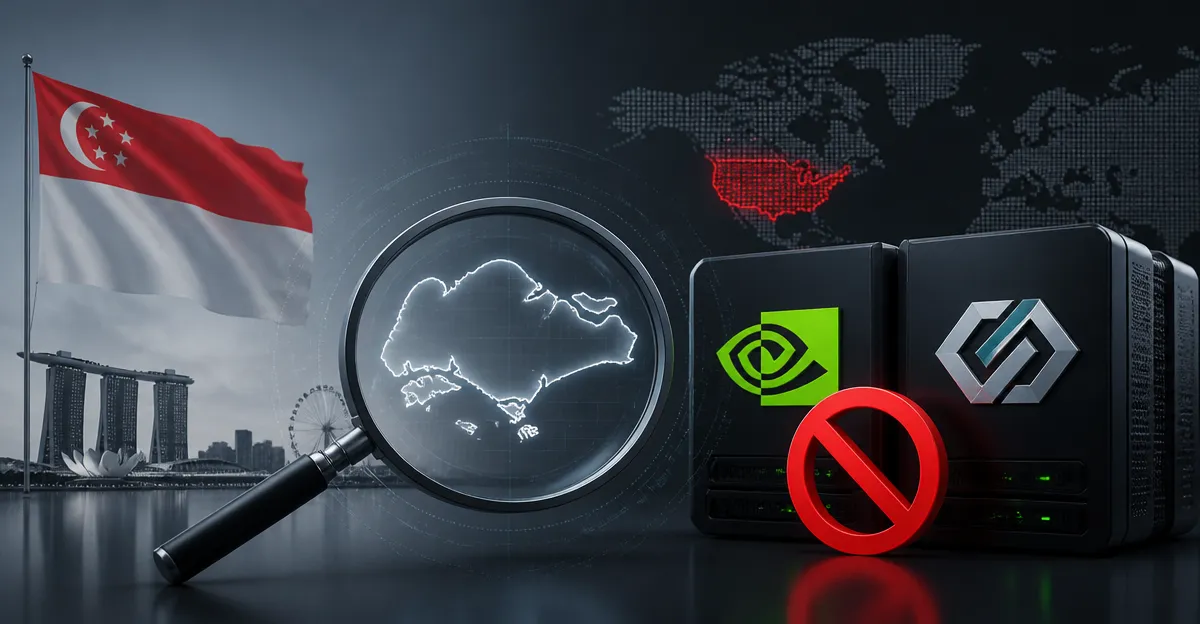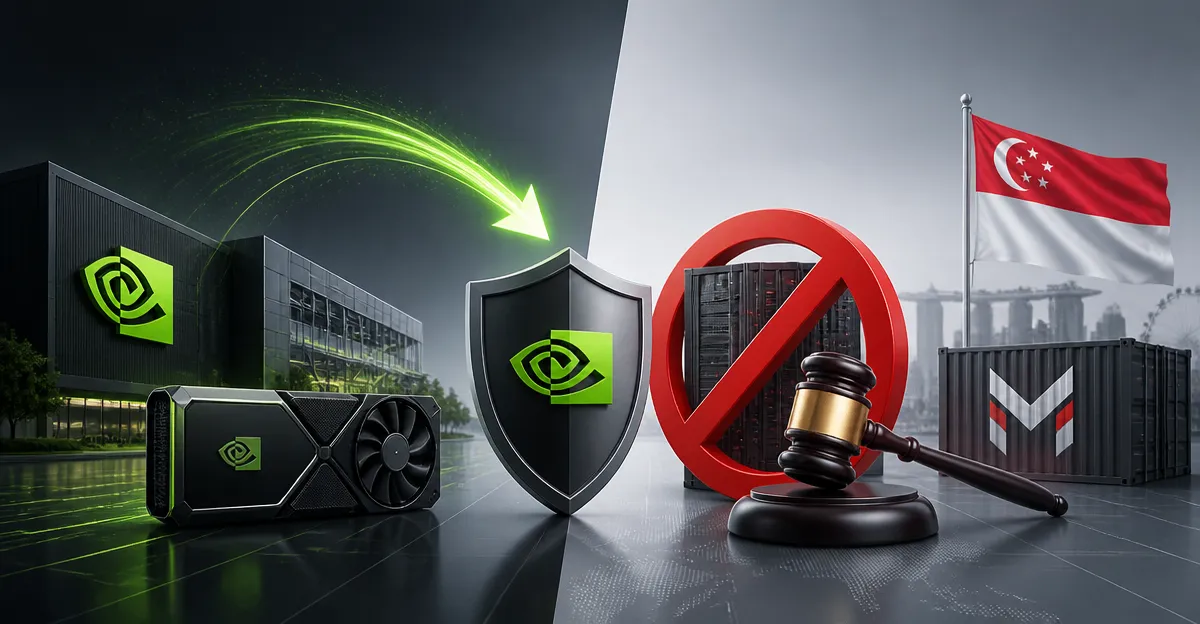
November 24, 2026, (Inside AI) — The Trump administration has added Singapore-based data centre operator Megaspeed to the US Entity List, barring the company from purchasing advanced AI chips from American suppliers without a government licence. The Commerce Department action, confirmed by people familiar with the matter who spoke on condition of anonymity, lands as Megaspeed faces a criminal investigation into allegations it smuggled Nvidia chips into China in violation of US export controls.
The timing is hard to ignore. The blacklisting came hours after Jensen Huang returned to Nvidia, a detail that places the chipmaker's leadership transition and Washington's enforcement apparatus on the same news cycle. Megaspeed now joins a growing list of intermediaries accused of exploiting third-country routes to move restricted silicon into Chinese hands.
At the centre of the case is a simple enforcement gap. US export rules target China directly, but they also rely on companies in neutral jurisdictions to police end-use. Singapore has become a major transshipment hub for AI hardware, and regulators have struggled to track where high-end GPUs end up once they leave American ports. The Entity List gives Washington a blunt tool to cut off suspected diversion routes before criminal proceedings conclude.
Enforcement Widens Beyond Chinese Borders
Megaspeed is not the first company outside China to face US restrictions over AI chip diversion. The Commerce Department has spent the past two years tightening scrutiny of intermediaries in Southeast Asia, the Middle East and Europe. The pattern is consistent: Washington identifies a suspected smuggling channel, adds the company to the Entity List, and forces suppliers to apply for licences that are rarely granted.
For Nvidia, the Megaspeed case adds another layer of compliance risk. The company has repeatedly said it follows all export rules and requires customers to certify end-use. But intermediaries can obscure final destinations, and Nvidia's own sales channels depend on regional partners that US regulators do not directly control. A criminal investigation into a Singapore-based buyer raises questions about how far Nvidia's due diligence can realistically reach.
The broader AI industry has watched these enforcement actions with unease. Singapore hosts data centres that serve customers across Asia, and a blacklisting can freeze legitimate business overnight. Industry groups have warned that broad restrictions on intermediaries could push AI infrastructure investment toward less transparent markets. Washington's counterargument is that the smuggling risk outweighs the commercial cost.
Legal experts note that an Entity List designation is not a criminal conviction. Megaspeed can still challenge the listing, and the criminal investigation remains ongoing. But the practical effect is immediate: US suppliers must now obtain licences before shipping advanced chips to the company, and those licences are granted only in exceptional cases. The blacklisting effectively cuts Megaspeed off from the American AI hardware ecosystem.
The case also highlights a structural tension in US export policy. Washington wants to slow China's access to cutting-edge AI chips, but it relies on a global network of distributors and data centres to enforce those rules. Every new Entity List addition signals that the network is leaking. The question for policymakers is whether blacklisting intermediaries solves the problem or simply moves the diversion routes elsewhere.
Megaspeed has not publicly responded to the designation. Nvidia declined to comment on the specific case. The Commerce Department has not released a formal statement, and the criminal investigation remains sealed. For now, the facts are limited to the blacklisting and the allegations behind it. The outcome will depend on what investigators find and whether Megaspeed can prove its compliance.
The timing of the action, coming hours after Huang's return to Nvidia, may be coincidental. But it reinforces a message from Washington: export enforcement will continue regardless of corporate leadership changes. For AI hardware companies and their regional partners, the Megaspeed case is a reminder that the compliance map is being redrawn in real time.

If a research paper dropped this week, Mahesh has already read it. He covers AI tools and vibe coding for builders who need to know what is worth their time and what is not.