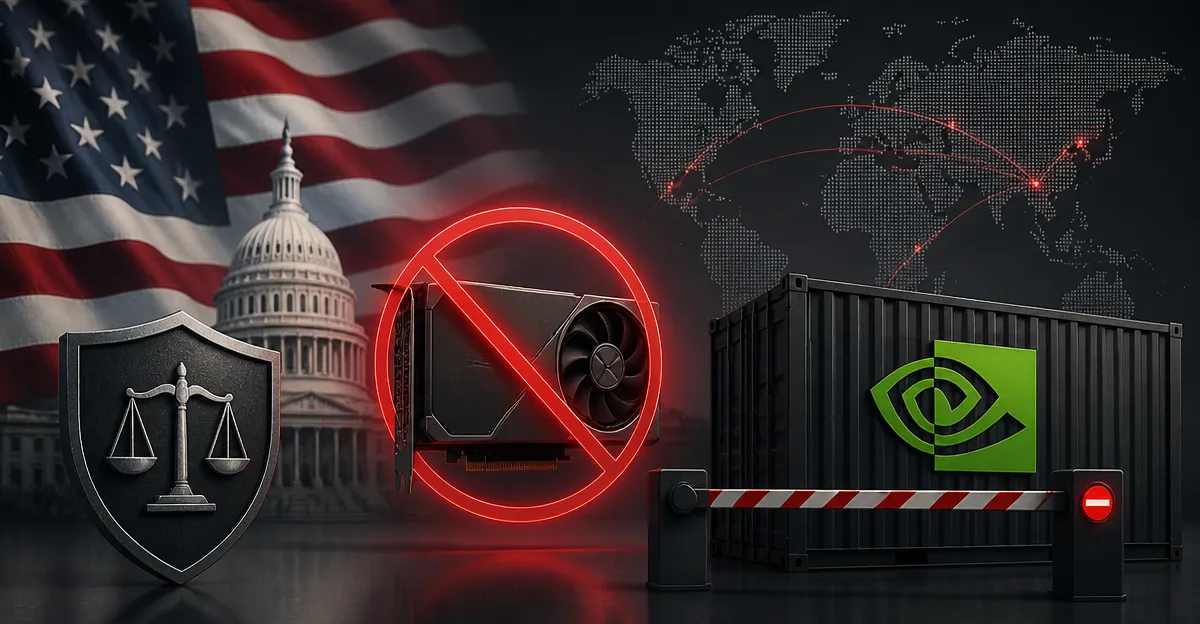
November 25, 2026, (Inside AI) — Senate Democratic leader Chuck Schumer on Tuesday accused Nvidia CEO Jensen Huang of violating federal export control law, escalating a congressional confrontation over advanced chip sales to China and the CEO's reinstatement. In a post on X, Schumer compared Huang's actions to "selling rocket engines to the Soviets during the Space Race." Nvidia did not immediately respond to a request for comment. The accusation lands days before Huang is scheduled to testify publicly before the Senate Banking Committee on December 3, and ahead of a closed-door briefing with three House panels on December 1.
The dispute centers on whether Nvidia's China sales crossed legal limits and whether political pressure shaped Huang's return as CEO. Lawmakers from both parties are calling for new legislation to tighten chip export rules. The timing matters because Huang's testimony will be the first public accounting of the allegations under oath, and because President Donald Trump has openly said he pushed the Nvidia board to reinstate Huang. That admission turns a corporate governance question into a test of whether export enforcement can survive White House intervention.
Schumer's Rocket Engine Comparison Draws A Hard Line
Schumer's post was blunt. He wrote that Huang "shipped extremely advanced chips to China, violating US export control law, in what amounts to the equivalent of selling rocket engines to the Soviets during the Space Race." The comparison is rhetorical, but the underlying legal claim is specific: that Nvidia's shipments breached the Export Administration Regulations, which restrict advanced semiconductors to China. Schumer and other lawmakers say Congress must move quickly on legislation to crack down on those exports. The Senate leader's intervention raises the political cost for Nvidia, which has spent years arguing that its China business complies with shifting rules.
Republican Senator Kevin Cramer told CNBC on Tuesday that more guardrails were needed. "We might even have to put a babysitter on Jensen Huang," Cramer said, adding it would "just make sure that he doesn't do something that is going to risk the United States." The remark, from a Republican, signals that scrutiny of Huang is not purely partisan. It also suggests that any legislative fix could include personal oversight mechanisms, not just company-level restrictions.
The White House's role complicates the picture. Trump said on CNBC that he had pressed the Nvidia board to reinstate Huang and did not think the board would have done so without his action. That statement gives Democrats a direct line of attack: if the president intervened to restore a CEO accused of export violations, then enforcement becomes a question of political will. Nvidia has not publicly detailed the circumstances of Huang's return, and Inside AI could not independently verify the board's internal deliberations.
Republican Representative Pat Harrigan said Monday that for two years he had said privately "there is no way Jensen Huang can argue for the exportation of advanced American chips to China without being compromised. Turns out, well, we all know." Harrigan added that Huang's "reinstatement today at this juncture is a mistake.... We sent a signal that one man's financial impact on our economy outweighs the importance of good governance, good citizenship, and adherence to the law. That is a dangerous precedent to set." His comment ties the export question to a broader argument about whether economic weight should shield executives from accountability.
The allegations also touch on Huang's ties to a woman accused of being a Chinese spy, a matter lawmakers plan to probe at the December 3 hearing. Senator Tim Scott, who chairs the Banking Committee, said Monday that Huang will testify publicly. The panel has not released a witness list beyond Huang. The closed-door House briefing on December 1 will cover similar ground with three panels, according to sources familiar with the schedule.
The export control regime itself has tightened repeatedly since 2022, when the U.S. began restricting sales of advanced AI chips to China. Nvidia has designed downgraded chips for the Chinese market to stay within the rules, but each revision has drawn congressional scrutiny. The current fight is less about any single shipment than about whether the rules have teeth when a company's CEO has direct access to the White House. That question now sits at the center of a public hearing and a legislative push.
For Nvidia, the risk is twofold. A finding of violation could trigger enforcement action and reputational damage. Even without a finding, the hearing will force Huang to defend his record under oath while lawmakers compete to look tough on China. For Congress, the test is whether it can pass export legislation before the next chip cycle. For the White House, the question is whether Trump's admitted intervention helps or hurts the company he says he wanted to protect. Nvidia's stock, a bellwether for the AI trade, has not yet priced in a legal finding, and the company has not commented on the specific allegations.
Huang's testimony on December 3 will be the first public moment when these threads converge. Lawmakers have signaled they will ask about the China shipments, the reinstatement, and the spy allegation. Nvidia's response, and the board's explanation for rehiring Huang, will shape whether this remains a political fight or becomes a legal one. The Senate Banking Committee has not said whether it will call other witnesses. The House panels have not set a public schedule beyond the December 1 briefing.

Sofia spent years studying how machines parse human language before pivoting to cover the systems now rewriting it. She reads technical papers the way others read news and looking for what the numbers are actually saying beneath the headlines.