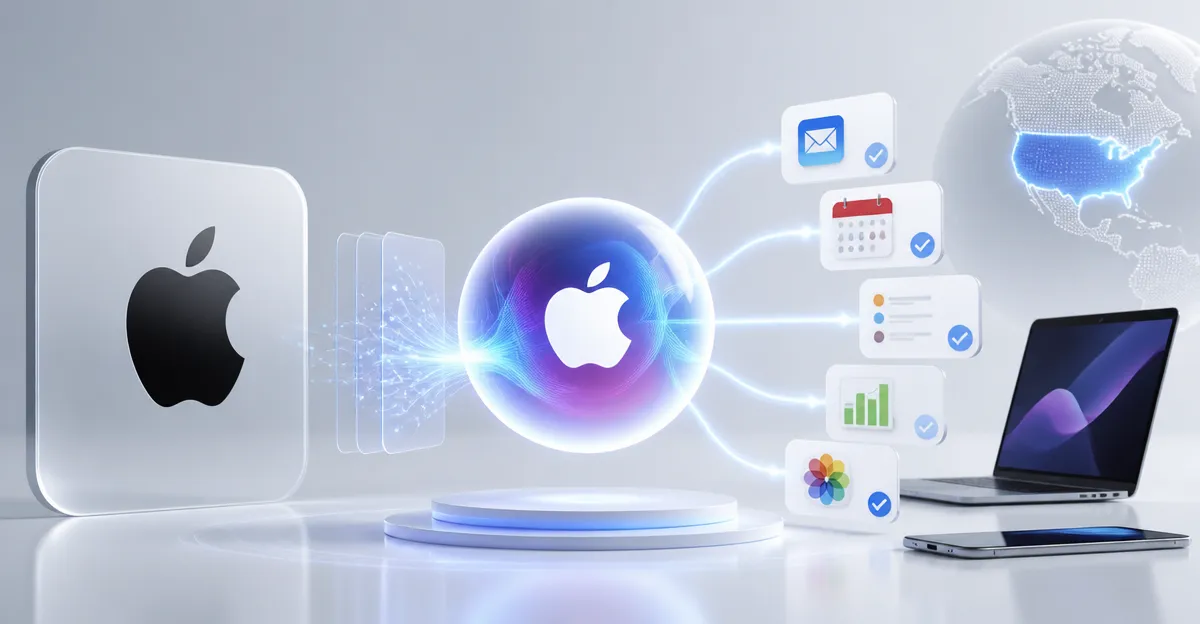
November 24, 2026, (Inside AI) — Apple is developing an AI assistant capable of completing multistep tasks without user input, according to a now-removed job listing first reported by Bloomberg's Mark Gurman. The listing sought a senior engineering manager to lead work on a "proactive, agentic AI assistant." The system would plan and execute tasks across apps, code, APIs, web browsers, and command lines, and coordinate specialized subagents. Apple has not officially announced the project or its release plans.
The disclosure, while unintentional, signals Apple's intent to compete in the emerging market for autonomous AI agents. This market includes Meta's Muse and OpenAI's Dots, both of which aim to reduce user involvement in complex digital workflows. Apple's entry would mark a significant shift from its current AI strategy, which has focused on on-device processing and privacy-preserving features like those in Apple Intelligence. An agent that controls apps and browses the web raises new questions about security, reliability, and user trust.
The job listing described a system that can handle "planning and completing multistep tasks across apps, code, APIs, web browsers, and command lines." It also mentioned "general-purpose computer-use agents" and the need for strong safety measures. This suggests Apple is prioritizing both capability and control. The ability to coordinate subagents implies a modular architecture, where different AI models or processes handle specific parts of a task. Such a design could improve efficiency but also introduces complexity in ensuring consistent behavior and safety.
Apple's move into agentic AI is not entirely surprising. The company has been steadily expanding its AI capabilities, though often with a focus on privacy and integration with its hardware. The job listing, however, points to a more ambitious direction: an assistant that acts autonomously. This could differentiate Apple from competitors by leveraging its tight control over both hardware and software. But it also puts Apple in direct competition with companies that have already made strides in agentic AI.
Meta's Muse and OpenAI's Dots are early examples of AI agents designed to perform tasks on behalf of users. These systems typically rely on large language models to interpret user intent and execute actions. Apple's approach, as hinted by the listing, would involve similar capabilities but with a focus on cross-platform task management. The mention of "command lines" suggests the agent could interact with developer tools, potentially appealing to professional users.
Safety is a critical concern. The listing emphasized building "strong safety measures" into the system. This is essential for any agent that can control apps and browse the web, as errors or malicious exploitation could have serious consequences. Apple's reputation for security and privacy may give it an advantage, but the company will need to demonstrate that its agent can be trusted with sensitive tasks.
The removal of the job listing indicates Apple is not ready to publicly discuss the project. The company often keeps unannounced products secret until they are ready for launch. This approach has worked well in the past, but in the fast-moving AI field, competitors may gain an edge by being more transparent. Apple's silence leaves many questions unanswered: When will this assistant be available? Will it be integrated into Siri? How will it handle user data?
Industry analysts have long speculated that Apple would eventually enter the agentic AI space. The company's focus on user experience and integration could lead to a polished product, but it will need to catch up with rivals that have been working on similar technology for longer. The job listing suggests Apple is still in the early stages of development, as it was seeking a manager to lead the effort.
The broader trend toward agentic AI reflects a shift from passive assistants to proactive systems. Instead of waiting for user commands, these agents can anticipate needs and complete tasks autonomously. This could revolutionize how people interact with technology, but it also raises ethical and practical questions about control and accountability. Apple's entry into this space will likely accelerate these discussions.
For now, Apple has not commented on the job listing or its plans. The company's next moves will be watched closely by competitors, developers, and users alike. If Apple can deliver a safe and reliable agentic assistant, it could set a new standard for AI interaction. But the challenges are significant, and the competition is fierce.

Shamil has a low tolerance for AI that only works in controlled demos. He covers agentic systems and generative AI with the skepticism of someone who has seen too many “revolutionary” tools quietly disappear six months after launch.