November 24, 2026, (Inside AI) — Jensen Huang is back as Nvidia's chief executive, 11 days after resigning over allegations of extramarital affairs, including a reported relationship with a woman suspected of links to Chinese intelligence. The chipmaker confirmed Huang's reinstatement on Monday and said Colette Kress, who served as interim CEO, will return to her role as chief financial officer. Nvidia shares jumped 31 per cent on the news, and the Nasdaq rose more than 6 per cent.
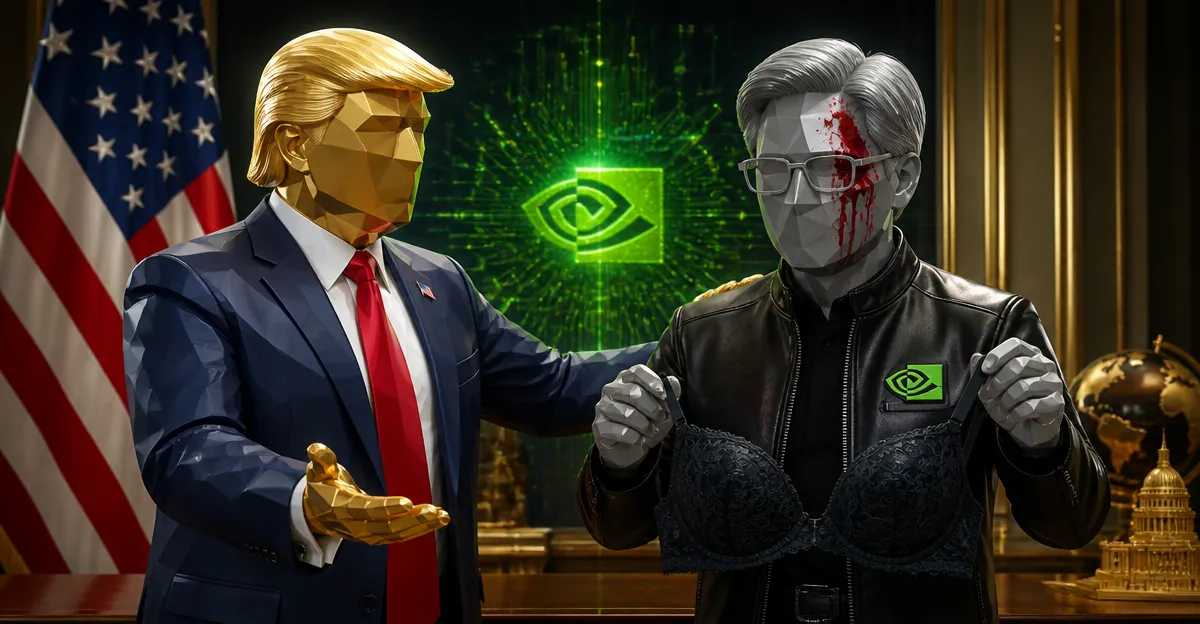
Huang's return ends a turbulent two-week period that began with revelations about his personal life, led to his resignation on November 12, and saw the board initially rule out his comeback. Employee pressure, investor demands, and intervention from US President Donald Trump reversed that decision. The episode raises questions about corporate governance at the world's most valuable chip company and the challenges facing Kress as she resumes oversight of Nvidia's finances amid aggressive AI infrastructure spending.
Kress Faces Scrutiny Over Circular Financing
Kress, 59, joined Nvidia as CFO in 2013 and has more than three decades of finance experience at Microsoft, Cisco, and Texas Instruments. She holds about 4.775 million shares directly and indirectly, according to CNBC. As interim CEO, she struck an optimistic tone on her first earnings call, raising the company's fiscal revenue-growth forecast to about 75 per cent from 70 per cent. She also asserted that it was business as usual at Nvidia and later told media that the board had determined it would not reinstate Huang.
Her brief stint drew both praise and criticism, mainly from those who could not see her as an appropriate replacement for Huang, whom many have hailed as a visionary. Now, as CFO, Kress must ensure that Nvidia's commitments to AI startups and financial arrangements with data-centre operators yield sustainable returns without exposing the balance sheet to excessive risk. Analysts describe these arrangements as circular financing, and investors worry about potential risks if growth in the AI industry slows.
The scrutiny extends beyond Nvidia. Across the AI sector, companies are increasingly acting as both investors and suppliers, creating webs of interdependence that complicate risk assessment. Nvidia's scale makes its financial disclosures a bellwether for the industry. Kress's challenge is to provide transparency that satisfies regulators and investors while preserving the flexibility Nvidia needs to compete.
Huang returned to his office and was welcomed by employees with loud cheers and thunderous applause. "Thank you all for the second chances," Huang told the crowd, adding that he will be a better CEO the second time. Following his unceremonious exit, a sense of frustration and ambiguity prevailed across the company.
Over the past two weeks, Huang became entangled in a major controversy following revelations about alleged extramarital affairs, including a relationship with a Chinese businesswoman suspected by US intelligence of having links to Beijing's spy agency. Soon after, Huang admitted infidelity and apologised to his family and employees. On November 12, he resigned as CEO, with Kress taking over on an interim basis. The board initially ruled out his return. However, following pressure from employees, investors, and US President Donald Trump, Nvidia reinstated Huang on Monday.
The episode has exposed tensions between personal conduct and corporate leadership at a time when Nvidia's technology underpins the global AI boom. It also highlights the concentration of investor confidence in Huang personally. His return may stabilise the stock in the short term, but the board's reversal raises questions about succession planning and governance robustness. Kress's dual role as CFO and former interim CEO positions her as a key figure in addressing those concerns.
Nvidia has not disclosed details of the investigation into the allegations or the terms of Huang's return. The company's shares remain volatile, and analysts will watch Kress's next earnings call for signs of how Nvidia plans to manage its expanding financial commitments.

Shamil has a low tolerance for AI that only works in controlled demos. He covers agentic systems and generative AI with the skepticism of someone who has seen too many “revolutionary” tools quietly disappear six months after launch.