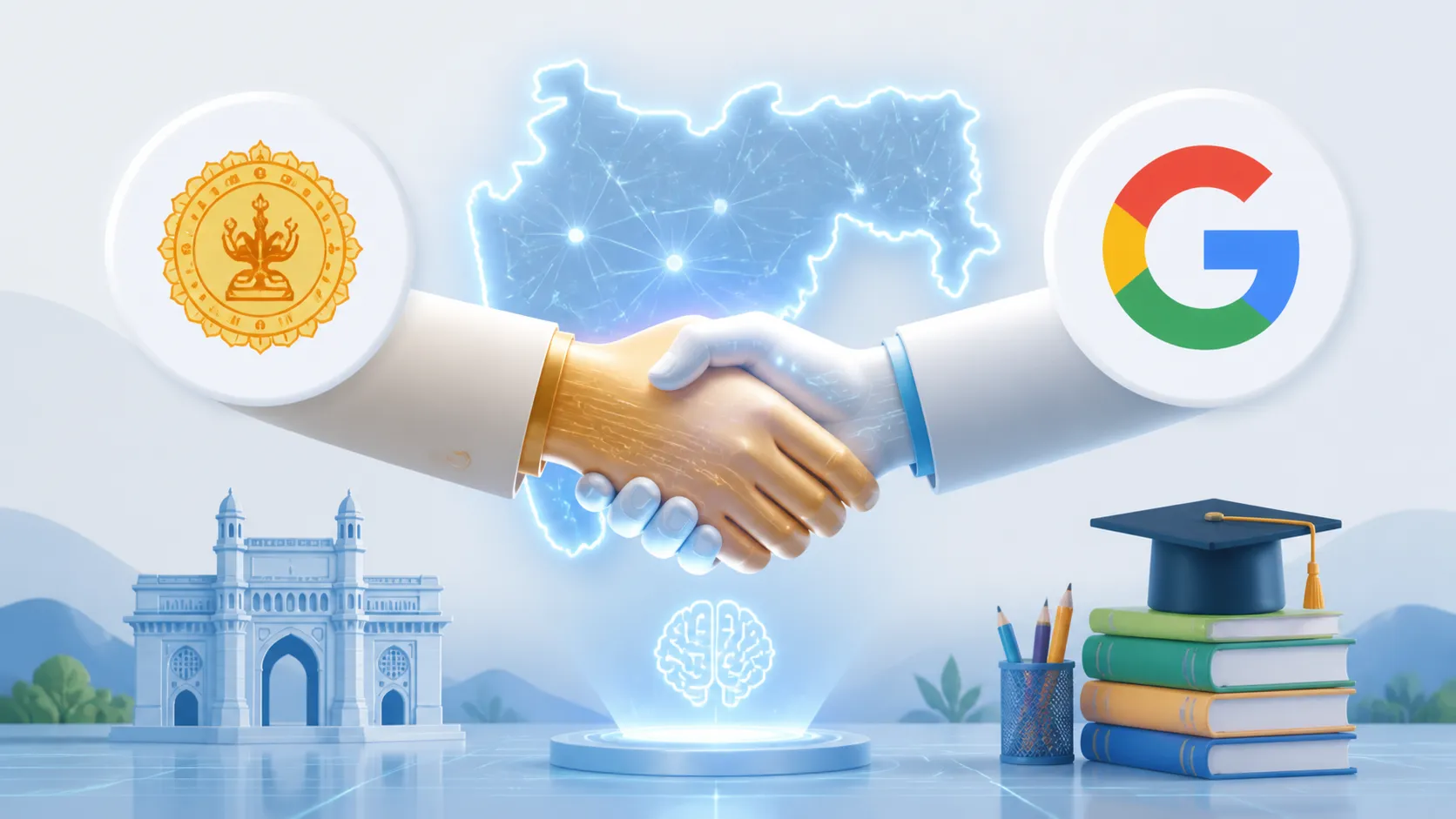
June 20, 2026, (Inside AI) — The Maharashtra School Education Department has partnered with Google for Education to deliver artificial intelligence training to over 400,000 teachers across the state. A memorandum of understanding was signed Friday at Mantralaya in Mumbai, with School Education Minister Dadaji Bhuse presiding.
The Blueprint: Master Trainers and Multilingual Content
The initiative will first train a cadre of master trainers, who will then fan out to instruct teachers in every government and aided school. The entire program comes at no cost to the state. Minister Bhuse stressed that Maharashtra retains full control and will enforce digital safety standards.
Minister of State Pankaj Bhoyar framed the move as a bid to give educators access to world-class instruction. The curriculum will cover AI literacy, digital skills, and the use of Google’s AI tools in classrooms. Training materials will be available in Marathi, Hindi, and English.
Why This Deal Matters Now
This is one of India’s largest public-sector AI upskilling efforts, targeting the backbone of its education system. With over 400,000 teachers, the program could reshape how AI enters classrooms in a state of 120 million people. It also signals a shift from piecemeal edtech pilots to systemic, state-led integration.
Read: Punjab to Introduce AI Curriculum in Government Schools from August 2026
The timing coincides with India’s push to embed AI in national education policy. Yet, the reliance on a single corporate partner raises questions about vendor lock-in and data stewardship—especially when minors are involved.
Behind the Promises: Digital Safety and Control
Minister Bhuse’s promise of “digital safety” is notable but vague. No details were released on data handling, teacher consent, or whether Google’s tools will process student information. India lacks a comprehensive data protection law for education, leaving such terms to contractual fine print.
Google’s education tools have faced scrutiny elsewhere. In Denmark and the Netherlands, regulators flagged privacy risks in Google Workspace for Education, leading to stricter data processing agreements. Maharashtra’s deal could invite similar examination.
What the Announcement Leaves Out
The release does not mention a timeline, teacher assessment metrics, or how the training will adapt to varying digital infrastructure. Many rural schools in Maharashtra still struggle with connectivity and device access—factors that could limit the program’s reach.
Also absent is any mention of pedagogical integration. AI literacy for teachers is one thing; changing how they teach with AI is another. Without ongoing support and curriculum redesign, the training risks becoming a checkbox exercise.
The Bigger Picture: AI in Indian Classrooms
Maharashtra’s move follows smaller AI training pilots in states like Andhra Pradesh and Telangana. But the scale here is unprecedented. If successful, it could become a template for other states—or a cautionary tale about public-private partnerships in education.
Read: India Ranks 13th in AI-Economy Readiness but Skills Gap Threatens Growth
The program aligns with Google’s broader strategy to expand its education footprint in emerging markets. For Maharashtra, it offers a fast track to AI readiness, but the long-term costs—in autonomy, data, and dependency—remain to be calculated.