August 4, 2026, (Inside AI) — AI-generated text has become indistinguishable from human writing in many contexts, pushing detection tools to the forefront of digital integrity battles. In 2026, the cat-and-mouse game between content generators and detectors has intensified, with platforms like Originality.ai, Copyleaks, and GPTZero racing to keep pace with the latest large language models. These tools are now embedded in workflows across education, publishing, and enterprise, yet their limitations remain stark.
The stakes are high: academic institutions risk credential devaluation, publishers face trust erosion, and businesses grapple with authenticity in marketing. No single detector offers a silver bullet, but the market has stratified into specialized solutions. Originality.ai dominates the publisher and agency segment by bundling AI detection with plagiarism scanning, while Copyleaks courts enterprises with multilingual analysis and compliance features. Turnitin, a legacy player in academic integrity, has layered AI writing detection onto its existing plagiarism framework, directly targeting the surge in student use of generative AI.
Detection Arms Race Intensifies
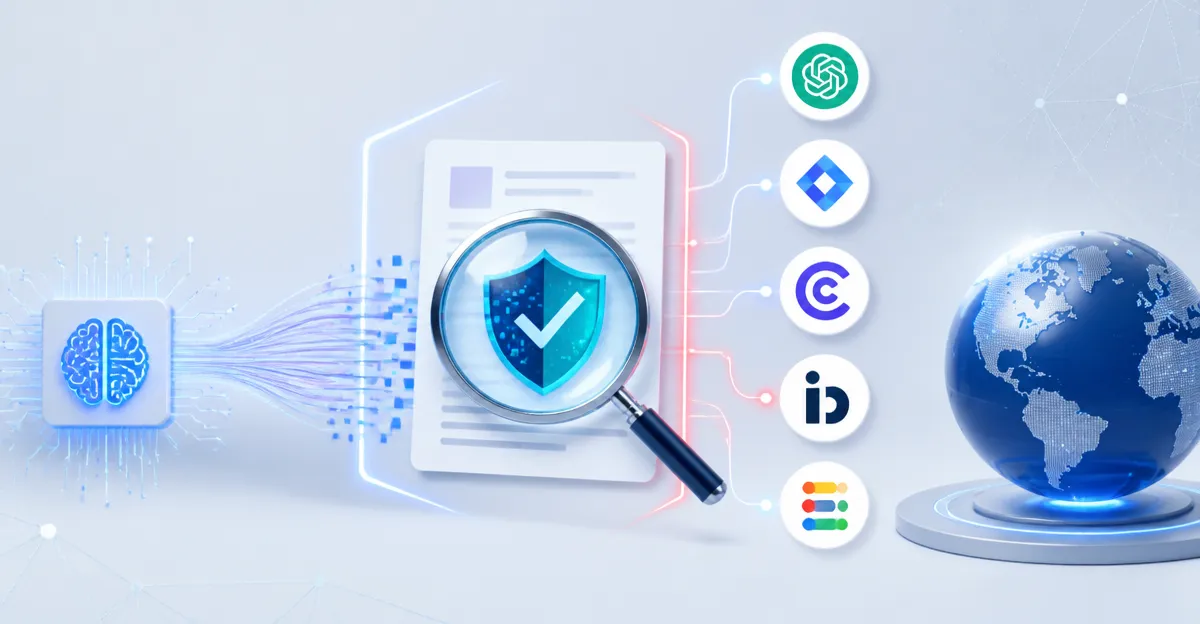
Originality.ai remains a top choice for content teams, supporting the newest AI models and delivering probability scores that guide editorial decisions. Its dual functionality—flagging both AI text and copied passages—reduces tool sprawl for websites managing high-volume output. Meanwhile, Copyleaks has expanded its enterprise footprint by adding support for over 30 languages and integrating with learning management systems. The company reports a 40% increase in government and corporate clients year-over-year, reflecting regulatory pressure to disclose AI use.
GPTZero, originally built for classrooms, now serves recruiters and journalists. It analyzes burstiness and perplexity—metrics that quantify textual randomness—to estimate AI involvement. Winston AI has emerged as a strong competitor by tackling a blind spot: scanned documents. Its optical character recognition (OCR) engine can process PDFs and handwritten submissions, a feature that appeals to legal firms and archival projects. Sapling.ai fills the real-time niche, offering browser extensions and API integrations that check content as it’s typed, a boon for customer support teams wary of canned AI responses.
Yet experts caution against over-reliance. Dr. Emily Chen, a computational linguist at Stanford University, notes: “Detectors are probabilistic tools, not arbiters of truth. They can be fooled by paraphrasing attacks or fine-tuned models, and false positives disproportionately affect non-native English writers.” This echoes findings from a 2023 study on AI text detection robustness, which showed that simple paraphrasing reduces accuracy by up to 30%.
False Positives Haunt Classrooms
Turnitin’s AI detection module, now active in over 15,000 institutions, has faced backlash after multiple reports of students being wrongly accused of cheating. The company maintains that its indicator should trigger a conversation, not a verdict, but educators often lack training to interpret the scores. In response, the Turnitin team has published guidance emphasizing human review and contextual investigation, yet the tension persists.
Copyleaks and Originality.ai have both introduced confidence intervals and source highlighting to aid manual verification. These features let users see which sentences triggered the AI flag, enabling more nuanced judgments. Still, the fundamental problem remains: as language models become more fluent, the statistical fingerprints that detectors rely on fade. OpenAI’s own classifier was shut down in 2023 due to low accuracy, and no major model provider currently offers a reliable detection API.
The industry’s trajectory points toward layered authentication rather than standalone detection. Combining stylometric analysis, metadata inspection, and version history tracking could provide stronger evidence of human authorship. For now, the best practice is a hybrid approach: use detectors as a triage mechanism, then apply human expertise to verify. The cost of getting it wrong—whether a false accusation or an undisclosed AI-generated news article—is too high.