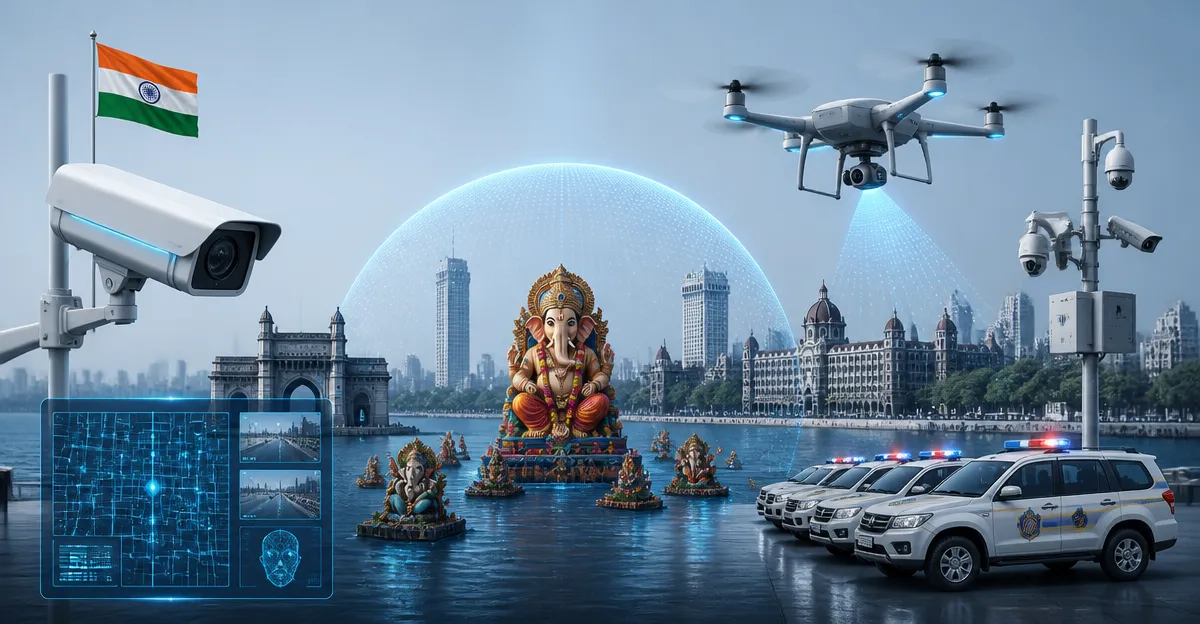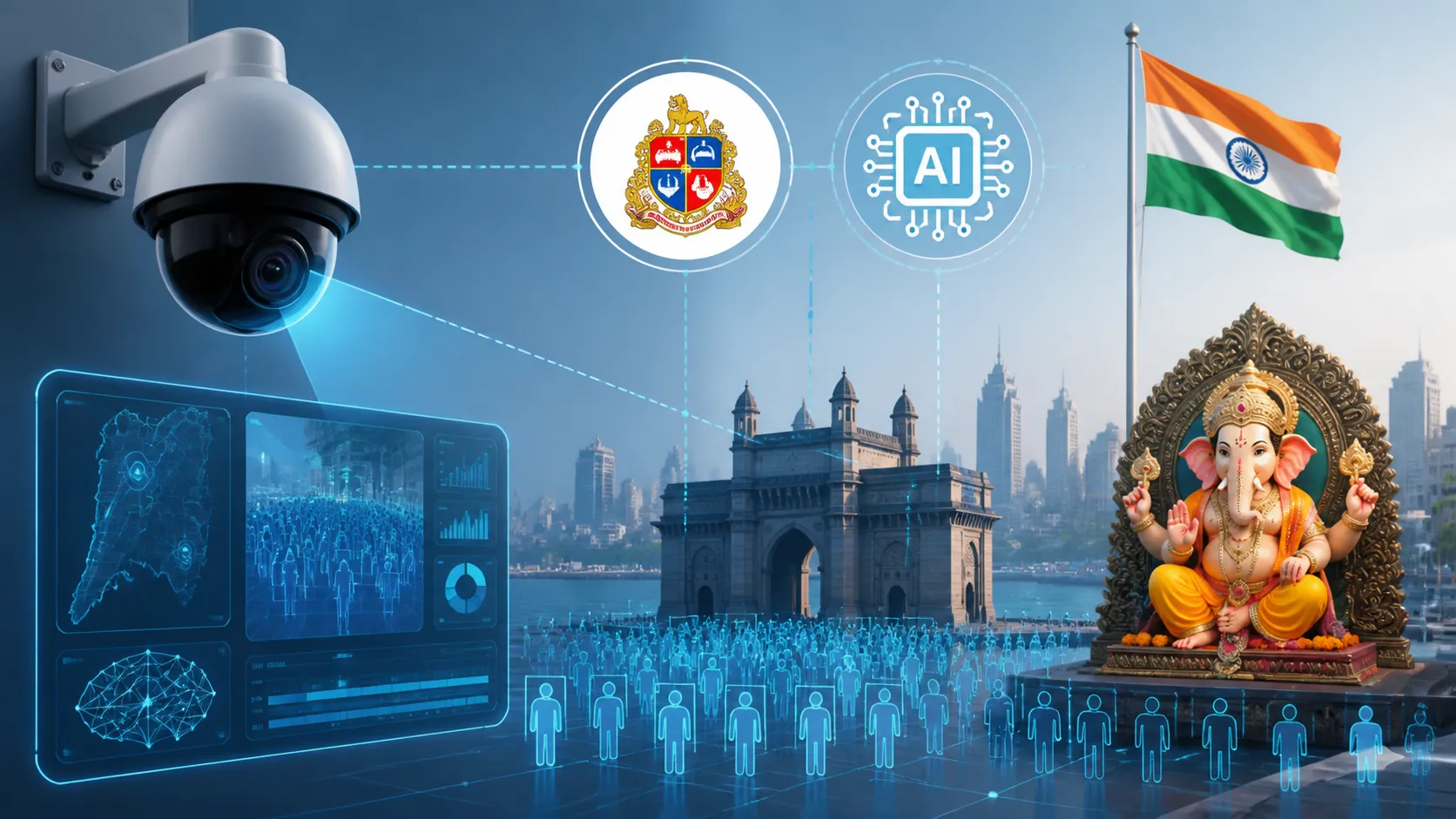
June 25, 2026, (Inside AI) — The Brihanmumbai Municipal Corporation (BMC) has greenlit an AI-driven crowd-monitoring pilot at five of Mumbai’s busiest tourist and religious sites ahead of Ganeshotsav. Locations include the Gateway of India, Siddhivinayak Temple, Juhu Beach, Dadar Beach, and Girgaon.
The system will deliver real-time footfall analytics, counting crowds and tracking movement patterns. It marks a shift from the city’s 10,000 passive surveillance cameras to active, data-generating sensors. Officials aim to use the insights for sanitation, water supply, traffic, and security planning.
Tenders will follow once cost estimates and logistics reports are finalized. The pilot’s urgency is tied to the massive floating populations during the festival, which strain civic infrastructure.
BJP councillor Tejinder Singh Tiwana, who proposed the project, stated:
“The absence of real-time crowd data often creates challenges in sanitation, drinking water supply, traffic management, public amenities, and security. Therefore, a pilot project will be launched in at least five major tourist or religious destinations using AI-powered CCTV technology to monitor visitor footfall in real time.”
He added that analytics will bolster public safety, optimize services, and support Mumbai’s Smart City goals. A civic official told The Indian Express that localized war rooms could emerge if the system succeeds, extending the disaster management department’s current CCTV monitoring.
The technology promises to reshape police deployment and crowd control during peak seasons. However, details on the AI models—such as edge computing versus cloud processing—remain undisclosed. Privacy safeguards and data retention policies have not been outlined, a gap that could draw scrutiny given India’s evolving data protection landscape.
Digital Street Museums Layer History onto Mumbai’s Roads
A second AI-backed initiative will embed QR codes on the city’s blue street nameboards. Scanning them launches an interactive dashboard with animations and videos detailing the local history and the figures behind the road names.
Under the Mumbai Municipal Corporation Act, nearly 19,000 roads honor freedom fighters, scholars, poets, and social workers. Tiwana noted the codes will also unpack area-specific histories, turning every junction into a micro-museum.
This low-cost digital layer could engage tourists and residents alike, though its success hinges on consistent maintenance and content updates. Critics may question whether QR codes on busy streets will attract enough scans to justify the investment.
Both projects reflect a broader municipal push to weave AI into urban governance. While the crowd-monitoring pilot addresses immediate festive pressures, the digital museums offer a long-term cultural asset. Together, they test Mumbai’s appetite for data-driven public services.