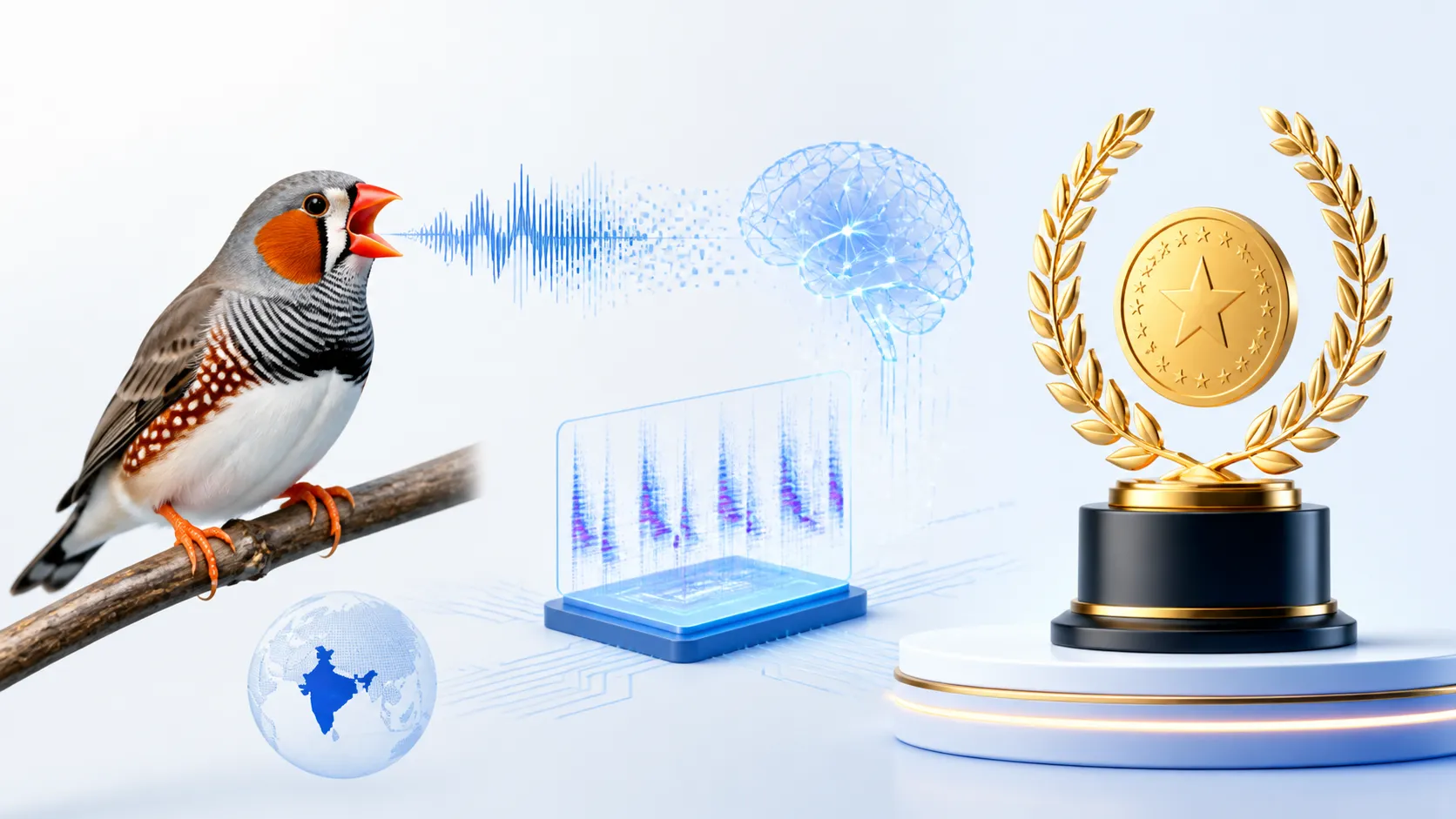
June 27, 2026, (Inside AI) — A University of California, Berkeley researcher has won a $1,00,000 prize for using machine learning to decode the core vocal repertoire of zebra finches, marking a pivotal advance in the quest for two-way communication between humans and animals.
Dr Julie Elie received the 2026 Coller-Dolittle Prize for Two-Way Interspecies Communication after over 15 years of studying the small, highly vocal songbirds. Her work identified 11 core calls and their meanings, revealing how the birds announce identity, activity, and recognition through unique vocal signatures.
The prize, launched in 2024 by the Jeremy Coller Foundation and Tel Aviv University, honors advances in animal communication. A separate $10 million grand prize awaits anyone who achieves genuine two-way dialogue with animals.
Elie’s breakthrough relied on recording thousands of calls, classifying them, and applying machine learning to spot recurring patterns. The approach harnessed AI’s ability to sift through massive datasets far faster than manual analysis, a shift that is reshaping the entire field.
Read: Global AI models struggle with Indian wildlife sounds. 59 volunteers built a fix.
Professor Jonathan Birch, a philosopher at the London School of Economics and prize judge, called the work “absolutely phenomenal.”
Zebra finches were chosen for their constant chatter, which provided a rich dataset. Elie’s findings show that the birds embed individual identity into each call, regardless of the message—a complexity once thought exclusive to higher mammals.
Professor Yossi Yovel of Tel Aviv University, who chaired the judging panel, labeled the achievement “a key moment in the field” but stressed that true two-way communication remains a formidable scientific hurdle.
Yet Jeremy Coller, the prize’s founder, struck a more bullish tone. He predicted that AI advances could crack the code of animal communication by the end of the decade, potentially transforming how humans interact with other species.
While no one expects dinner-table chats with birds soon, Elie’s work supplies the strongest evidence yet that many species communicate with far greater sophistication than previously assumed. As machine learning tools grow more powerful, they may soon decode not just zebra finches but a whole menagerie of animal languages.
Read: AI Unwraps 2,000-Year-Old Herculaneum Scroll, Revealing Lost Stoic Text
The prize also underscores a broader trend: AI is becoming the indispensable tool for decoding nature’s oldest data streams, from whale songs to prairie dog alerts. Elie’s win is both a capstone on 15 years of meticulous research and a launchpad for a new era of interspecies understanding.