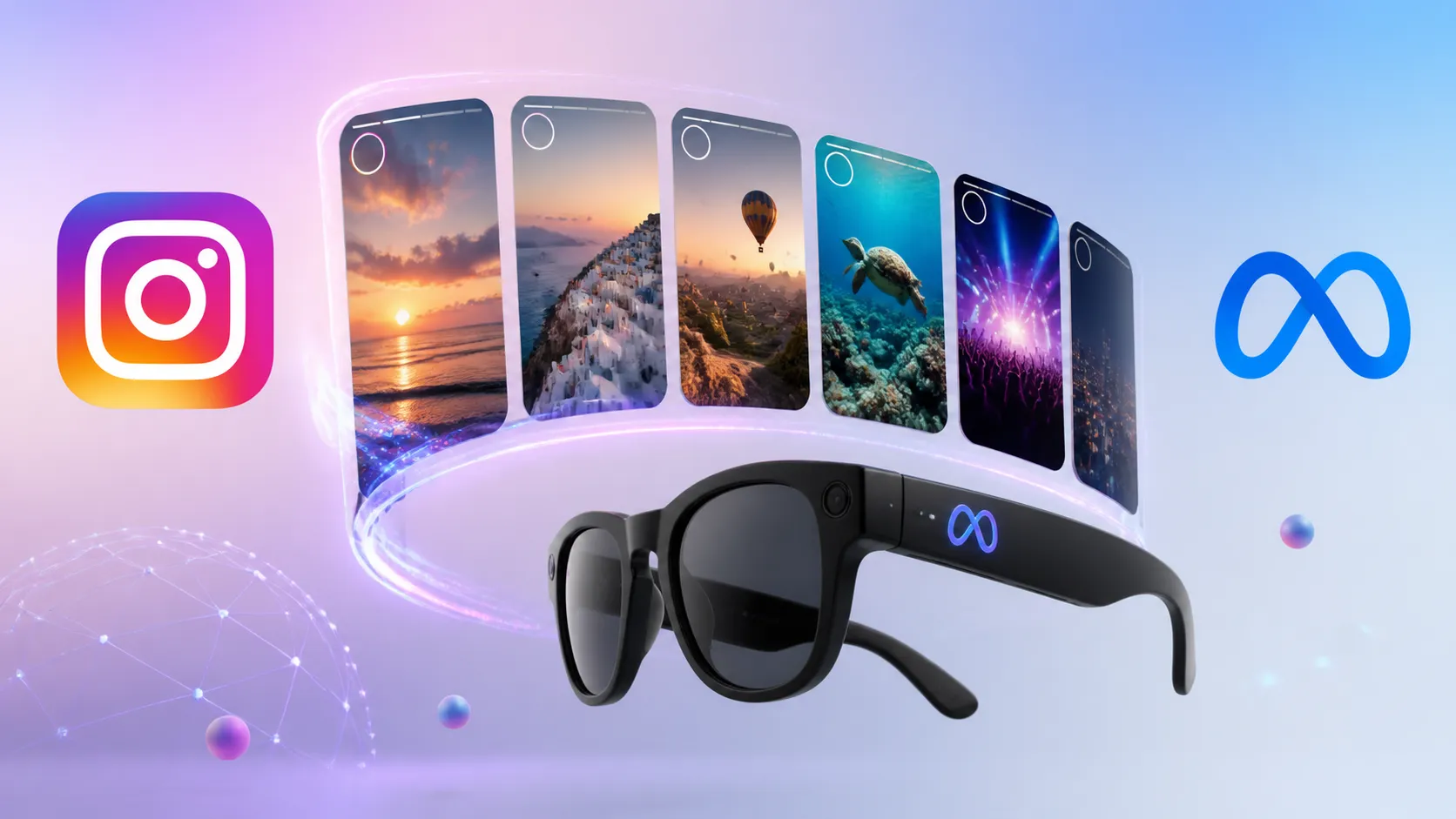
July 2, 2026, (Inside AI) — Instagram launched new Story creation tools tailored for Meta’s smart glasses ecosystem, including Ray-Ban Meta, Oakley Meta, and Meta Glasses. The features aim to transform first-person video storytelling with interactive and synchronized capabilities.
The headline addition is Spin View, an interactive Story format that lets viewers explore footage beyond a fixed frame. By rotating or moving their smartphones, audiences can pan across a creator’s field of view, experiencing the scene from the creator’s perspective.
Instagram also introduced Multi-Cam, which synchronizes footage recorded simultaneously on Meta smart glasses and a smartphone into a single Story. This allows creators to present two viewpoints at once—first-person from the glasses and a traditional selfie angle from the phone.
New native editing tools include Expand, for reframing wide-angle footage, Audio, which reduces background noise and enhances voice, and Speed, for adjusting playback rates. These controls are accessible directly in the Instagram Story editor for media captured with the supported glasses.
Read: Facebook Launches AI-Powered Creator Studio App in India to Boost Creator Growth
Hands-Free Storytelling Gets a Technical Upgrade
The Spin View feature relies on the wider field of view captured by Meta’s glasses cameras. When a viewer tilts their phone, the app adjusts the visible portion of the video in real time, creating a pseudo-360-degree effect without requiring special cameras.
Multi-Cam’s automatic synchronization uses timestamps and device metadata to align clips. This bypasses the need for manual editing, lowering the barrier for creators who want multi-angle narratives. The feature could appeal to vloggers, athletes, and event attendees.
Expand works by cropping into the wide-angle footage, allowing creators to recompose shots after capture. Audio processing likely uses beamforming and noise suppression algorithms, while Speed offers standard slow-motion and timelapse effects.
These tools are part of Meta’s strategy to make its wearables indispensable for content creation. By embedding editing directly into Instagram, the company reduces friction between capture and publish, potentially increasing usage of its glasses.
Wearable Integration Faces a Privacy and Adoption Gap
Meta’s push into first-person video raises privacy concerns. Smart glasses with cameras have historically faced backlash, as seen with Google Glass. Meta’s devices include recording indicators, but public acceptance remains mixed, especially in private spaces.
Competitors like Snapchat Spectacles have offered similar first-person capture but struggled with mainstream adoption. Meta’s advantage is its massive social platform integration, but the glasses’ price and style may limit uptake beyond early adopters.
Read: Instagram’s ChatGPT ’80s Photo Trend Goes Viral
The announcement did not mention any new privacy controls for subjects captured in Spin View or Multi-Cam. Without clear consent mechanisms, creators could inadvertently share footage of bystanders, reigniting debates on surveillance and consent.
Industry analysts note that while the features are innovative, the real test is whether they inspire a new genre of storytelling or remain niche gimmicks. The success hinges on creator adoption and audience engagement with these interactive formats.
Instagram’s move aligns with Meta’s broader metaverse ambitions, where blending physical and digital experiences is key. The tools could eventually extend to augmented reality overlays, but for now, they focus on enhancing raw first-person video.