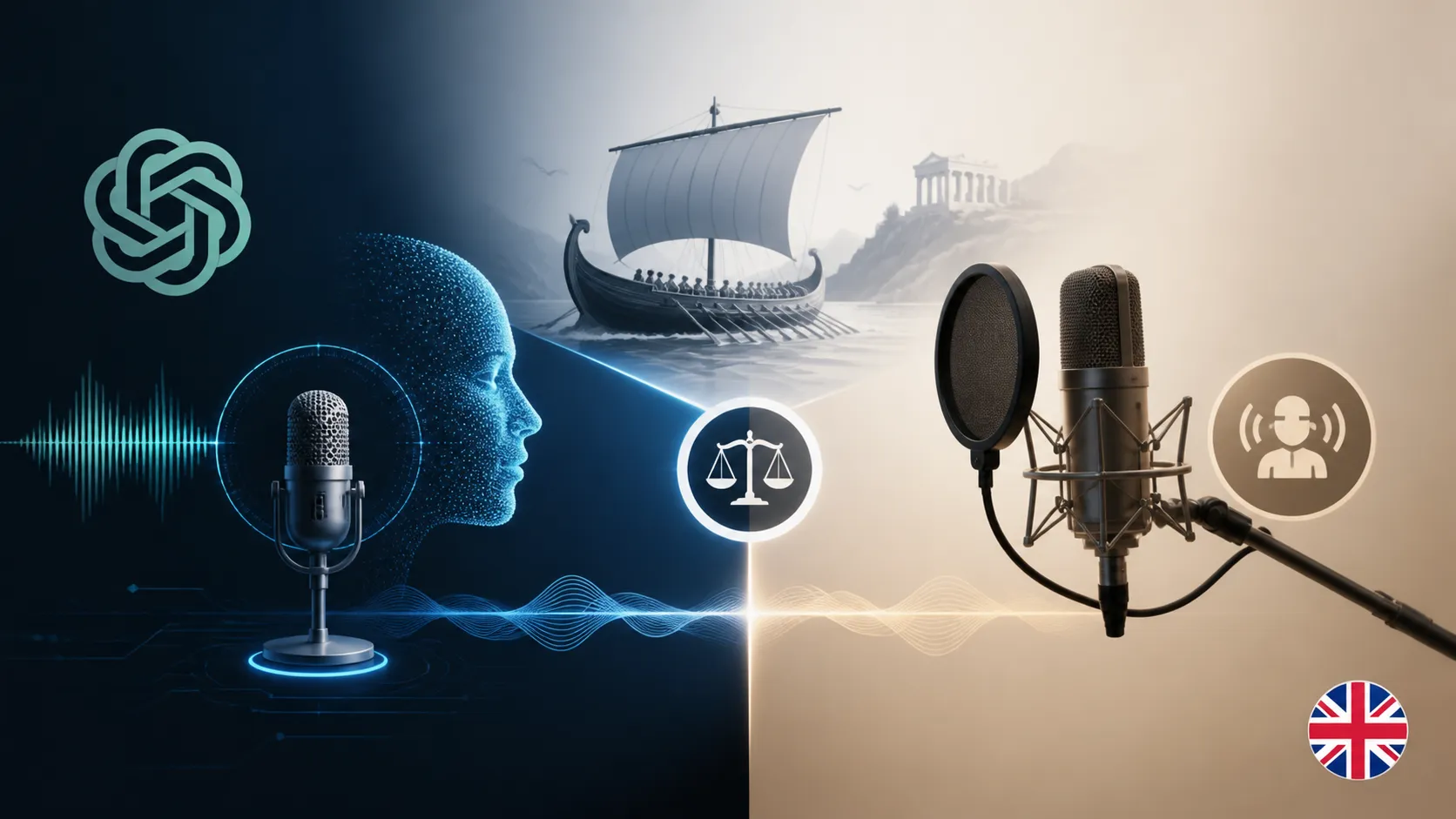
July 2, 2026, (Inside AI) — An AI-generated version of Sir Michael Caine’s voice will narrate a new audiobook of Homer’s The Odyssey, timed for release before Christopher Nolan’s film adaptation on July 17. The project, authorized and compensated by Caine himself, uses voice cloning technology from an unnamed platform that also offers synthetic narrations from Maya Angelou, Alan Turing, Liza Minnelli, and Art Garfunkel.
The announcement has reignited debate over AI’s role in creative industries. While Caine’s participation is consensual, critics argue that such deals normalize synthetic performances and threaten emerging voice artists who lack the star power to compete with digital replicas of legends.
The Consent Paradox and the Erosion of Opportunity
Sir Michael Caine’s gravelly Cockney baritone—famous for the catchphrase “Not a lot of people know that”—is a cultural touchstone. His approval of the AI narration might seem harmless, but it masks a deeper problem: every authorized AI clone shrinks the market for living artists.
Platforms offering licensed synthetic voices from deceased icons like Angelou and Turing further entrench this dynamic. While estates and stars profit, unknown narrators lose potential work. The audiobook industry, already disrupted by text-to-speech tools, now faces a future where publishers prioritize recognizable AI voices over human talent.
Voice actor advocacy groups have long warned of this trend. The National Association of Voice Actors (NAVA) has pushed for stricter consent and compensation frameworks, but high-profile deals like Caine’s undermine those efforts by making AI narration seem inevitable and even prestigious.
Read: Modulate Secures $25M to Scale Frontier Audio-Native AI Architecture Against Monolithic LLMs
Flawed Perfection: Why Human Narration Endures
Proponents of AI narration tout consistency and cost savings, but they miss a crucial element: imperfection. Caine himself once reflected on his early acting struggles, noting the charm of human error. In a BBC Radio 2 interview, he recalled,
“They gave me a little part, about ten lines. Eight of which I screwed up.”
That vulnerability is absent in AI. A synthetic voice can mimic cadence but cannot interpret a text with genuine emotional spontaneity. It cannot decide to whisper a line meant to be shouted, or linger on a word out of instinct. The result is technically proficient but artistically sterile.
This distinction matters for a work like The Odyssey, which originated in oral tradition. Ancient bards performed the epic with improvisational flair, adapting to audiences. An AI narrator, however advanced, lacks that living connection. It can replicate a voice, not a soul.
Comparisons to other iconic voices reinforce the point. Indian superstar Amitabh Bachchan’s resonant baritone is sought after for public announcements, but audiences prefer the man himself over any impersonator. AI clones, no matter how accurate, remain duplicates—lacking the original’s irreplaceable presence.
The entertainment industry has already seen the dangers of digital likenesses. The final season of Lisa Kudrow’s The Comeback depicted a character who accidentally signs away her image and is replaced on her own show. Today, artists are willingly doing the same, trading long-term creative legacy for short-term gain.
Ironically, using AI to narrate The Odyssey—a celebration of human imagination passed down through generations—underscores the tension. The epic survived centuries because of human performers who reinvented it. AI threatens to freeze that tradition into a single, synthetic rendition.
Yet the technology itself is a product of human ingenuity. The question is whether it will serve as a tool for artists or a replacement. For now, the rise of AI narrators casts a shadow over countless aspiring voice actors who may never get their chance to interpret the classics. As the audiobook market expands, the graveyard of foiled ambitions grows alongside it.