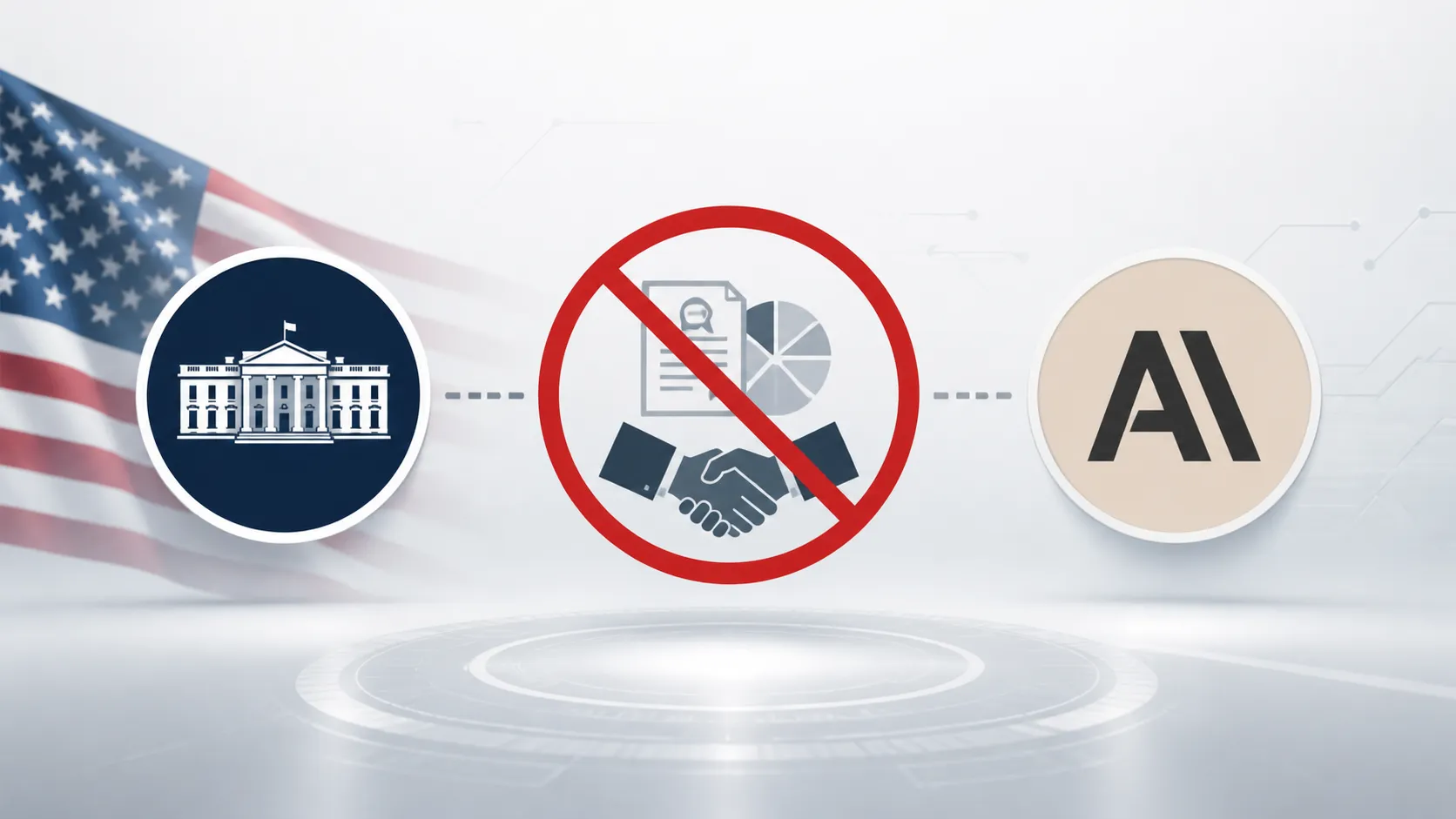
July 3, 2026, (Inside AI) — Anthropic and the Trump administration have not held talks about the government acquiring an equity stake in the AI company, a source familiar with the matter confirmed on Thursday. The disclosure arrives amid swirling speculation about federal ownership in frontier AI labs.
The White House, Commerce Department, and Anthropic did not respond to requests for comment. The silence leaves room for interpretation as the industry navigates unprecedented government interest.
The revelation follows a Financial Times report that OpenAI has discussed granting the U.S. government a 5% stake. That potential arrangement would give Washington a direct financial interest in a leading AI developer.
This divergence highlights the fractured approach among top AI firms to government oversight. While OpenAI appears open to shared ownership, Anthropic has not entertained similar conversations.
The Ownership Debate Splits AI’s Frontier
The contrast between Anthropic and OpenAI underscores a strategic fault line. OpenAI’s reported willingness to cede a 5% equity position suggests a bet that government partnership can ease regulatory friction.
For Anthropic, the absence of talks signals a preference for independence. The company, founded by ex-OpenAI executives, has emphasized safety and constitutional AI principles. A government stake could complicate that mission.
Industry observers note that equity stakes are not the only path to influence. The Commerce Department already wields power through export controls and funding for AI safety research. Formal ownership would mark a dramatic escalation.
Washington’s scrutiny has intensified as AI models grow more capable. Lawmakers worry about misuse in disinformation, cyberattacks, and bioweapons. They also question whether the public will share in the wealth generated by trillion-dollar valuations.
Why Government Stakes Are Suddenly on the Table
The push for government equity can be traced to a convergence of national security fears and populist economics. The Trump administration has framed AI dominance as essential to competing with China.
At the same time, critics argue that a handful of private companies should not control technologies that reshape society. A government stake could ensure public accountability and a direct return on taxpayer-funded research that enabled modern AI.
Yet the mechanics remain murky. Would the government buy shares, or would companies donate them? How would voting rights work? And would such stakes trigger conflicts with foreign investors or antitrust law?
No federal agency has publicly outlined a framework. The OpenAI discussions, if confirmed, would be the first concrete step. Anthropic’s distance from the idea suggests that any government equity push would face industry resistance.
The Financial Times report did not detail how a 5% stake would be structured. OpenAI’s complex corporate setup—with a capped-profit arm governed by a nonprofit—adds layers of legal complexity.
For now, the Anthropic disclosure clarifies one thing: the AI industry is not monolithic in its response to government overtures. The coming months will test whether Washington can craft a unified approach or must negotiate firm by firm.
Reporting by Karen Freifeld and Alexandra Alper originally appeared via Reuters. Additional context and analysis by Inside AI.