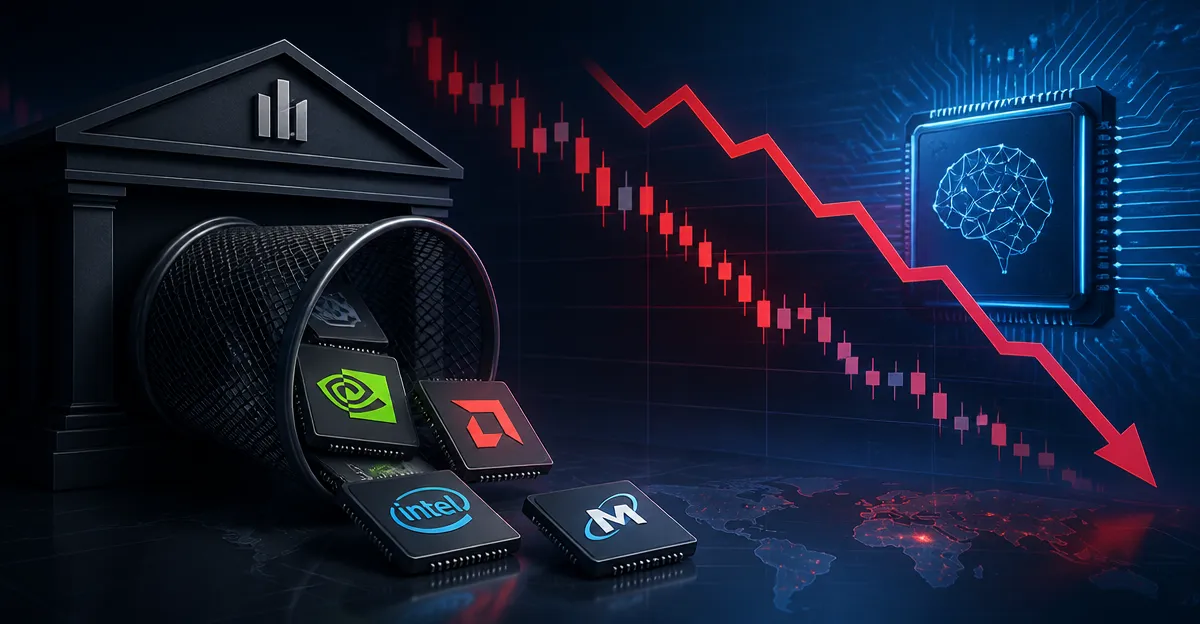
July 6, 2026, (Inside AI) — Hedge funds unloaded U.S. tech hardware stocks for the fourth consecutive week, Goldman Sachs revealed in a client note on Friday. The selling spree aligns with a sharp 4.2% drop in the Philadelphia Semiconductor Index (SOX) for the week ending July 3, intensifying just before a wave of earnings reports from chip giants.
The rotation out of semiconductors, the year’s market darlings, signals mounting unease. Investors are questioning the massive capital pouring into artificial intelligence infrastructure and the timeline for tangible returns. The SOX index has been a bellwether for AI-fueled exuberance, but recent swings betray a crisis of confidence.
Goldman’s prime brokerage data, which tracks hedge fund flows, shows tech hardware was the most net-sold sector on its platform that week. The note, reported by Reuters, didn’t name specific stocks, but the trend mirrors a broader retreat from the high-flying AI trade that dominated early 2026.
The Profit-Taking Precipice
Semiconductor stocks have been the engine of equity gains this year. Yet, the narrative is fraying. A cocktail of profit-taking and skepticism over AI spending has triggered violent price swings. The question isn’t whether AI will transform industries, but when the billions in outlays will translate into earnings.
This isn’t the first time hype has outpaced reality. The dot-com bubble offers a cautionary parallel: infrastructure build-out preceded profitable applications by years. Today’s AI boom echoes that pattern, with chipmakers like Nvidia and AMD riding a wave of demand that may take longer to monetize than bulls anticipate.
Compounding the anxiety, the upcoming earnings season could be a reckoning. If chip companies fail to justify their valuations with robust guidance, the sell-off may deepen. Hedge funds, often the canary in the coal mine, are already hedging their bets.
When the Smart Money Retreats
Goldman’s note underscores a strategic shift. Hedge funds aren’t just trimming positions; they’re aggressively rotating out of hardware. This contrasts with retail investors, who have been net buyers of semiconductor ETFs, according to flow data from VettaFi. The divergence hints at a classic institutional fade.
Some analysts argue the pullback is healthy. “A correction was overdue,” said Dan Ives of Wedbush Securities in a recent note, though he remains bullish on the AI revolution. Others are less sanguine. David Trainer of New Constructs warns that many chip stocks are “dangerously overvalued” based on flawed cash flow assumptions.
The macro backdrop adds pressure. Persistent inflation and hawkish central bank rhetoric have soured risk appetite. Tech stocks, with their long-duration cash flows, are especially sensitive to rate expectations. The 10-year Treasury yield inched up to 4.35% that week, further dimming the allure of growth names.
Meanwhile, geopolitical tremors are rattling supply chains. New export controls on advanced chip technology to China, rumored to be under discussion in Washington, could choke off a key revenue stream. The memory chip market, already grappling with a glut, faces additional headwinds from sluggish smartphone demand.
Despite the gloom, AI spending isn’t slowing. Hyperscalers like Microsoft and Amazon are still building data centers at a breakneck pace. But the market is now demanding a clearer path to profitability. As one hedge fund manager told Reuters, “We’re in a show-me phase.”
The coming weeks will test the AI thesis. Earnings from Taiwan Semiconductor (TSMC) and ASML will offer clues on demand durability. For now, the smart money is stepping back, leaving the rest to wonder if the AI trade has peaked.