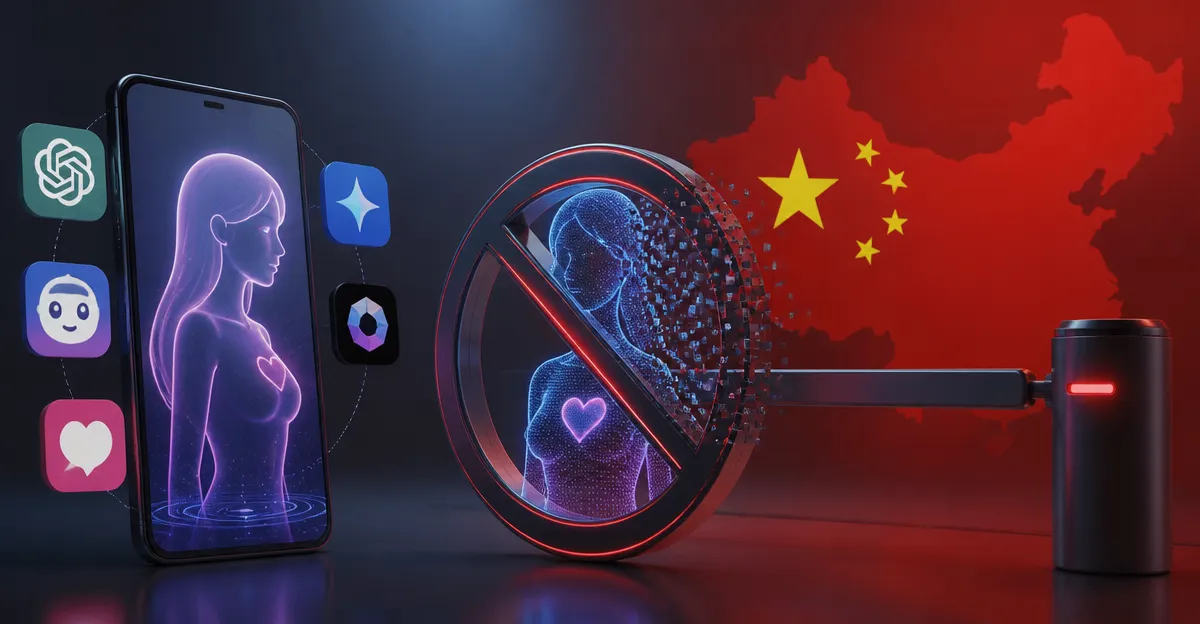
July 7, 2026, (Inside AI) — China’s largest technology companies are disabling customizable persona features in their AI chatbots, effective July 15, to comply with sweeping new regulations on anthropomorphic artificial intelligence. The move directly targets AI companionship apps that allow users to create virtual romantic partners, relatives, and other intimate digital relationships.
ByteDance’s Doubao, the country’s most popular chatbot, and Alibaba’s Qwen will remove persona-shaping capabilities by the deadline. Tencent had already stripped a similar feature last week. NetEase Cloud Music’s AI companion app Miaoshi will shut down entirely on July 14.
The new rules, issued by the Cyberspace Administration of China (CAC), ban providers from offering virtual intimate relationships—including virtual family members or romantic partners—to minors. They also mandate parental or guardian consent for any anthropomorphic AI services offered to children under 14.
These features let users craft chatbot personas through natural language prompts, adjusting identity, tone, expertise, and conversational style. The result was a booming market for AI girlfriends, boyfriends, tutors, and even digital relatives—a phenomenon that has exploded among lonely teenagers, isolated seniors, and others seeking connection.
The crackdown follows a year of escalating concern. Last year, a Beijing court warned that over 100 AI companion apps on the market risked harvesting personal data without consent. In April, the CAC launched a four-month nationwide campaign against AI application misconduct. The first phase targeted agents stealing user data or account credentials, resulting in the removal of more than 3,500 noncompliant AI products—including mini-programs, apps, and agents.
The next phase is expected to confront AI-generated misinformation and obscene content. But the immediate trigger appears to be a surge in what experts call “AI psychosis”—a non-clinical term describing users losing touch with reality after intense interactions with role-playing bots. While AI companionship previously operated in a regulatory gray area, the ease with which these services veered into explicit content has drawn fresh scrutiny.
Industry observers note the rules align with China’s broader tightening of AI governance. The 2023 generative AI regulations already required security assessments and content moderation. The new anthropomorphic AI rules add a layer specifically addressing emotional manipulation and child safety—echoing global debates. In the U.S., the Federal Trade Commission has probed AI companion apps for deceptive practices, while the European Union’s AI Act classifies emotion-recognition systems as high-risk.
Yet China’s approach is uniquely swift and enforcement-heavy. By compelling tech giants to preemptively disable features, regulators sidestep the slower, case-by-case litigation seen elsewhere. This reflects a pattern: Beijing often acts decisively when it perceives social harm, as it did with gaming addiction limits for minors in 2021.
Critics argue the rules may push AI companionship underground, where unregulated apps could pose greater risks. Others point to unresolved questions about enforcement—how will authorities verify age or consent in anonymous digital spaces? The CAC has not detailed compliance mechanisms, but its track record suggests aggressive monitoring and rapid takedowns.
The impact on China’s AI landscape is immediate. Doubao and Qwen, which together serve hundreds of millions of users, must now strip features that drove engagement. Smaller startups like Miaoshi face extinction. The move could also chill innovation in empathetic AI, a field China had been racing to lead.
As the July 15 deadline looms, the industry is bracing for the next phase of the CAC’s crackdown. With misinformation and obscenity in the crosshairs, more features may vanish. For now, China’s AI girlfriends are saying goodbye.