July 8, 2026, (Inside AI) — U.S. electricity consumption will shatter records in 2026 and 2027, propelled by an unrelenting expansion of artificial intelligence data centers and the electrification of transport and heating, according to the Energy Information Administration’s latest Short-Term Energy Outlook.
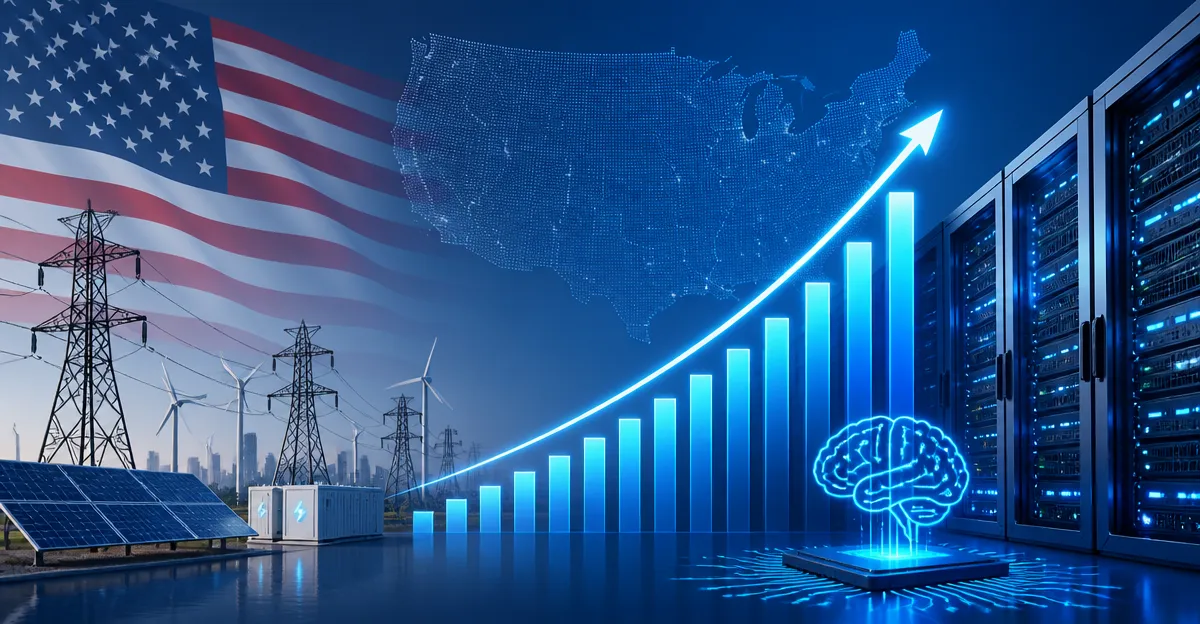
The agency projects total U.S. power demand rising from a record 4,195 billion kilowatt-hours in 2025 to 4,269 billion kWh in 2026 and 4,399 billion kWh in 2027. This marks a third consecutive year of all-time highs, a streak unseen in modern U.S. energy history.
The surge is not merely a continuation of past trends. For the first time, commercial electricity sales are expected to eclipse residential sales in 2026, underscoring the outsized role of data centers, which now rival small cities in energy appetite. The EIA forecasts commercial sales climbing to 1,550 billion kWh in 2026, overtaking residential sales projected at 1,508 billion kWh. Industrial sales are seen reaching 1,065 billion kWh, approaching a two-decade-old record.
“Electricity demand growth is led by an increase in the commercial sector, which is expected to outpace residential demand in 2026 for the first time on record,” the agency stated. This inflection point reflects an economy where bits and algorithms are consuming more power than households.
Read: TeraWulf and Anthropic Sign $19 Billion AI Data Center Lease in the US
The AI boom’s energy footprint is staggering. A single hyperscale data center can demand as much electricity as 80,000 homes. With major cloud providers and AI startups building out capacity at a frantic pace, the grid is straining to keep up. The EIA’s outlook confirms that data centers dedicated to artificial intelligence and cryptocurrency are primary drivers, alongside the broader shift from fossil fuels to electricity in buildings and vehicles.
This demand explosion is reshaping the generation mix. Coal’s share of U.S. power production is forecast to slide from 17% in 2025 to 15% in 2026 and 2027, continuing a long decline. Natural gas, the dominant fuel, will hold steady at 40% through the period, while renewables inch up from 24% to 27%. Nuclear power remains flat at 18%. The modest growth in clean energy highlights the challenge of decarbonizing while meeting voracious new demand.
Industry observers note a disconnect between AI’s promised efficiencies and its physical toll. While AI optimizes supply chains and reduces waste in other sectors, its own infrastructure is becoming a major emitter. The EIA data suggests that without a breakthrough in energy efficiency or a massive acceleration of renewable deployment, the carbon footprint of the digital economy will keep growing.
Natural gas markets are also feeling the heat. The EIA projects gas sales for power generation reaching 36.6 billion cubic feet per day in 2026, just shy of the 36.8 bcfd record set in 2024. Industrial gas sales are expected to hit 24.0 bcfd, surpassing a peak from 1973. In contrast, residential and commercial gas use are declining, reflecting the electrification trend.
These figures arrive amid heated debate over grid reliability. The North American Electric Reliability Corporation has warned that rapid demand growth is outpacing new generation and transmission buildout. Some regions, including Texas and the Mid-Atlantic, face elevated risks of shortages during peak periods. The AI sector’s insatiable hunger for power is testing the limits of an aging grid designed for a different era.
Critics argue that the EIA’s projections may still underestimate AI’s impact. The agency’s models historically lag behind fast-moving technology trends. A report from the Electric Power Research Institute earlier this year suggested that data center electricity use could double by 2030, consuming up to 9% of total U.S. power. If that materializes, the grid will need hundreds of billions of dollars in investment.
Read: OpenAI and Broadcom Unveil Jalapeño: Custom AI Chip for LLM Inference at Gigawatt Scale in the U.S.
Meanwhile, tech companies are racing to secure dedicated clean power. Nuclear restart deals, such as the planned revival of Three Mile Island for Microsoft, and long-term contracts for advanced geothermal and fusion projects signal a frantic search for reliable, carbon-free electrons. Yet these solutions remain years away from scale.
The EIA’s outlook serves as a sobering data point for policymakers balancing economic growth, energy security, and climate goals. As AI becomes embedded in everything from healthcare to manufacturing, its energy appetite will force hard choices about how the nation generates and delivers power.