July 13, 2026, (Inside AI) — Microsoft CEO Satya Nadella issued a stark warning to enterprises racing to adopt artificial intelligence: they may be paying for intelligence twice. In a Sunday essay on X, he argued that companies are not just spending money on AI tools but also surrendering proprietary knowledge that could erode their long-term competitive advantage.
Nadella introduced the concept of the ‘Reverse Information Paradox,’ flipping a classic economic theory to describe how AI providers learn from customer data. His caution lands as businesses face rising AI bills despite falling token prices, prompting a reassessment of so-called ‘tokenmaxxing’ strategies that equated heavy usage with productivity.
“The better you want the model to perform, the more of that knowledge you have to feed it! That is what I think of as the Reverse Information Paradox,” Nadella wrote. His essay, published on July 13, 2026, comes amid growing scrutiny of AI spending and a shift toward usage-based pricing.
Nadella’s warning echoes concerns from other tech leaders. Palo Alto Networks CEO Nikesh Arora and Coinbase Global CEO Brian Armstrong have both argued that smaller, cheaper models can handle many corporate needs. Last month, Nadella cautioned against a future where a few AI models “eat everything they see,” commoditizing entire industries’ expertise.
Read: OpenAI Proposes ‘Useful Intelligence per Dollar’ as the New AI Scorecard
The Reverse Information Paradox Explained
Nadella’s theory builds on Nobel laureate Kenneth Arrow’s ‘Information Paradox,’ which states that buyers cannot know the value of information until they possess it, while sellers risk giving it away to make a sale. In the AI era, Nadella says the problem is reversed.
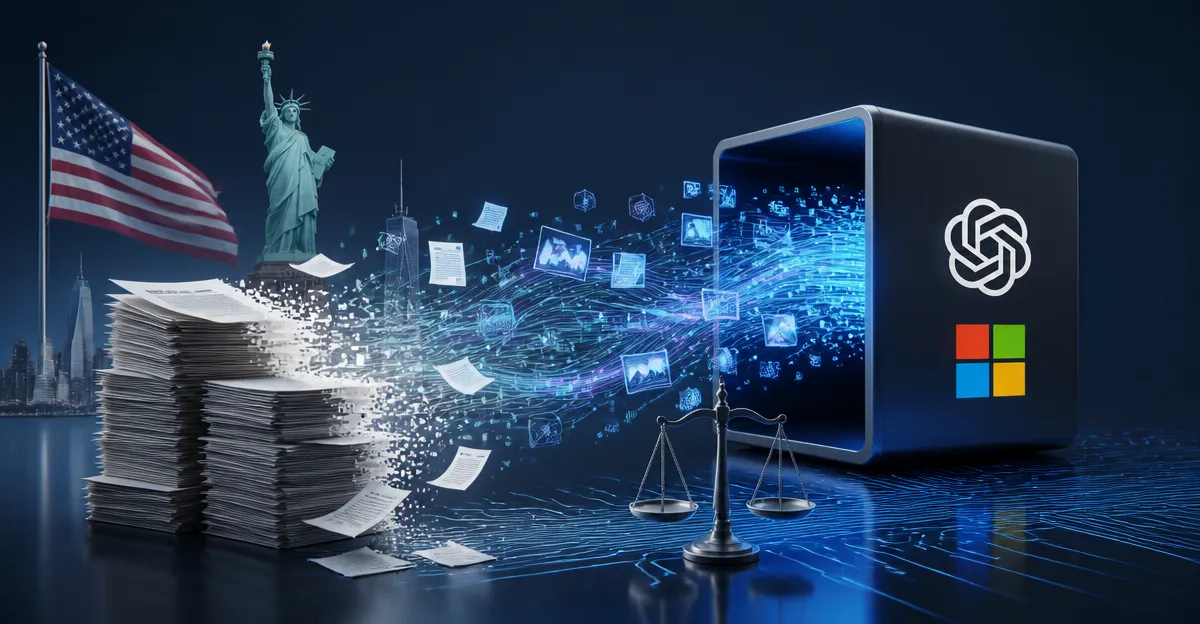
“In the AI age, the buyer risks giving away knowledge, just in order to use what they bought,” he wrote. “You essentially pay for intelligence twice, once with money, and again with something even more valuable: the proprietary knowledge you must reveal to make that intelligence useful.”
Every prompt, correction, and feedback fed to an AI system helps improve it, Nadella noted. “Every correction is distilled into institutional know-how. It’s the kind of knowledge a competitor could never buy, and the kind that leaks almost imperceptibly: trace by trace, correction by correction, eval by eval.”
This dynamic creates a growing information asymmetry. “The seller learns more and more about you as you use what you purchased, while you learn very little about what the seller is learning in return,” he added. The result is a slow bleed of competitive intelligence that few firms fully grasp.
Distillation and the One-Way Learning Loop
Nadella also criticized AI model providers for restricting distillation—a technique to create smaller, cheaper models by learning from larger ones—while reserving the right to learn from customer usage data. He called this a one-way flow of learning that concentrates economic value among infrastructure owners.
Read: Atlassian Caps Employee AI Spend at $2,000 Monthly Amid Tokenmaxxing Trend
“I find it ironic that the status quo is to then turn around and impose restrictive terms on distillation, and to reserve the right to learn from customer usage and interaction data,” Nadella said. His comments follow Anthropic’s accusation that Chinese firms DeepSeek, Moonshot AI, and MiniMax used over 24,000 fake Claude accounts to distill models.
“If learning flows in only one direction, economic value converges toward the owners of the learning infrastructure rather than the creators of the knowledge itself,” Nadella argued. He urged distributing learning infrastructure so every firm can control its own learning loop, akin to how patents protect inventions.
To safeguard themselves, Nadella outlined four pillars: control, capability, choice, and cost. He advised enterprises to create private evaluations, retain ownership of institutional memory, build proprietary learning environments, and decouple orchestration layers from any single model. “If any one model you are using is taken away, do you still have the ability to operate?” he asked.
Nadella’s blueprint reflects a broader industry shift toward AI sovereignty, as firms like Microsoft, Google, and Amazon race to offer private, fine-tuned models. Yet, the tension between open innovation and IP protection remains unresolved, with regulators and courts still defining the rules of AI-era knowledge ownership.