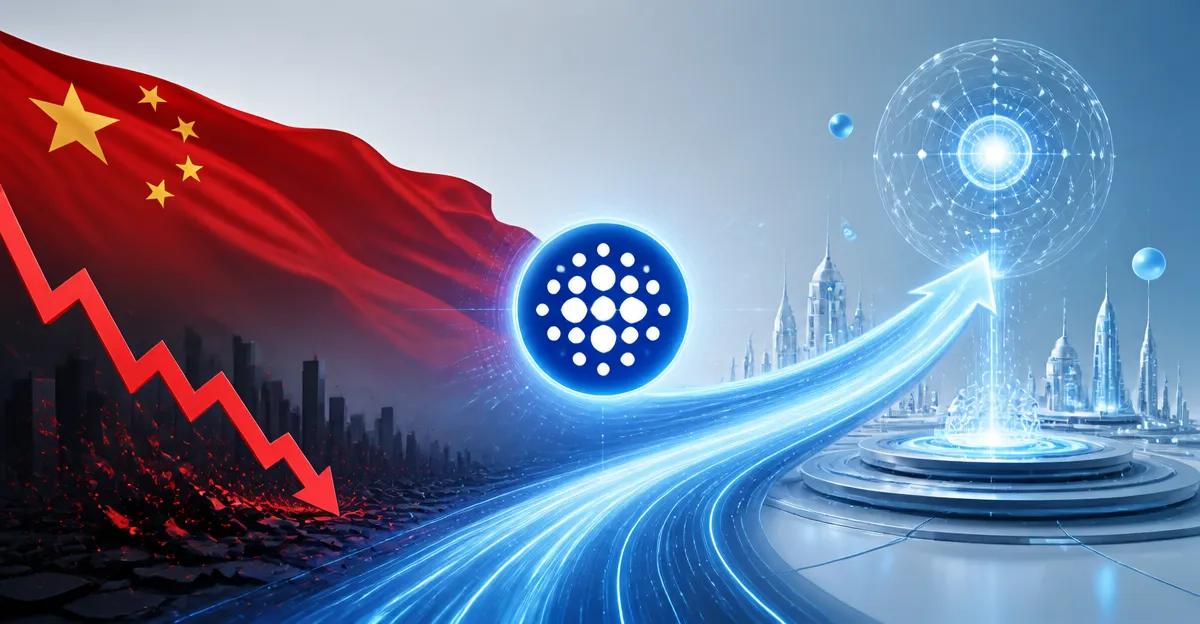
July 13, 2026, (Inside AI) — Chinese artificial intelligence firm Zhipu AI bucked a broad market rout in AI stocks on Monday, closing nearly flat in Hong Kong while rival MiniMax tumbled almost 20 per cent. Zhipu, listed as Knowledge Atlas Technology, ended at HK$1,645 after gaining over 1 per cent intraday, defying a sector-wide sell-off that hit chip designers, equipment makers, and materials suppliers.
The resilience follows a weekend pledge by co-founder Tang Jie to prioritize artificial general intelligence over near-term profits. In an internal letter seen by the South China Morning Post, Tang said the company would spend the next two years investing in frontier AI research.
“The company would not pursue short-term monetization from AI applications,” Tang wrote, instead targeting AGI—the point where AI captures “the aggregation of all human intelligence.” The declaration comes as Zhipu’s stock has skyrocketed 12-fold since its January debut, though it has retreated from a peak market cap of over HK$1 trillion (US$128 billion) in late June, now sitting at HK$730 billion.
The broader AI stock decline underscores deepening investor caution after months of hype. MiniMax’s nearly 20 per cent drop was the sharpest among peers, reflecting fears that the AI boom may be outpacing real-world revenue. Zhipu’s long-term bet on AGI—a goal shared by OpenAI and DeepMind—sets it apart in a market increasingly demanding quick returns.
Zhipu’s strategy echoes early moves by Western labs that burned cash for years before productizing breakthroughs. However, the company faces unique pressures: China’s regulatory environment is tightening around AI, and state-backed competitors like Baidu are racing to commercialize. Tang’s letter did not detail how Zhipu would fund the AGI push, but the firm’s recent HK$1 trillion valuation suggests deep investor pockets—for now.
Industry analysts note that AGI remains a distant, ill-defined target. “No one has a clear roadmap to AGI,” said Li Wei, a Beijing-based tech analyst. “Zhipu is betting that its GLM model architecture can scale further, but the economics are brutal.” Zhipu’s GLM-5.2 release last month briefly reignited hype, but the subsequent stock slide hints at volatility ahead.
The sell-off on Monday was broad: Semiconductor Manufacturing International Corp fell 3.5 per cent, while Hua Hong Semiconductor dropped 4.2 per cent. The declines mirror a global reassessment of AI valuations after several high-profile product delays and ethical controversies. In China, added uncertainty stems from new export controls on advanced chips, which could hamper AI training.
Zhipu’s AGI focus may also be a strategic hedge against commoditization. As large language models become ubiquitous, differentiation could hinge on capabilities that edge toward general intelligence. Tang, a prominent computer scientist at Tsinghua University, has long advocated for fundamental research over application-layer quick wins. His letter frames the next two years as a “critical window” to leapfrog competitors.
Yet the path is fraught. MiniMax’s plunge shows how quickly sentiment can sour. That firm, once a darling for its consumer AI apps, has struggled to convert users into revenue. Zhipu’s enterprise-focused model may offer more stability, but its refusal to monetize near-term risks alienating investors if AGI milestones slip.
Looking ahead, Zhipu plans to double its research headcount and build a new compute cluster, according to people familiar with the matter. The company declined to comment beyond Tang’s letter. As the AI sector digests Monday’s losses, Zhipu’s contrarian stance will test whether patience can still be rewarded in a market that suddenly demands proof, not promises.