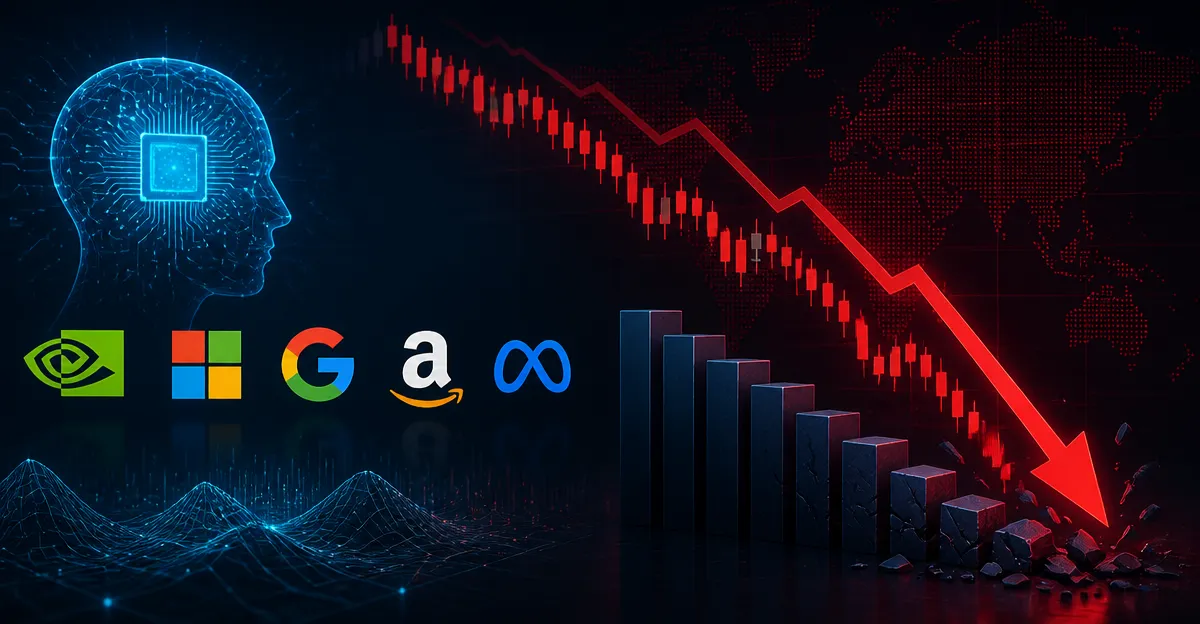
July 9, 2026, (Inside AI) — Quantitative hedge funds just suffered their worst performance stretch in nearly a year, caught in a violent unwind of crowded AI and semiconductor trades. Goldman Sachs reported Wednesday that systematic managers have surrendered a quarter of their year-to-date returns in recent weeks, sliding from a 14.4% gain on June 22 to just 10.8%.
The rout was concentrated in the most popular equity positions: U.S. stocks, Asian developed-market shares, and, to a lesser degree, Europe. A surge in chipmaker volatility—exacerbated by heavy retail leverage in Korean markets—turned the tide against trend-following algorithms that had ridden the AI wave higher.
Quant funds, which accounted for roughly 10% of the largest hedge funds in 2025 according to S&P Global, rely on systematic models to surf market momentum. When those trends snap, losses can cascade. This episode underscores how deeply AI hype had infiltrated positioning, and how quickly the exit can become a stampede.
The Unraveling of AI’s Market Grip
Goldman’s note detailed that fundamental stockpickers—those relying on human analysis—lost 2.2% over the same window, though they remain up 15.5% for the year. These managers “aggressively” fled AI-linked trades that had previously driven their winning positions, pushing overall hedge fund leverage to its lowest level in a year.
The selloff did not emerge from a vacuum. Regulators at the Bank of England, the Bank of Japan, and the Bank for International Settlements have long cautioned that tech valuations were stretched. Shares in firms like Micron Technology, Intel, and Marvell Technology had rocketed roughly 200% in 2026 alone before the reversal. Those warnings now appear prescient.
Yet the quant pain is not just about valuation. It reflects a structural vulnerability: when algorithms cluster in the same momentum trades, a small shock can trigger a self-reinforcing unwind. Korean retail leverage acted as an accelerant, magnifying moves in chip stocks that sit at the heart of both AI supply chains and quant portfolios. The result was a feedback loop that punished even funds with no direct exposure to Seoul.
When Crowded Trades Meet Regulatory Warnings
The episode revives a perennial debate about hedge funds’ role in amplifying market swings. As their assets and influence have grown, so have concerns that their concentrated bets can destabilize the very trends they seek to exploit. The Bank for International Settlements warned in its latest quarterly review that non-bank financial intermediation now accounts for half of global financial assets, making deleveraging events more contagious.
For quant managers, the damage is a stark reminder that momentum strategies are only as robust as their risk models. Many had incorporated volatility targeting, but the speed of the reversal—compressed into a few weeks—overwhelmed those defenses. The drawdown is the deepest since August 2025, when a similar unwind hit macro quant funds during a bond market tantrum.
Goldman’s data suggests the purge is not over. With leverage at yearly lows, further forced selling could emerge if volatility persists. The note did not name individual funds, but industry sources indicate that multi-strategy platforms and dedicated trend-followers bore the brunt. Some have already begun reducing gross exposure to meet risk limits, a move that could cap any near-term recovery.
The AI selloff also tests the narrative that machine-driven strategies are inherently more disciplined. While they avoid emotional bias, they remain vulnerable to the same herding dynamics that plague discretionary managers. As one senior quant researcher told Inside AI, “The model doesn’t care why the trend exists—only that it does. When that breaks, it breaks for everyone at once.”
Looking ahead, the episode may accelerate a shift toward more diversified quant approaches that blend momentum with value or carry signals. But for now, the lesson is clear: in a market where AI hype has lifted all boats, the tide can go out with equal speed.