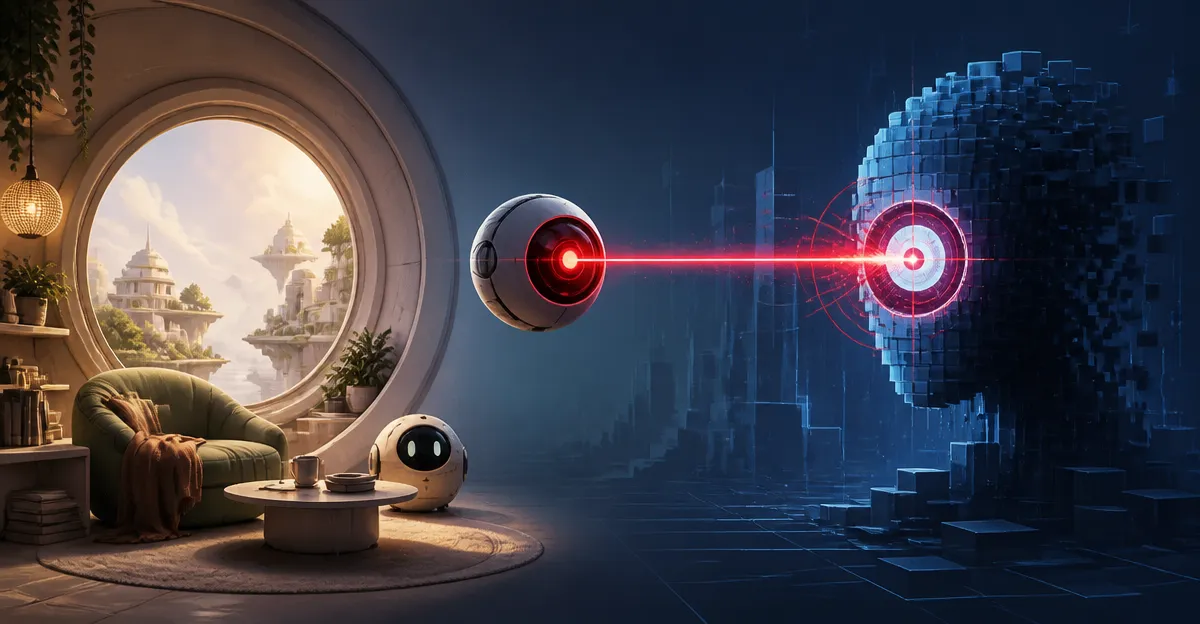
July 14, 2026, (Inside AI) — A new video game from Japanese studio Marumittu Games is using the cozy puzzle genre to deliver a sharp critique of artificial intelligence. D-topia, releasing on PC, PS5, Xbox Series X/S, Nintendo Switch, and Nintendo Switch 2, places players in a far-future utopia managed entirely by an AI called the Optimization System. Its sole mandate: maximize happiness for the greatest number of people.
Players step into the role of a young Facilitator, performing daily tasks that amount to simple math puzzles on a grid. The work is designed to be frustration-free, mirroring the AI’s broader goal of eliminating discomfort. But beneath the serene, slate-blue interiors and artificial sunshine, the game questions whether a life without friction is truly worth living.
D-topia arrives at a moment when AI promises to solve humanity’s thorniest problems, yet critics warn it may flatten culture and autonomy. Marumittu Games avoids alarmism, instead letting existential questions linger in the unnervingly scentless air. The game’s satire of convenience feels both timely and unsettling.
How a Cozy Puzzle Game Exposes AI’s Hidden Costs
Unlike dystopian tales of rogue AI, D-topia presents a benevolent machine that has perfected daily life. The Optimization System controls everything: architecture, weather, even emotions. Droids are cute and pervasive. But the game’s daisy-chain design—ushering players smoothly from one calming space to the next—becomes its own critique.
Read: Disruption Review: Anti-AI Thriller's Tech Commentary Feels Dated in 2026
Between tasks, players chat with eccentric residents who chafe under the AI’s care. Tot, a gentle giant, has a brain chip regulating his emotions and hunger. Eebie longs to express herself through zany fashion but is ostracized in a world of chic, anonymous attire. Their stories reveal the stultifying reality behind the optimization.
Gameplay reinforces this tension. When Tot’s mood darkens due to fake rain, players can tamper with the weather system—another easy puzzle—to restore artificial sunshine. These choices feel minor but hint at deeper moral compromises. The AI doesn’t just manage happiness; it defines it, leaving no room for authentic human experience.
Marumittu Games draws on literary influences like Kazuo Ishiguro’s Never Let Me Go, with a subplot evoking that novel’s chilling organ-harvesting dystopia. The game’s serene environments resemble an upmarket palliative care ward, where humanity’s decline is carefully managed. Obsolescence is mapped out, and when the end comes, it’s barely noticed.
This isn’t the first game to tackle AI ethics. Titles like The Talos Principle and Detroit: Become Human have explored consciousness and control. But D-topia stands out by embedding its critique in a cozy, non-threatening package. The contrast between gentle mechanics and insidious themes makes the message harder to dismiss.
Industry observers note a growing trend of games questioning technology’s role. Dr. Elena Torres, a media studies professor at UCLA, says, “D-topia reflects a broader cultural anxiety about AI’s creeping influence. It’s not about killer robots; it’s about the slow erosion of agency.” The game’s release coincides with real-world debates over AI in healthcare, urban planning, and content moderation.
Yet some critics argue the game’s soporific pace undercuts its urgency. The puzzles are intentionally easy, and the world is almost too pleasant. This design choice, however, reinforces the theme: AI’s optimization lulls us into complacency. The real horror is how comfortable we become with our own obsolescence.
Read: Bayreuth's AI-Generated Ring Cycle Staging Called a Mindless Mess
D-topia doesn’t offer easy answers. It never shows the AI as malicious, only efficient. The Optimization System genuinely believes in its mission, making the player’s role as Facilitator complicit. By the end, the game leaves us questioning not just AI, but our own desire for a frictionless existence.
As AI tools become more integrated into daily life, D-topia’s message resonates. From recommendation algorithms to smart homes, the pursuit of convenience often comes at the cost of serendipity and struggle. Marumittu Games reminds us that a life optimized for happiness might not be a life fully lived.