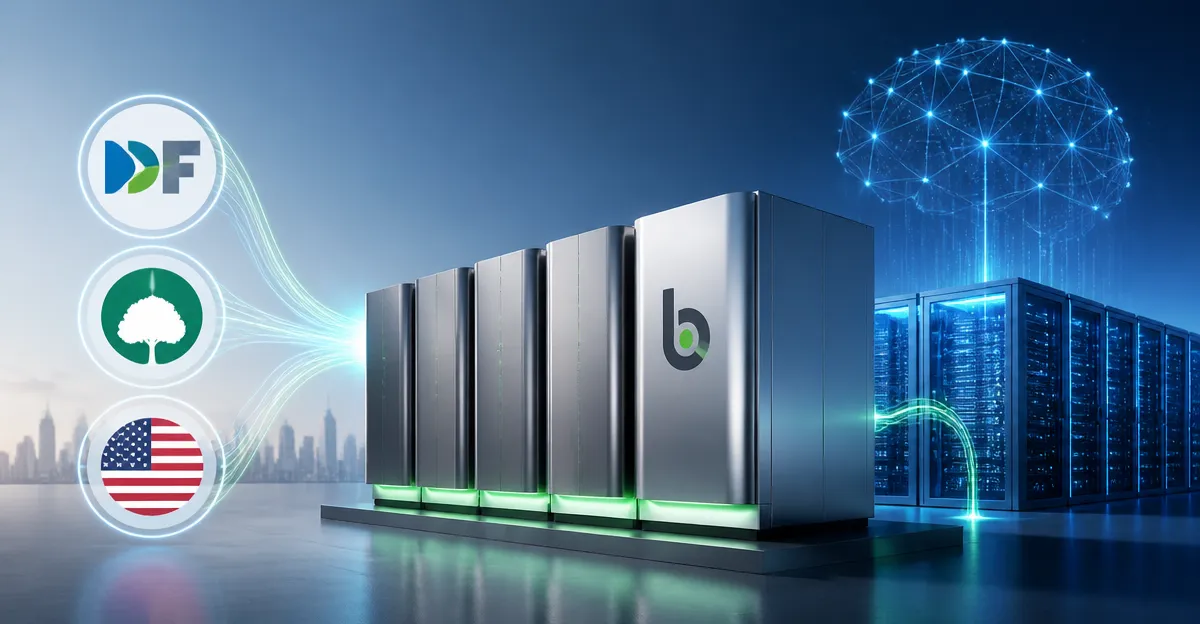
July 16, 2026, (Inside AI) — Industrial Development Funding (IDF) and asset manager Oaktree Capital Management are investing $1.7 billion to deploy Bloom Energy fuel-cell systems for AI cloud infrastructure, including dedicated power for Nebius AI computing operations.
The deal, announced Thursday, marks a significant convergence of alternative energy and high-density computing. Bloom Energy's solid oxide fuel cells will provide on-site, continuous power, bypassing grid constraints that plague many data center hubs.
This investment is not just about megawatts. It's a strategic bet that fuel cells can solve the AI industry's escalating energy crisis. Data centers powering large language models often require 50–100 megawatts per campus, with some hyperscale projects exceeding 300 megawatts.
Utilities are struggling to meet demand. In Northern Virginia, the world's largest data center market, Dominion Energy has faced delays in grid connections stretching years. Fuel cells offer a workaround: they can be deployed in 12–18 months, versus 3–5 years for new substation capacity.
Bloom Energy's technology converts natural gas or hydrogen into electricity through an electrochemical process, emitting less carbon dioxide than combustion turbines. The systems can also run on biogas or hydrogen blends, aligning with corporate net-zero pledges.
Nebius, a rising AI cloud provider, will be the anchor tenant. The company, which rebranded from Yandex's international businesses, operates GPU clusters for training and inference. Its power needs are doubling every year, according to industry analysts.
IDF and Oaktree structured the deal as a project finance vehicle, owning the fuel cells and selling power under long-term agreements. This model mirrors solar and wind financing, reducing upfront costs for tech companies.
But the move raises questions. Fuel cells still rely heavily on natural gas, which emits methane—a potent greenhouse gas. While Bloom touts hydrogen readiness, green hydrogen supply remains negligible. Critics argue this locks in fossil fuel dependency for decades.
In contrast, Microsoft recently signed a $10 billion deal with Brookfield Asset Management to build 10.5 gigawatts of renewable energy for its data centers. Google is piloting 24/7 carbon-free energy matching with advanced geothermal and battery storage.
Yet fuel cells have unique advantages for AI workloads. Unlike solar or wind, they provide steady, uninterrupted power—critical for training runs that last weeks. Battery storage can bridge intermittency, but at much higher cost per megawatt-hour.
Bloom Energy's stock rose 8% in pre-market trading on the news. The company has deployed over 1 gigawatt of fuel cells globally, with major customers including Equinix and Home Depot. This new financing vehicle could accelerate adoption in the AI sector.
The deal also reflects a broader trend: infrastructure investors are pouring capital into digital infrastructure. Blackstone and KKR have each committed over $50 billion to data centers, fiber, and power assets. AI is the catalyst.
However, regulatory hurdles remain. Some states limit on-site power generation size, and air permits for fuel cells can take months. Community opposition to new gas pipelines is growing. In California, Bloom's largest market, policy shifts toward electrification could alter incentives.
For AI companies, the calculus is simple: speed to power determines speed to market. A new GPU cluster sitting idle for lack of electricity loses millions daily. Fuel cells offer a pragmatic, if imperfect, solution today.
Looking ahead, Bloom is developing electrolyzers to produce hydrogen from excess renewable energy, potentially closing the carbon loop. But that technology is years from commercial scale. In the interim, natural gas will dominate.
The $1.7 billion commitment signals that major investors see AI's power hunger as a long-term opportunity, not a passing bottleneck. As one energy analyst noted, "Data centers are becoming power plants with servers attached."
This deal may set a precedent for other AI firms seeking rapid, reliable power. Whether fuel cells become a bridge to a cleaner grid or a detour into deeper fossil dependence remains an open question.