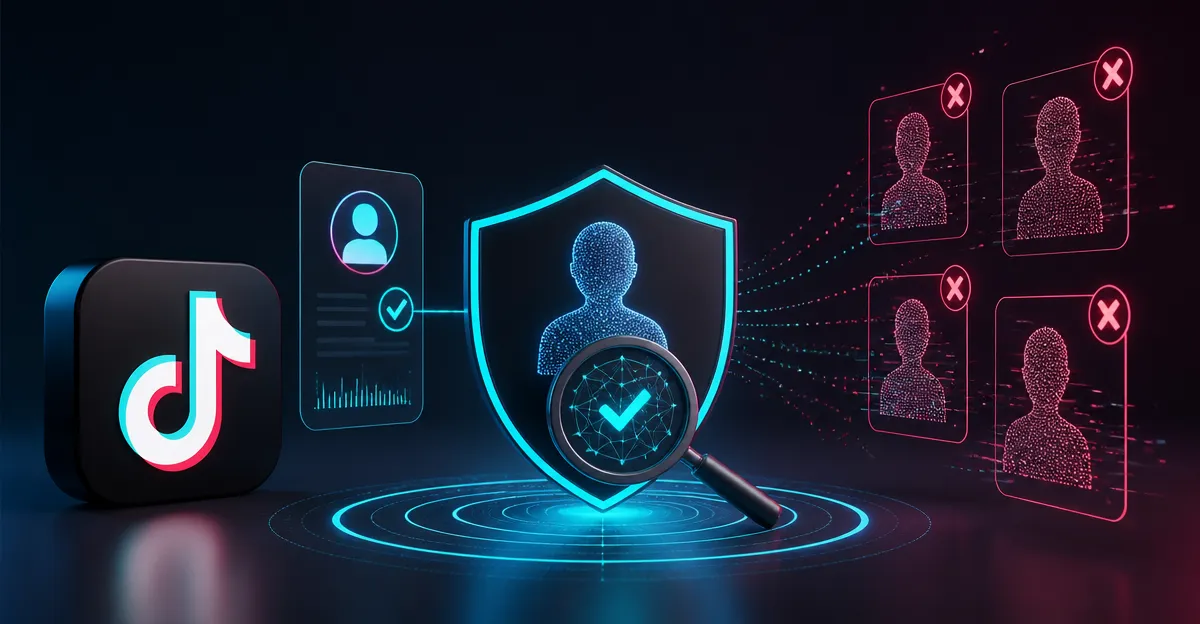
July 18, 2026, (Inside AI) — TikTok is testing a new tool that lets creators detect AI-generated videos using their face or likeness without consent. The feature was first spotted by social media consultant Matt Navarra and later confirmed by Zachary Kizer, a TikTok US spokesperson.
The test is limited to a small group of creators in the United States. Creators must opt in and verify their identity through Jumio, a third-party verification company, using a real-time selfie and an ID check. Kizer said TikTok does not keep ID documents, and facial data is used only to match a creator’s likeness against unauthorized AI-generated content.
Once verified, TikTok scans for AI-generated videos that may include the creator’s face. If matches are found, creators can review them and report impersonation. This gives creators a direct way to combat deepfakes and unauthorized digital copies.
TikTok’s move follows YouTube‘s expansion of its own likeness detection tool. YouTube’s system uses a selfie-style scan to monitor for resembling videos. If a match is found, users can request removal. YouTube opened access to all eligible users over 18 after earlier tests with creators.
Read: 5 Ways to Verify AI-Generated Videos Before Sharing
TikTok’s opt-in approach stands out as platforms face mounting pressure over consent and AI-generated likenesses. Meta recently pulled a Muse Image feature after backlash over automatically accessing public Instagram photos to create AI images. TikTok’s test puts verification and user control at the center, signaling that AI likeness detection is becoming a standard safety feature for major video platforms.
Read: Google Earth’s New AI Tool Can Generate Fake Satellite Imagery
The tool remains a limited test with no announced wider rollout date. Its success may hinge on balancing creator protection with privacy, as the platform navigates the growing threat of AI-driven impersonation.