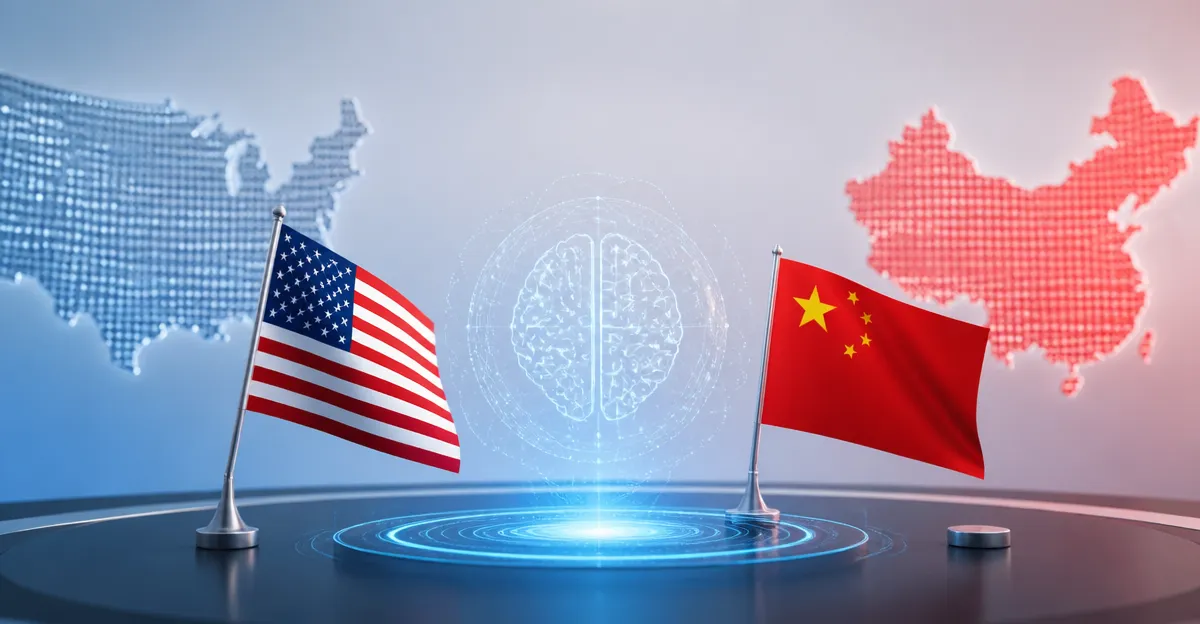
July 21, 2026, (Inside AI) — The United States and China are set to hold dedicated talks on artificial intelligence in September, according to five sources with direct knowledge of the plans. The discussions, a tangible result of the Trump-Xi summit in May, are expected before Chinese President Xi Jinping’s scheduled September 24 visit to the U.S., though the exact dates remain fluid.
Treasury Secretary Scott Bessent will lead the U.S. delegation, four sources confirmed. The full roster of participants, the agenda, and the venue are still being shaped, signaling the early stage of preparations. Neither the White House, State Department, Treasury, nor Chinese agencies responded to requests for comment.
The talks mark a rare moment of bilateral engagement on a technology both nations view as critical to economic and military dominance. For months, Washington and Beijing have raced to develop frontier AI models while imposing export controls and investment restrictions. These September meetings could establish guardrails or, at minimum, open a backchannel to prevent miscalculation.
The Treasury’s Unusual Lead Role
Placing Bessent at the helm signals that economic and trade dimensions—not just national security—will dominate. The Treasury oversees the Committee on Foreign Investment in the United States (CFIUS), which has blocked several Chinese tech deals. Its involvement suggests discussions may touch on outbound investment rules and supply chain resilience for advanced chips.
This structure mirrors the Treasury-led financial working groups formed after the 2023 California summit, but with a sharper AI focus. Experts note that economic statecraft is now inseparable from AI policy. Yet, some analysts question whether the Treasury can adequately address algorithmic transparency or autonomous weapons. “Economic leverage is powerful, but AI safety requires technical dialogue that Treasury officials may lack,” said a former State Department negotiator who requested anonymity.
Why Now and What’s at Stake
The timing is critical. China’s latest large language model, reportedly matching GPT-5 capabilities, has alarmed U.S. lawmakers. Meanwhile, U.S. cloud providers face new Chinese data localization mandates. The September talks could preempt a spiral of tit-for-tat restrictions that fragment the global AI ecosystem.
Three sources noted that preliminary agendas include model evaluation standards, cross-border data flows, and military AI applications. However, deep mistrust persists. The U.S. recently expanded semiconductor export bans, and China retaliated with rare earth processing restrictions.
Historical context is sobering. The 2023 U.S.-China AI dialogue in Geneva produced no binding agreements, and subsequent Pentagon reports flagged Chinese AI-enabled cyberattacks. Still, the September talks represent the highest-level AI-specific engagement since the Trump-Xi summit, raising cautious hopes.
The location remains undecided, but sources say Geneva or Singapore are possible neutral venues. The Chinese delegation may include officials from the National Development and Reform Commission and the Cyberspace Administration, reflecting the cross-cutting nature of AI governance.
As the world’s two AI superpowers inch toward the table, the outcome could shape international norms for years. But with fundamental disagreements on data privacy, censorship, and military use, a breakthrough remains far from certain.