September 4, 2026, (Inside AI) — Student protests over exam paper leaks have exposed a deeper rupture in education. The leaked paper was not a machine error. Teachers broke trust by passing questions to paying parents.
This betrayal lands at a moment when algorithms answer faster than any lecturer. YouTube, ChatGPT, Siri, and Alexa now shape what students accept as truth. The crisis is not technological. It is pedagogical.
The urgent question is not how students adapt to AI. It is how teachers empower them to do so. Can a teacher walk into a classroom with her own mind and hold it? Can she become, once again, a Socratic teacher?
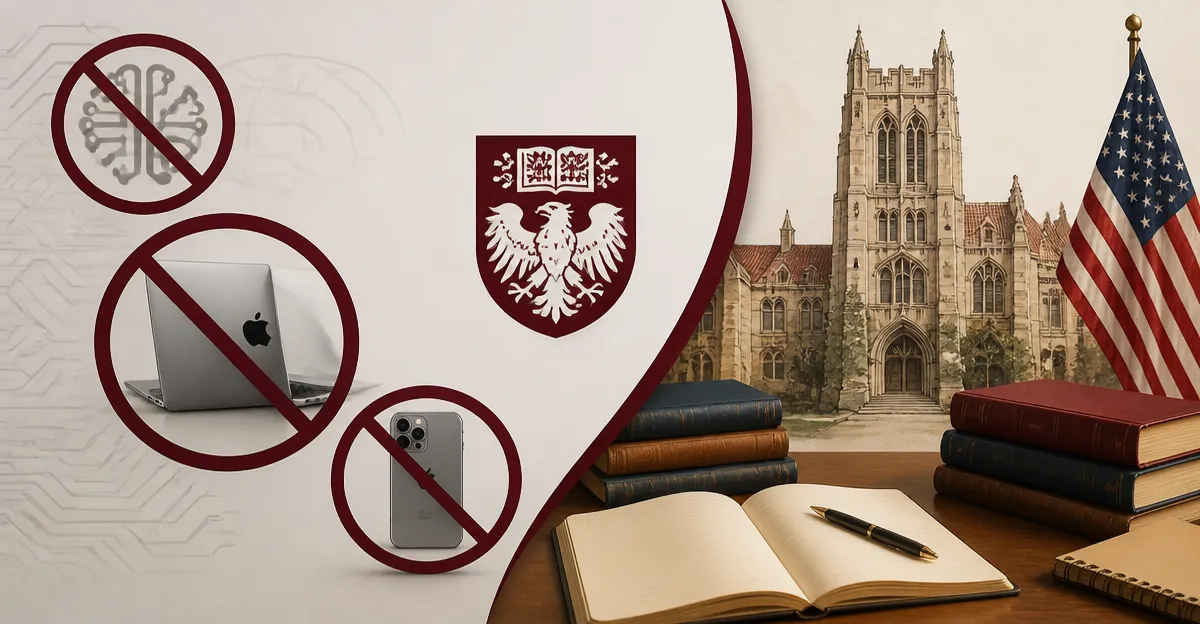
One easy response is to police students harder. Ban AI tools, detect plagiarism, force pen and paper, raise exam bars, and sort winners from losers. That puts the burden in the wrong place.
The real task is to revive teaching as intellectual guardianship. Not content delivery, because a machine will always deliver content faster. The teacher must offer a moral compass outside the safety net of parents and friends.
Socrates never wrote anything down. He worked by elenchus, drawing out what a student already half-knew. Plato recorded those dialogues and built Western philosophy on them. Confucius did not lecture. He gathered students, ate with them, and mourned student Yan Hui's death as a father mourns a son.
Ramakrishna Paramahansa and Vivekananda were bound by something no curriculum can schedule. These are the models, East or West, worth reviving.
The discipline required now falls on the teacher, not the student. Can she conduct a 90-minute class with only a whiteboard and a marker, trusting her own knowledge rather than a PowerPoint? Can she make everyone in the classroom feel part of the class, each one on her own arc but all united by the common purpose of learning?
When Albert Einstein arrived at Princeton in 1935 and was asked what he needed, he reportedly asked only for a desk, a pencil, some notebooks, and a "wastebasket for my mistakes". That is a teacher's real skill: a mind willing to think in front of students and be seen thinking, mistakes included.
This is harder than banning AI in an exam hall. It asks a teacher to become again what a machine cannot be. Someone who knows the student's name, notices the bad week, asks the follow-up question that has no single correct answer, and stays in the room after the bell.
Aristotle believed morality could be learned, not memorised, through the cultivation of good habits until virtue became disposition. That is a teacher's real syllabus. Practical and technical skills, taught by a teacher who has first built that relationship, become an inspiring inheritance rather than just a reading or homework assigned.
In the end, a good teacher is one who helps her students increasingly trust their own reason over her authority earned through dialogue rather than demanded. A good teacher makes a student evolve into a teacher and, in that process, herself becomes a better student. Happy Teachers' Day.