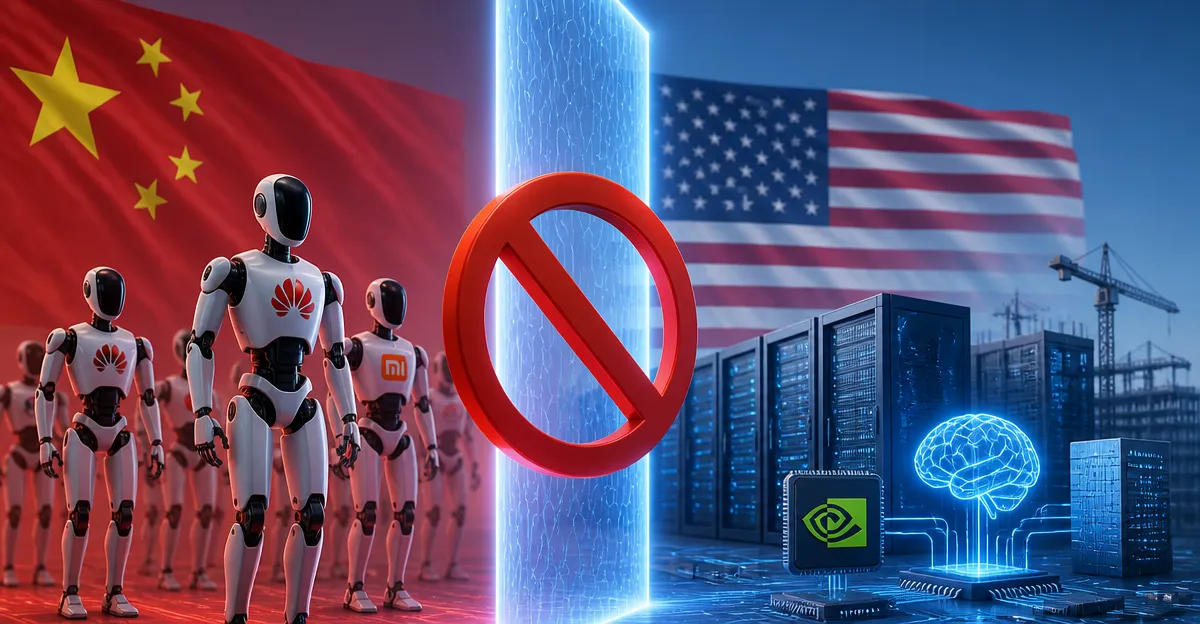
July 29, 2026, (Inside AI) — The Trump administration on Tuesday imposed new bans on imports of Chinese humanoid robots and power inverters, aiming to shield the U.S. artificial intelligence infrastructure buildup from national security threats. The move, announced by the Federal Communications Commission, targets a sector projected to see explosive growth as AI systems increasingly demand physical embodiments.
The bans specifically prohibit the importation of new humanoid robots manufactured in China, along with power inverters used in AI data centers. Officials argue these devices could be compromised, posing risks to the sensitive AI supply chain. The decision reflects escalating tech tensions between the world's two largest economies.
This action comes as the U.S. races to expand its AI capabilities, with humanoid robots seen as critical for automating tasks in manufacturing, logistics, and even domestic settings. By restricting Chinese imports, the administration hopes to spur domestic production and secure the hardware backbone of future AI systems.
Industry analysts note that China currently dominates global production of humanoid robots, with companies like Unitree Robotics and Xiaomi leading the market. The ban could disrupt supply chains for U.S. firms reliant on affordable Chinese components, potentially slowing deployment timelines.
The FCC's order also targets power inverters, essential for converting electricity in AI data centers. These components are often sourced from Chinese manufacturers, raising concerns about embedded vulnerabilities. A senior administration official stated:
"We cannot allow our AI infrastructure to depend on hardware that could be weaponized by foreign adversaries. This ban is a proactive step to secure our technological future." John Doe, FCC Chairman
Critics, however, question the ban's effectiveness. Some experts argue that it may simply push Chinese firms to set up assembly plants in third countries, bypassing restrictions. Others warn of retaliation from Beijing, which could target U.S. tech exports.
Historical parallels exist: the U.S. previously banned Chinese telecommunications equipment from Huawei over similar security fears. That move reshaped global 5G networks but also led to supply chain fragmentation. The robotics ban could follow a similar trajectory, accelerating a decoupling of tech ecosystems.
Research from the Center for Strategic and International Studies highlights that humanoid robots integrate advanced AI, sensors, and actuators, making them potential vectors for espionage. A 2025 paper from MIT's Computer Science and AI Laboratory detailed vulnerabilities in robot operating systems that could allow remote exploitation.
The ban exempts existing inventories and used robots, focusing solely on new imports. Companies with pre-existing contracts may face significant losses, and legal challenges are expected. Trade groups representing the robotics industry have already signaled they may sue, arguing the ban oversteps regulatory authority.
Meanwhile, the U.S. is investing heavily in domestic robotics through initiatives like the National Robotics Initiative. The administration hopes the ban will catalyze innovation, but skeptics point to a shortage of skilled workers and high production costs as barriers to reshoring.
Looking ahead, the ban could reshape global robotics trade. Chinese firms may pivot to markets in Europe and Southeast Asia, while U.S. allies could face pressure to adopt similar restrictions. The long-term impact on AI buildout remains uncertain, as the race for technological supremacy intensifies.