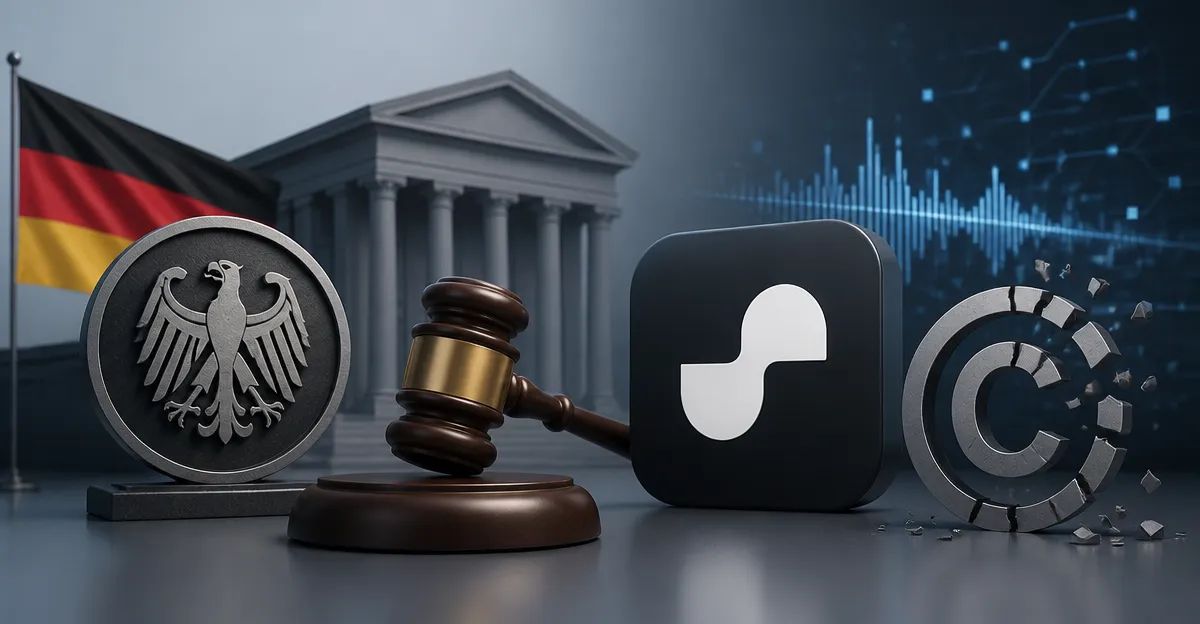
July 31, 2026, (Inside AI) — A Munich court has found AI music generation company Suno liable for copyright infringement, ordering the firm to disclose details of revenues earned from what the court deemed unauthorized use of protected musical works. The ruling, delivered on Friday, marks a pivotal moment in the escalating legal battle between rights holders and generative AI platforms.
The decision directly addresses the core tension in AI training practices: whether ingesting vast amounts of copyrighted material to build commercial models constitutes fair use or requires explicit licensing. Suno, which allows users to create songs from text prompts, now faces financial exposure and a precedent that could ripple across the industry.
The court’s order compels Suno to provide information on illicit revenues, a move that opens the door for rights holders to calculate damages. This procedural step is often more threatening to AI firms than an initial liability finding, as it forces transparency into business models built on contested data practices.
Training Data Secrets Under Legal Siege
Suno has been notoriously guarded about the datasets used to train its models. The company has previously stated that its training data includes “proprietary, public, and licensed” content, but has not detailed the proportion or origin of copyrighted works. This opacity has fueled lawsuits from major music labels.
Read: Sony and Warner Sue Anthropic
In June 2024, the Recording Industry Association of America (RIAA) sued Suno and competitor Udio for “unlicensed copying of sound recordings on a massive scale.” The RIAA alleged that Suno’s training involved ingesting millions of tracks from artists like Mariah Carey and Bruce Springsteen. Suno’s defense leaned on a fair use argument, claiming its model learns patterns, not copies.
The German ruling, however, suggests courts are growing skeptical of that distinction. GEMA, Germany’s music rights organization, has been a vocal critic of AI music generators, arguing that training without consent violates creators’ rights. This case was likely brought under the German Copyright Act (UrhG), which protects musical works and performances.
A key legal question is whether AI training falls under the temporary copying exception in Article 53a of the UrhG, which permits reproductions for text and data mining if rights holders have not reserved their rights. However, many labels and publishers have explicitly opted out, complicating Suno’s position. The court’s ruling implies that such reservations were effective.
Revenue Disclosure and the Damages Puzzle
The order to reveal illicit revenues is particularly damaging. Under EU Directive 2004/48/EC on intellectual property enforcement, rights holders can request financial information to quantify damages. Suno must now detail subscription income, licensing deals, or other earnings directly tied to the infringing model.
This could set a template for other jurisdictions. In the United States, the Copyright Office is reviewing AI and copyright, but no federal legislation exists. The German decision may pressure lawmakers to clarify training data rules, especially as the EU AI Act requires transparency about training data but stops short of mandating licensing.
Suno has not yet commented on the ruling. The company raised $125 million in funding in 2024, signaling investor confidence in its legal strategy. But revenue disclosure could expose the extent of its reliance on unlicensed material, potentially scaring off partners and users.
Read: ARIA Charts Ban AI Music
Meanwhile, the music industry is pursuing a dual strategy: litigation and licensing. Some platforms, like YouTube, have struck deals with labels for AI tools. But standalone generators like Suno have resisted, arguing that blanket licenses are impractical for training. This ruling may force a reckoning.
For now, the Munich court has drawn a line in the sand: AI firms cannot hide behind trade secrets when copyright is at stake. The decision is part of a broader global trend, with similar cases pending in the U.S. and U.K. The outcome could reshape how AI models are built and who gets paid.