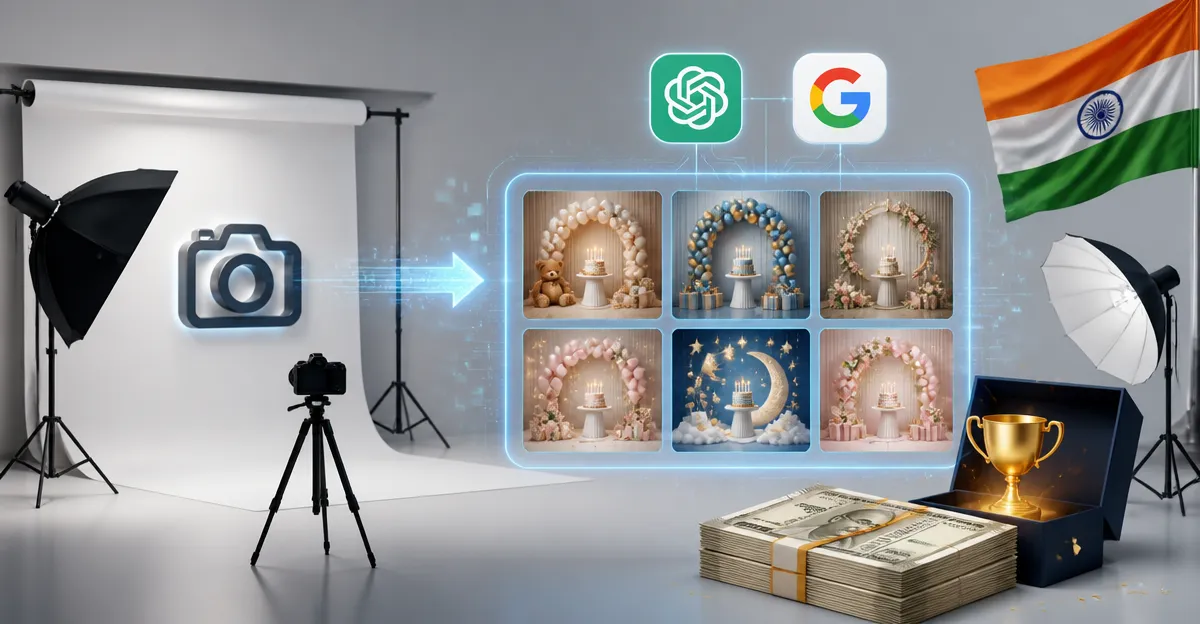
August 1, 2026, (Inside AI) — A district consumer commission in Telangana has ruled that a photography studio committed a deficiency in service by delivering AI-generated images instead of the promised original photoshoot themes for a child’s pre-birthday event. The studio was ordered to pay Rs 8,000 in compensation and litigation costs to the complainant.
The order, issued on July 16, 2026, by President Chitneni Latha Kumari and members Madhavi Sasanakota and Kathyayani Khandavilli, addressed a complaint filed by a Hyderabad man who had booked a photoshoot for his son in January 2026. The commission found that the studio failed to provide the contracted services and instead substituted AI-generated content without consent, marking a notable early legal test of AI’s misuse in consumer transactions.
AI Substitution Ruled a Service Failure
The man approached the studio on January 28, 2026, for a pre-birthday shoot ahead of his son’s celebration on February 11. He paid an advance of Rs 2,500 for 15 themed shoots costing Rs 13,500 total. The shoot occurred on February 1, after which he paid another Rs 9,000. The studio promised delivery of all themes by February 6, but only 14 arrived, and those were AI-generated, not the original photographs he had paid for.
The commission’s order stated:
Read: Instagram Limits Reach of Undisclosed AI-Generated Profiles
“Despite repeated requests by the complainant, the opposite party (photography studio) failed to provide promised shoot themes. The action of non-providing promised services to the complainant attracts the definition of deficiency in service enshrined under Sec.2(11) of the Consumer Protection Act.”
The studio was served notice on April 15, 2026, but neither appeared nor contested the case, leading to an ex-parte ruling. The man submitted booking sheets, payment records, WhatsApp messages, emails, and other evidence. The commission noted the WhatsApp exchanges clearly showed the studio’s failure, and since the allegations went unrebutted, they were accepted as true.
This case underscores a growing tension in the creative services industry, where the rise of generative AI tools like DALL-E and Midjourney has made it trivially easy to produce synthetic images. A 2024 study on generative AI ethics highlights the risks of undisclosed AI use, including erosion of trust and potential fraud. Here, the studio’s action fits a pattern of what researchers call “AI washing” in services—passing off machine-generated output as human-crafted work.
While the man sought a full refund of Rs 11,500, the commission awarded only Rs 5,000 for mental agony and Rs 3,000 for costs, reasoning that some photographs were delivered. It noted the irreplaceable nature of the birthday event but cited a lack of documentary proof of monetary loss. The ruling aligns with consumer protection principles that recognize non-economic harm, a stance detailed in the National Consumer Helpline’s guidelines.
Unrepeatable Events Raise Stakes for AI Deception
The commission observed that no rigid formula exists for mental agony compensation, especially for one-time occasions. The man claimed he needed the photos for banners and donations, and the studio’s failure caused embarrassment. This echoes broader concerns about AI’s impact on personal milestones, where authenticity carries emotional weight that synthetic substitutes cannot replicate.
Legally, the case is straightforward: the studio breached its contract and the Consumer Protection Act. But it signals that regulators are willing to treat undisclosed AI delivery as a distinct form of deficiency. As AI tools become ubiquitous, such disputes may multiply, prompting calls for mandatory disclosure laws. For now, the judgment serves as a warning to service providers that hiding behind AI-generated shortcuts can lead to liability, even without direct financial loss.
Read: China Enforces First AI Micro-Drama Rules, Mandates Disclosure Labels
Consumers facing similar issues can contact the Telangana consumer helpline at 1800-4250-0333 or the national line at 1915.