August 23, 2026, (Inside AI) — A protein long dismissed as impossible to drug may finally yield to treatment, thanks to a cross-continental collaboration between Mayo Clinic and a Bengaluru startup.
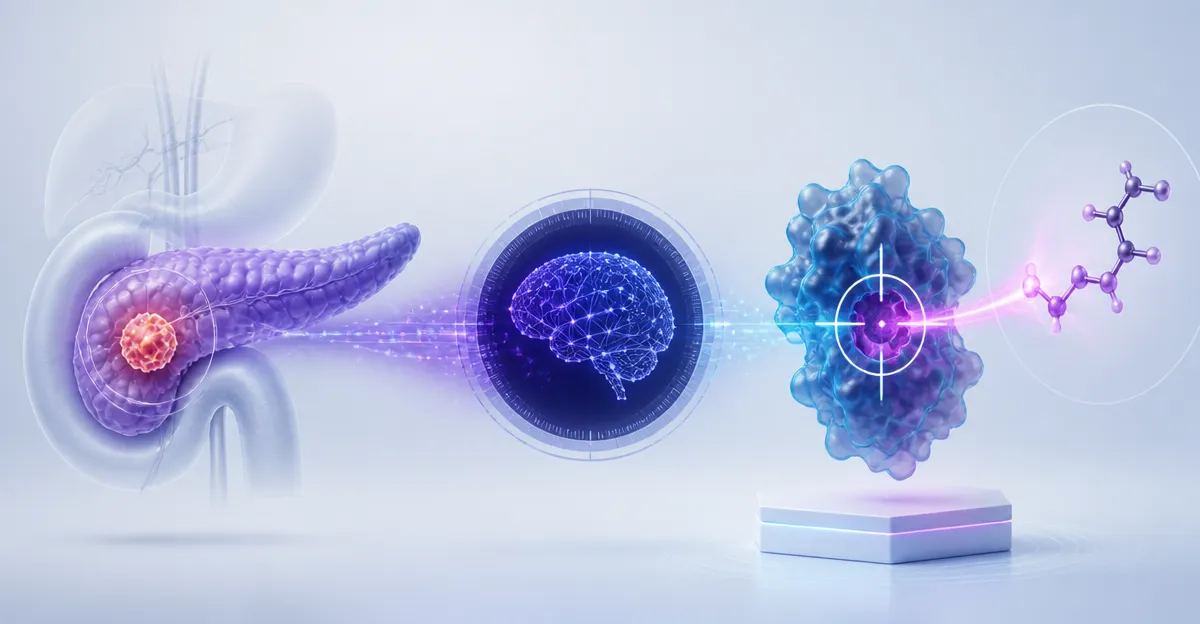
Researchers from Mayo Clinic and Sravathi AI Technology have identified a small molecule inhibitor against GIPC1, a signaling protein implicated in pancreatic cancer and other malignancies. The molecule, named GIPCi, targets the protein’s PDZ domain, a region that has resisted conventional drug design for years.
The findings appear in Cell Reports under the title “AI-driven discovery and validation of a GIPC1 PDZ domain inhibitor for pancreatic ductal adenocarcinoma.” The work marks one of the first public validations that generative and predictive AI can crack targets once considered beyond reach.
Pancreatic ductal adenocarcinoma, the most common and aggressive form of pancreatic cancer, carries a five-year survival rate below 13.3%. Late diagnosis, rapid progression, and therapeutic resistance have kept outcomes stubbornly poor. GIPC1 is overproduced in these tumors, driving growth and chemotherapy resistance.
Read: AI-Generated Drug Rentosertib Shows Early Signs of Slowing Biological Aging
Why a shallow protein pocket stumped chemists for a decade
The difficulty lies in the PDZ domain’s structure. Unlike deep, well-defined binding pockets that small molecules can easily occupy, PDZ domains present broad, shallow surfaces. Traditional drug candidates struggle to latch on with enough affinity to matter.
Parag Tipnis, CEO of Sravathi AI, explained the challenge. “Its PDZ domain interacts with multiple proteins through broad, shallow surfaces, making it difficult for conventional small molecules to bind effectively. It is also a signalling hub, so blocking one pathway may not be enough to stop the others that remain active.”
Mayo Clinic had worked on GIPC1 for 12 years before the collaboration began. The startup’s founder, Gurram Kishan, said the protein was considered mostly “undruggable.” That history matters. It shows the problem was not a lack of effort but a lack of suitable tools.
Sravathi AI started its discovery work in 2023 and completed the computational phase in about five months. The team began with roughly 40,000 candidate molecules. Machine learning models narrowed the list to five, of which two were synthesized and tested in the lab.
Kishan described the workflow. “We started with around 40,000 molecules and progressively narrowed them down to five candidates, of which two were synthesised and tested. Generative AI helped us design the initial molecules, while predictive AI was used to assess properties such as toxicity and absorption.”
He added, “We then used molecular modelling and quantum chemistry to identify the molecules most likely to bind GIPC1, ultimately leading us to the final candidate.”
Read: Pathos AI Licenses Breast Cancer Drug from China’s Alphamab for $125M
Preclinical promise does not yet mean a pill for patients
The molecule is still far from pharmacy shelves. Mayo Clinic continued the research with animal trials after Sravathi completed its computational work. Kishan estimated that if the treatment proves suitable for human use, it could reach patients in about three years.
That timeline is optimistic but not unreasonable for a small molecule with a clear mechanism. However, many candidates fail between animal models and human trials. Toxicity, dosing, and efficacy in humans remain open questions.
Debabrata Mukhopadhyay, senior author and cancer researcher at Mayo Clinic Florida, framed the result cautiously. “Our study demonstrates that AI can help us identify entirely new therapeutic opportunities against targets that have historically been considered undruggable. While these findings are preclinical, they provide a strong foundation for the next phase of research.”
The intellectual property arrangement between a major US medical center and an Indian startup is notable. It reflects a broader shift in drug discovery, where AI-native biotech companies in India and elsewhere are contributing to early-stage target validation and molecule design, not just backend services.
GIPC1 does not cause cancer on its own. Its presence is normal in the body. Problems arise when expression or signaling goes awry, allowing cancer cells to hijack associated pathways for excessive growth or invasion. The PDZ domain is found in signaling proteins across bacteria, yeast, plants, viruses, and animals, making it a conserved and biologically important structure.
The next phase will determine whether GIPCi can move beyond preclinical models. If it does, the same AI-driven approach could be applied to other flat, shallow protein surfaces that have frustrated medicinal chemists for decades.