September 7, 2026, (Inside AI) — A Silicon Valley office once bearing the sign of Chinese server giant Inspur now operates under a different name: Aivres. That name change, made shortly after Inspur landed on a U.S. trade blacklist in March 2023, has become a central thread in a sprawling investigation into how restricted American AI chips kept flowing toward China.
From April 2024 through February 2026, Aivres exported at least $5.6 billion of advanced U.S. technology to Southeast Asia, including more than $3 billion of computers containing cutting-edge Nvidia Blackwell chips and equipment, according to trade records analyzed by ImportGenius and reviewed by The New York Times. Those shipments went to data centers and tech firms serving China's largest companies, including Alibaba and ByteDance.
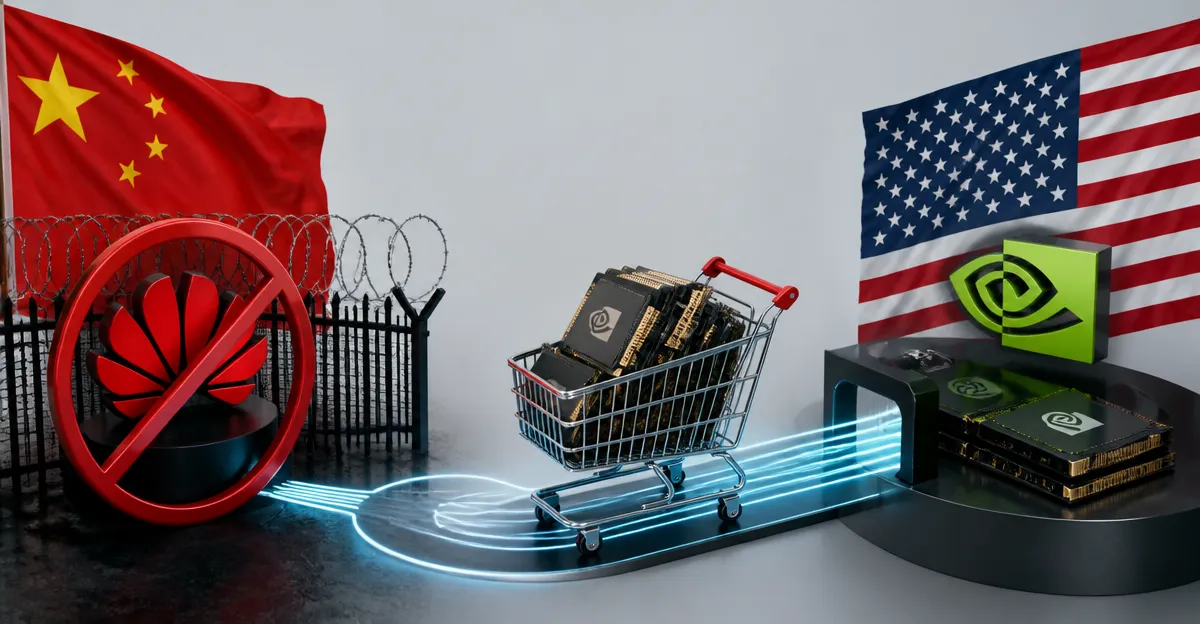
The transactions highlight a persistent gap in U.S. export controls. While the most advanced chips cannot be sent directly to China, and no company anywhere may buy restricted products on behalf of a blacklisted firm, there are few restrictions on Chinese companies remotely accessing AI data centers in Southeast Asia. Federal officials have begun looking into Aivres' business, but the status of that inquiry remains unclear, according to four officials who spoke on condition of anonymity.
Inspur is among the world's largest server makers and has a long history of adapting to sanctions. In 2020, the first Trump administration placed it on a list of Chinese military companies. In 2023, the Biden administration added Inspur Group to the entity list, saying it had sought U.S. technology for military supercomputers. Days after that listing, Inspur registered its main China business to a new address down the road from its previous headquarters in Jinan.
A loophole also opened quickly. U.S. chipmakers such as Intel had been selling to Inspur's subsidiary rather than the parent company, which the original order did not cover. In 2025, the second Trump administration added some Inspur subsidiaries to the blacklist, but Aivres was not among them.
Malaysian Servers, Chinese Buyers, And A Ghost Office
One standout connection involves Maginfra, a Chinese company created last year. Maginfra imported more than $700 million of servers from Malaysia into China over a six-month period, including more than 1,500 servers priced consistently with high-end AI capabilities, according to ImportGenius data. The shipment records do not describe the chips inside, but per-unit prices suggest advanced hardware.
Maginfra has no direct ownership link to Inspur on paper. It is government-owned and located down the street from Inspur's headquarters. Corporate records show the legal representative of Maginfra's parent company has held positions at firms affiliated with Inspur subsidiaries or investment partners. Patent filings show many Maginfra inventors previously worked for Inspur, and the two companies' websites share striking similarities.
When a reporter visited Maginfra's listed address in China on Tuesday, the office appeared deserted. A few chairs and empty desks sat inside a small locked room with no signs. Workers on the floor said they had not seen anyone use the office, and building receptionists said they had not heard of Maginfra.
William George, director of research at ImportGenius, said the pattern is hard to ignore.
"It's very hard to look at this and not see a state-sponsored Chinese network for bypassing export controls," William George, director of research, ImportGenius
Public filings analyzed by C4ADS, a Washington research nonprofit, show Chinese universities, some with defense research ties, seeking and sometimes obtaining servers built by Maginfra and Inspur. Maginfra also signed a contract in November to sell $165 million of high-performance computing technology to a division of a Chinese state-owned bank.
Yet the Trump administration approved Maginfra this year for a license to buy Nvidia's less powerful H200 chips, according to documents viewed by the Times.
Enforcement Fades As China's AI Gap Narrows
Inside the Commerce Department, six current and former officials described an agency that has lost its appetite for cases involving China or Nvidia. Ten months have passed without a firm being added to the entity list, the longest stretch in 18 years. The administration has also taken a more cautious approach to sanctions after attempts last year to expand the entity list drew blowback from China.
A White House official said the administration had enacted the most rigorous export control regime in modern history and remained committed to safeguarding national security. But Jordan Nanos, an analyst at SemiAnalysis who has studied Aivres, said the subsidiary operates in the United States with the same servers, employees, and offices as its parent company.
"Are they trying to ban them, or are they not?" Jordan Nanos, analyst, SemiAnalysis
Aivres remains highly visible in Silicon Valley. It has advertised AI servers using AMD technology and was listed as an "elite" partner of Nvidia and a sponsor of its annual conference in San Jose, California. In May, Nvidia announced that Aivres was among more than two dozen companies in full-scale production of servers for its next generation of AI technology.
John Rizzo, a spokesperson for Nvidia, said the company did not support "diverted products" and sold only to well-known partners who work to ensure sales comply with U.S. export control rules. Rizzo added that the business brought "tens of billions of dollars and high-paying jobs home."
Chinese AI companies are closing the performance gap on American systems, raising concerns that they are using U.S. technology. Whether Chinese firms are getting access to cutting-edge Nvidia chips has become a hot question in Silicon Valley and Washington, where executives and officials worry China could use AI for hacking, surveillance, and military operations.
Inspur, Aivres, Maginfra, Alibaba, and ByteDance did not respond to requests for comment. Megaspeed did not provide a comment. The Trump administration rolled back Biden-era restrictions on remote access by Chinese companies to data centers in other countries, and both the administration and Congress have been weighing new rules to replace them.