September 7, 2026, (Inside AI) — Shanghai Enflame Technology, one of China's leading AI chip startups, drew retail investor orders worth 6,109 times the shares available for its Shanghai initial public offering, according to an exchange filing published on September 2. The company is raising 6.1 billion yuan ($908 million) after setting its IPO price at 142.18 yuan per share on August 31. The listing values the unprofitable company at 61 billion yuan ($9.1 billion), or 61.8 times its 2025 sales.
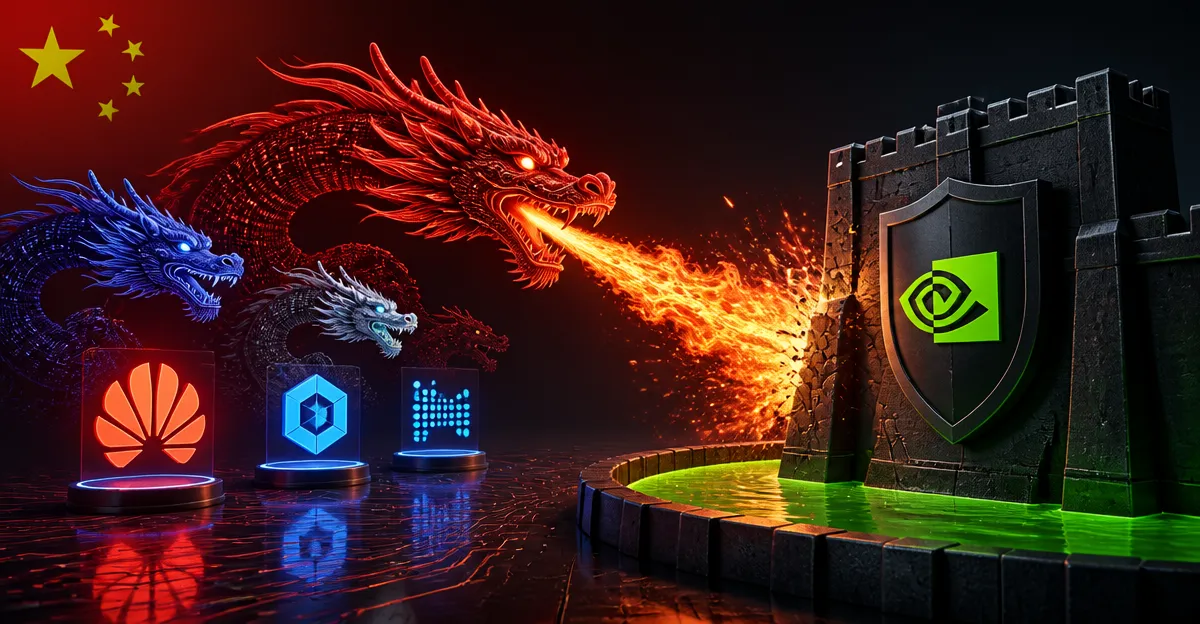
Enflame specializes in chips used for AI inference, the process in which a trained model generates responses or outputs. It is one of China's "four little dragons" in AI chips. The other three, Moore Threads Technology, MetaX Integrated Circuits, and Shanghai Biren Technology, all went public over the last year.
The IPO frenzy reflects a broader shift. Chinese chipmakers are building their own software ecosystems and easing migration from Nvidia's products. This strategy is steadily eroding Nvidia's hold on a $9 billion market in China, according to sources. Enflame's 1400% quarterly revenue growth underscores the momentum.
Software Moats Are the Real Battlefield
Nvidia's dominance has long rested on its CUDA software platform, which locks developers into its hardware. Chinese rivals are attacking that moat directly. They offer tools that translate CUDA code to run on domestic chips, reducing switching costs. This approach mirrors how AMD challenged Intel in CPUs by supporting x86 software compatibility.
Enflame's focus on inference chips is strategic. Inference workloads are growing faster than training as AI models move into production. Chinese cloud providers and enterprises need lower-cost alternatives to Nvidia's high-end GPUs, especially after US export controls limited access to advanced chips.
The valuation reflects investor optimism. Enflame is not yet profitable, but its revenue growth suggests rapid adoption. The 6,109 times oversubscription rate signals massive retail demand, though institutional investors may be more cautious about profitability timelines.
Export Controls Accelerated Domestic Demand
US export restrictions on advanced AI chips have forced Chinese companies to seek local alternatives. This policy shift created a captive market for startups like Enflame. Before the controls, Chinese firms could buy Nvidia's best chips. Now they must adapt to domestic silicon, even if performance lags.
Industry analysts note that Chinese AI chips still trail Nvidia in raw performance. However, for many inference tasks, the gap is less critical. Software optimization and lower costs can compensate for hardware deficits. This dynamic explains why Chinese cloud giants are testing domestic chips for large-scale deployment.
The "four little dragons" have collectively raised billions in public markets. Their success could reshape the global AI chip landscape. If Chinese firms achieve self-sufficiency in inference chips, Nvidia's China revenue, once a significant portion of its business, may never fully recover.
Enflame's IPO is a milestone, but challenges remain. Profitability is uncertain, and competition among the four startups is fierce. Still, the massive retail demand shows confidence in China's AI chip sector. The race to build a CUDA alternative is intensifying, and the outcome will shape the next decade of AI infrastructure.