September 6, 2026, (Inside AI) — Corporate America is swapping pricey closed AI models for open alternatives at a record pace. AT&T, Airbnb, and Deloitte are leading a shift that has pushed open model usage to 58% of AI workloads, up from 10% a year ago, according to OpenRouter data.
The catalyst is simple: cost. AT&T chief data and AI officer Andy Markus said open models now account for 40% of the telecom giant's AI use, up from 20% in May. He expects that figure to reach 60% within months.
"We believe it could go much, much higher," Markus said in an interview. He added that AT&T was saving up to 80% on AI costs compared with earlier this year.
The economics are stark. Chinese open models from Moonshot AI, DeepSeek, and Alibaba now deliver 80% to 90% of the capability of leading closed systems at as little as 20% of the price, according to Jerry Tang, CEO of Atlas Cloud.
"Mazdas do a fine job getting you where you need to go, and Maseratis are simply not worth the investment," Tang said. Open-source models, he added, "offer a better bang for your buck."
The shift gained momentum after DeepSeek-V3 launched last year, proving open models could rival closed ones with far less computing power. Since then, open models from Chinese firms have closed the performance gap with Anthropic, OpenAI, and Google.
Nvidia's announcement on Thursday that it will acquire Hugging Face for $12.9 billion underscores the strategic stakes. The deal gives the chipmaker control of the largest library of open AI models.
"Together, we will make AI more open, more capable and more accessible to people and institutions around the world," Nvidia CEO Jensen Huang said.
Open Weights Versus Open Source: A Critical Distinction
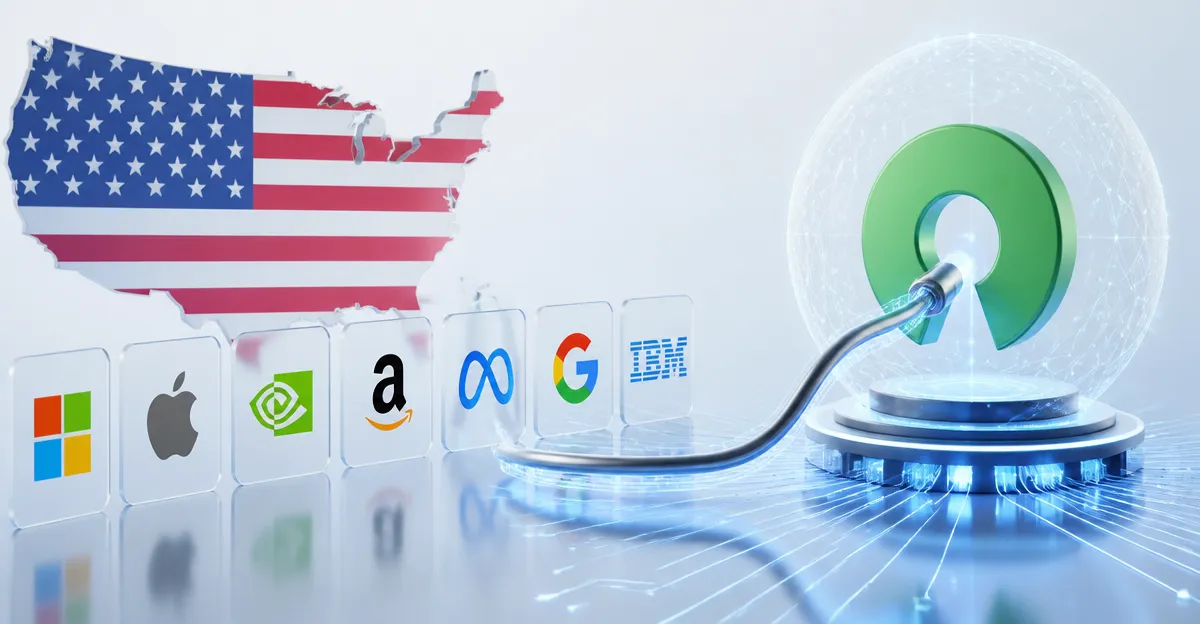
Not all open models are equal. Open-source models publish their underlying code. Open-weights models publish only the numerical parameters that determine behavior. Most popular open models today are open-weights, including Meta's Llama and Google's Gemma.
This distinction matters for enterprises. Open-weights models allow customization without revealing proprietary training data or architecture. Companies can fine-tune them for specific tasks like call transcription or customer service.
AT&T is taking open-weights models and building custom tools for transcribing calls and facilitating customer service, Markus said. The company researches Chinese models but does not use them, citing regulatory and data privacy concerns. Instead, it relies on Gemma and Llama.
The IPO Threat Hanging Over Closed AI Giants
The open model surge arrives at an awkward moment for OpenAI and Anthropic, both reportedly preparing blockbuster initial public offerings. Their business models depend on subscription fees and usage-based pricing, which are hard to sustain against free or low-cost open alternatives.
Both companies face a fundamental tension. They must charge more to cover billions in research, development, and computing costs. But every price increase pushes more customers toward open models.
Dario Amodei, CEO of Anthropic, has argued for tight AI regulation to address national security concerns. Mark Zuckerberg, CEO of Meta, counters that open-source technology is essential for a democratic, balanced AI ecosystem.
"I do not believe restricting access to foreign open-source models is an effective solution," Zuckerberg said in a statement last month. "Our goal should be for American open-source models to be the best globally."
Meta made its leading AI system an open-weights model last month and said it would offer the model at a lower cost than other top U.S. models. The move directly challenges OpenAI and Anthropic on price.
Most U.S. companies still use a mix of open and closed models. Closed models remain superior for heavy-duty tasks like coding and image generation. Open models excel at simple, specialized work. But the balance is shifting fast.
Open models can now run on a phone or laptop, said David Stout, CEO of WebAI. That accessibility removes the last barrier for many businesses. Leading closed models are getting more complex and requiring more computing power, pushing costs higher.
OpenAI and Anthropic did not immediately respond to requests for comment. The New York Times has sued OpenAI and Microsoft, claiming copyright infringement of news content related to AI systems. The companies have denied the suit's claims.
The open model movement is reshaping enterprise AI strategy. For companies like AT&T, the math is compelling: customize an open model, pay only for servers, and cut AI costs by up to 80%. The question is whether closed model providers can adapt before their IPO roadshows begin.