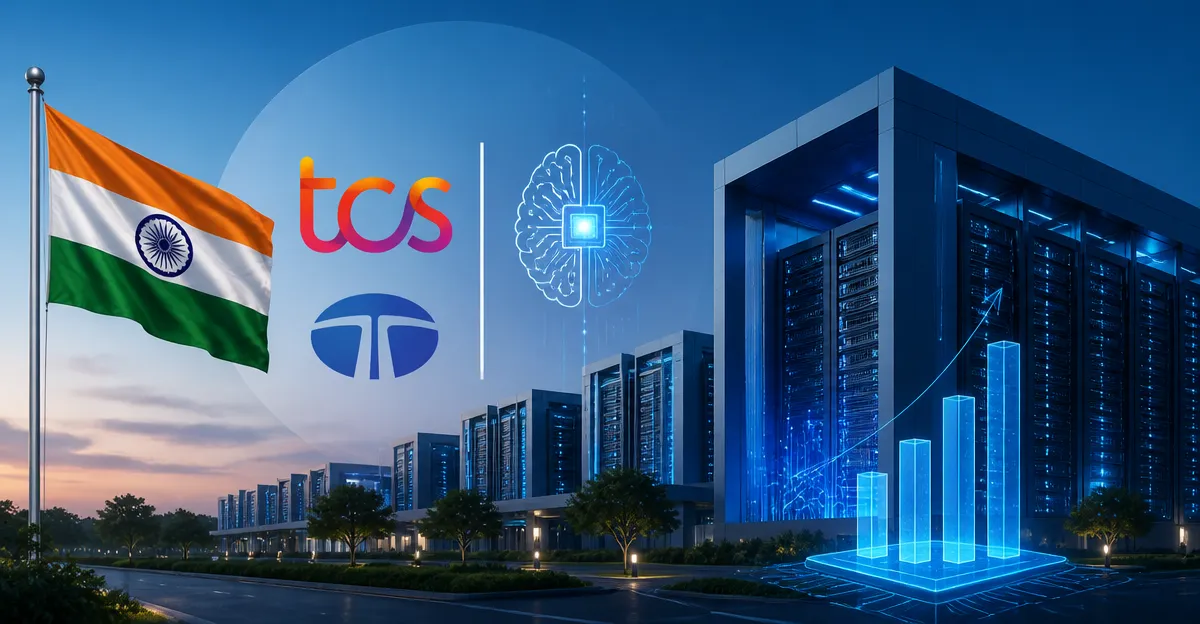
September 5, 2026, (Inside AI) — A Tata Consultancy Services subsidiary and its partners will invest up to 700 billion rupees ($7.41 billion) to build a 1 gigawatt AI data center campus in Telangana, India.
The announcement marks one of India’s largest single investments in AI infrastructure. It positions Telangana as a serious contender in the global compute race.
Why Telangana’s Gigawatt Bet Reshapes India’s AI Map
The campus will deliver 1 gigawatt of capacity. That scale rivals hyperscale projects in the United States and China.
TCS has not disclosed the exact timeline or the partners involved. The investment signals a shift from software services to physical AI infrastructure.
India’s data center market is projected to exceed $10 billion by 2027. Telangana has aggressively courted tech investment through power subsidies and land allotments.
This project could ease India’s compute shortage. Domestic AI startups often rely on foreign cloud providers due to limited local capacity.
The Hidden Economics of a $7.4 Billion Compute Campus
At 94.48 rupees per dollar, the investment reflects currency volatility risks. Energy costs will be a decisive factor in long-term viability.
Telangana’s grid reliability and renewable energy access remain open questions. A gigawatt campus consumes power equivalent to a small city.
TCS parent Tata Group already operates data centers through Tata Communications and NELCO. This new venture consolidates its AI infrastructure ambitions.
Competitors like Reliance Jio and Adani Group have announced smaller AI data center plans. TCS’s scale could trigger a capacity race.
The company has not named anchor tenants. But demand from government AI initiatives and enterprise migration is expected to fill early capacity.
Industry analysts note that India’s AI compute demand is growing faster than supply. A gigawatt campus would meaningfully close that gap.
TCS shares closed flat on the news. Investors may be waiting for execution details before repricing the stock.
The project aligns with India’s National AI Mission, which seeks sovereign compute infrastructure. It also reduces dependence on US hyperscalers for sensitive workloads.
Construction timelines for gigawatt campuses typically span three to five years. Phase one capacity could come online by 2029.
Power purchase agreements and water usage for cooling will face regulatory scrutiny. Telangana’s semi-arid climate makes water-efficient cooling essential.
The investment comes as global AI capital expenditure exceeds $300 billion annually. India currently captures less than 2% of that spend.
TCS’s move could attract global cloud providers seeking local partners. It may also pressure rivals to accelerate their infrastructure roadmaps.
The subsidiary’s identity remains undisclosed. TCS typically structures such ventures through special purpose vehicles.
This development extends Tata Group’s digital infrastructure footprint beyond telecom and enterprise IT. It signals a long-term bet on AI as a utility.