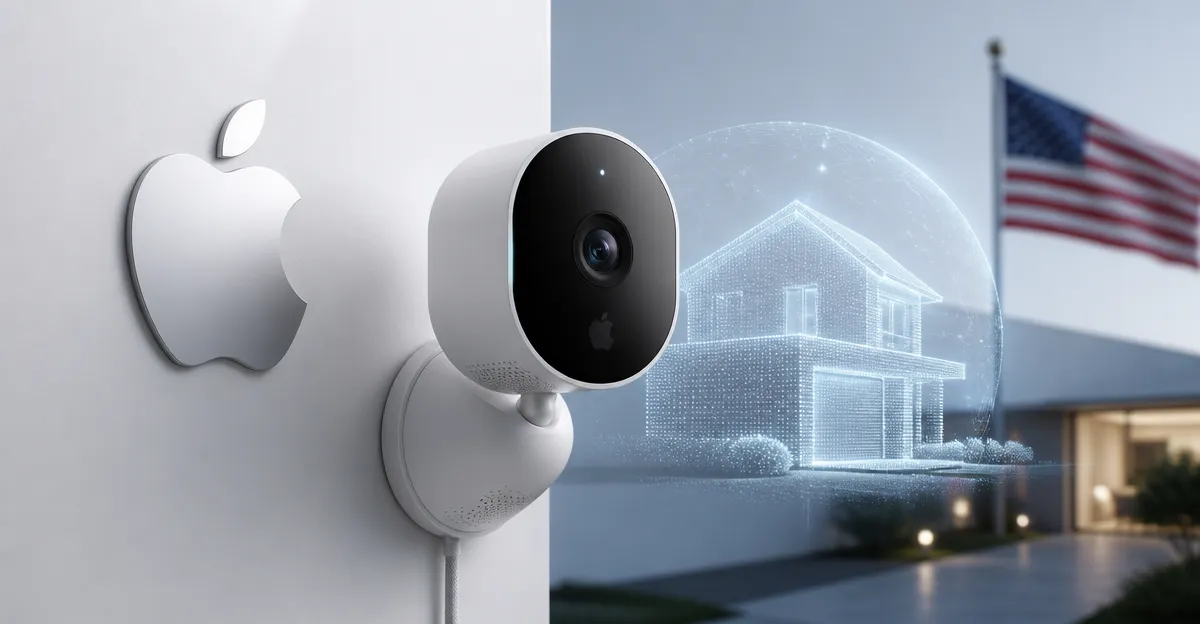
September 5, 2026, (Inside AI) — Apple is developing a privacy-focused home security camera with an integrated monitoring service, targeting a 2027 release. The device would rely on AI to interpret activity rather than streaming continuous video, according to sources familiar with the plans.
The move signals a deeper push into smart home hardware and recurring subscription revenue. Apple already offers HomeKit Secure Video for third-party cameras, but a first-party camera would give Apple end-to-end control over the experience.
Apple’s reported device would analyze environmental activity without traditional video footage. This approach could reduce bandwidth and storage demands while addressing privacy concerns. The company plans to pair the camera with a new home security and monitoring service, though pricing and feature details remain unclear.
Apple is expected to launch a new home hub before the end of 2026. That hub would serve as a central control point for compatible smart home products. Earlier reports described a wireless camera with Siri integration that connects directly to the hub.
Apple’s AI Camera Skips Continuous Video
The camera’s AI would track activity in the surrounding environment. Instead of recording 24/7 video, the system could generate alerts and summaries based on detected motion or presence. This mirrors Apple’s existing HomeKit Secure Video, which uses end-to-end encryption and iCloud storage for compatible third-party cameras.
Apple is also upgrading camera features in iOS 27. The Home app can now create written summaries for motion alerts. It can highlight important moments and group footage from multiple cameras. However, those features require a 2TB or higher iCloud+ plan. HomeKit Secure Video works with plans starting at 50GB.
The reported security service could eventually tie into iCloud+ and HomeKit Secure Video. That would expand Apple’s subscription business while reinforcing its privacy-focused smart home ecosystem. Apple has not publicly confirmed the camera or service.
Competition Heats Up in Smart Home Security
Apple’s move would place it against Amazon’s Ring, Google Nest, and Arlo. Those rivals rely heavily on cloud video recording and subscription plans. Apple’s on-device AI approach could differentiate it, but it also raises questions about detection accuracy and user trust.
Industry analysts note that Apple’s privacy stance has been a key selling point. A camera that avoids continuous video could appeal to privacy-conscious consumers. Yet Apple must prove its AI can deliver reliable security alerts without false alarms.
Apple’s smart home efforts have lagged behind competitors in device breadth. A first-party camera and monitoring service would fill a notable gap. The 2027 timeline gives Apple room to refine the product and integrate it with the upcoming home hub.