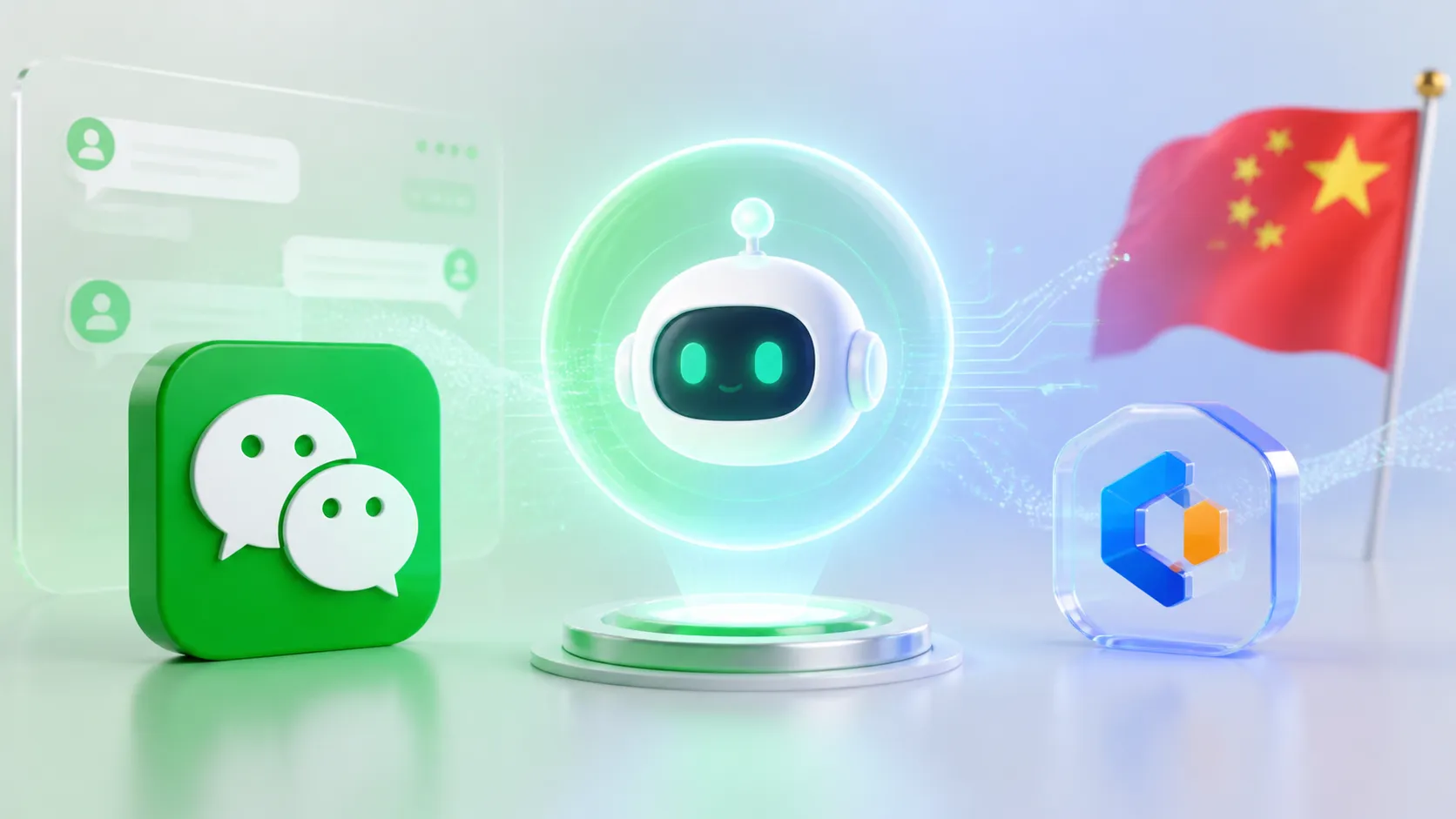
June 22, 2026, (Inside AI) — Tencent has begun limited testing of Xiaowei, a native AI assistant embedded directly inside Weixin, the Chinese version of its super app WeChat. The assistant responds to text and voice commands, acting as a digital agent that launches and orchestrates WeChat’s internal mini-programs to execute tasks like drafting messages, ordering food, hailing rides, and generating images.
WeChat and Weixin together claim over 1.4 billion monthly active users. By adding conversational AI layers to this massive ecosystem, Tencent aims to shift user behavior from manual app discovery to seamless AI orchestration. The announcement drew positive investor reaction, with markets eyeing new monetization avenues.
Xiaowei primarily runs on WeLM, WeChat’s proprietary large language model, but routes some queries to external services like DeepSeek. Tencent also develops its separate Hunyuan model family and recently hired a former OpenAI researcher as chief AI scientist, signaling aggressive AI infrastructure buildout.
Strategic Countermove in China’s AI Race
The Xiaowei test is a direct response to fierce competition. Alibaba is testing similar AI agents inside Alipay, while rivals Zhipu and DeepSeek push their own solutions. Tencent’s move leverages its super app dominance to embed AI deeply into daily digital life, potentially locking in users and data flows.
Xiaowei’s ability to mediate complex tasks—like altering app settings or handling payments—raises operational questions. Tencent has not disclosed protocols for safety controls, content filtering, or sensitive fintech mediation. These gaps could determine whether the assistant gains trust at scale.
Industry analysts note that super-app AI agents represent a new battleground. Unlike standalone chatbots, Xiaowei integrates with a vast ecosystem of services, making it a potential gatekeeper for commerce and communication. However, regulatory scrutiny in China around AI and data privacy could shape its trajectory.
For now, Xiaowei remains in a small-scale test, with a wider public rollout reportedly targeted for the third quarter of 2026. Until then, Tencent’s ability to address safety and monetization challenges will be closely watched by both competitors and regulators.