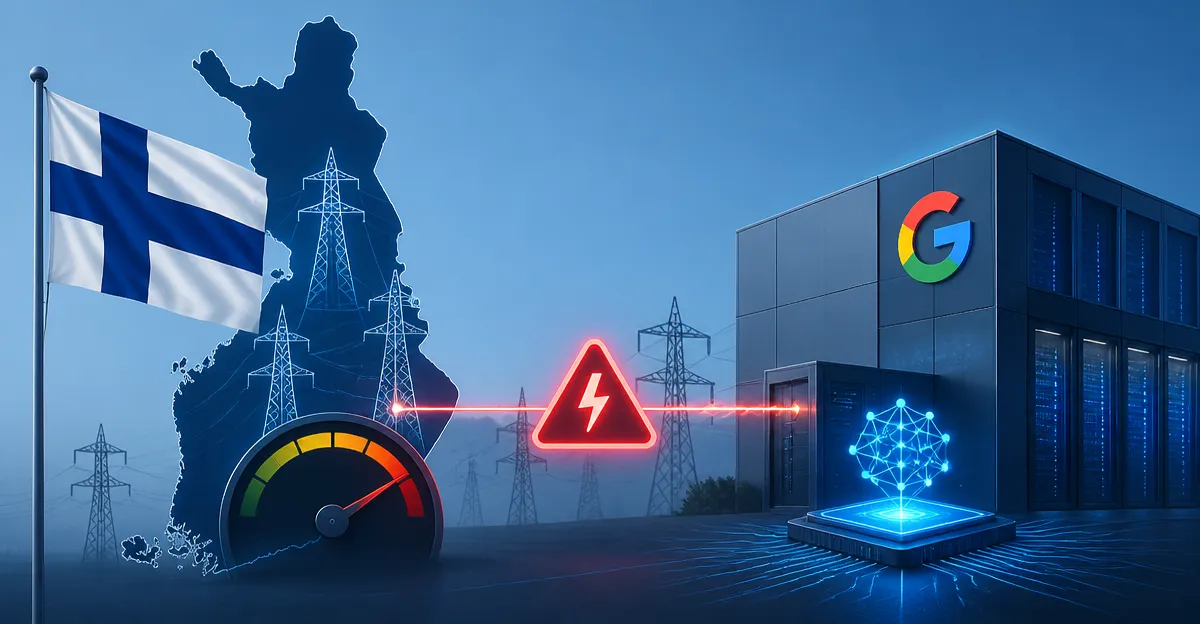
September 10, 2026, (Inside AI) — Google will spend at least €13 billion on AI infrastructure in Finland over the next two years. The announcement, made Wednesday, includes a 22-year nuclear power purchase agreement covering up to 50% of output from the Loviisa plant.
Opposition leaders now warn that Finland lacks a national permitting system for data centres. They say this gap could strain power supply and push electricity prices higher for households and businesses.
The investment is Google's largest in Europe. It also signals a shift in how tech giants secure energy for AI workloads. Rather than relying on grid purchases alone, Google is locking in long-term nuclear capacity.
Opposition Demands National Oversight Before Grid Strains Worsen
Centre Party leader Antti Kaikkonen said Finland welcomes data centres but must manage the bigger picture. He called for a national permitting system for new data centre investments.
"A national permitting system for new data centre investments would be needed. At the moment, no one is really looking after the overall picture," Kaikkonen said in a statement to Reuters.
The Social Democratic Party, which leads polls ahead of an election due in April, echoed the concern. Lawmaker Niina Malm framed energy availability as a security issue.
"It is particularly important that the availability of electricity is also examined as a broader internal security issue, so that people have enough energy and that it is priced at a level they can afford to use," Malm said.
The Nordic region has attracted data centres for years. Cool climate, abundant low-carbon electricity, and reliable grids are the main draws. But AI builders now face sharper scrutiny from consumers and politicians alike.
Nuclear Lifeline Reshapes Finland's Energy Horizon
Google's agreement with utility Fortum extends the Loviisa nuclear plant's expected life until 2050. The previous shutdown date was 2030. The deal also includes exploration of new nuclear and renewable energy development.
Prime Minister Petteri Orpo has defended the investment. He said the Google deal will boost Finland's economy and keep electricity prices under control. The government did not immediately respond to a request for comment.
Finland's grid operator has previously warned that large industrial projects must align with transmission capacity. The country's electricity consumption is projected to rise sharply as data centres and electrification expand.
Inside AI could not independently verify the projected demand figures. But the tension is clear. National economic gains from hyperscale investment now compete with local energy security concerns.
Google's parent company Alphabet has made similar nuclear-linked deals elsewhere. The Finland agreement is notable for its scale and its direct role in extending an existing reactor's lifespan.
The April election may turn data centre permitting into a campaign issue. If the Social Democrats win, a national oversight framework could move quickly. That would reshape how future hyperscale projects enter Finland.
For now, Google's investment proceeds. But the political debate over who guarantees affordable power is just beginning.