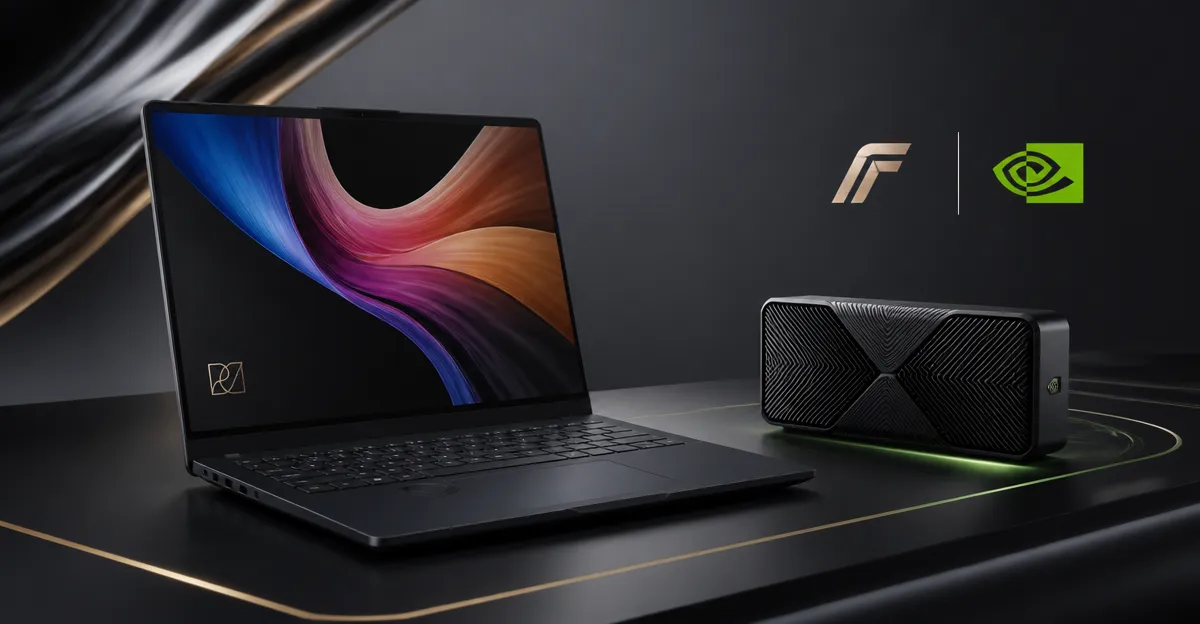
October 16, 2026, (Inside AI) — Asus has started shipping the ProArt P16, a 16-inch Windows laptop powered by Nvidia's new RTX Spark system-on-chip, with a US starting price of $2,599. The high-end configuration with 64GB of unified memory costs $4,499.99, and a 128GB version is priced at $6,999. The launch marks Nvidia's first direct entry into the PC processor market, challenging both Apple's MacBook Pro and Qualcomm's Snapdragon X series.
The RTX Spark platform combines a 20-core ARM-based Nvidia Grace CPU with a Blackwell RTX GPU containing 6,144 CUDA cores. Both share a unified memory pool, a design similar to Apple's M-series chips and AMD's Ryzen AI Max+ processors. The key difference is that RTX Spark runs Windows on ARM and integrates Nvidia's CUDA software stack, which could accelerate local AI workloads and gaming.
Nvidia unveiled the platform at its Spark Editors' Day in San Francisco last week, where the company also announced new AI PCs with Microsoft. Asus provided a review unit to journalists on a returnable basis. The ProArt P16 is not yet listed for sale in India, but company representatives say it is coming soon.
The laptop's design targets professionals who need portability without sacrificing performance. It measures 13.94 by 9.57 inches, is 0.63 inches thick, and weighs 1.7 kilograms without the charger. The chassis uses a sandblasted Nano Black finish. Port selection includes HDMI 2.1, three USB4 Type-C ports, USB-A, a headphone jack, and a full-size SD Express 7.0 card reader. All USB4 ports support display output, power delivery, and data transfer speeds up to 40Gbps.
Read: 19-Year-Old Raises $11M to Build a $3,499 Personal AI Computer
The 16-inch touchscreen has a resolution of 3840 by 2400 and a 120Hz refresh rate. It covers the full DCI-P3 color gamut and reaches a peak HDR brightness of 1,600 nits. The 16:10 aspect ratio provides more vertical space, which helps video editors see previews above timelines. An anti-reflection coating improves visibility in bright rooms.
In early hands-on testing, the RTX Spark platform showed consistent performance whether plugged in or running on battery. The reviewer ran Cyberpunk 2077 at medium settings and observed a steady 75 frames per second without excessive heat. Local AI tasks also ran faster than on typical Windows laptops, partly because the unified memory allows large models to load without hitting dedicated VRAM limits. Battery life reached around 10 hours in a standard browser test, matching Nvidia's all-day claims but falling short of Apple's M5 Pro and Max chips.
"The first major change is that RTX Spark adopts a unified memory architecture, similar to Apple's and AMD's approaches, allowing the CPU and GPU to share memory," the reviewer noted. "This combination of hardware and software could open up new possibilities for running local AI models and agentic coding on a laptop."
Nvidia's move into PC silicon follows years of speculation about the company expanding beyond discrete graphics cards. The RTX Spark platform differs from Qualcomm's Snapdragon X series in its priorities. While Qualcomm focuses on efficiency and always-on connectivity, Nvidia emphasizes graphics and AI acceleration. This could attract game developers and AI researchers who already rely on CUDA. However, software compatibility remains a hurdle for Windows on ARM, and the high price of RTX Spark laptops may limit adoption to professionals and enthusiasts.
The launch also intensifies competition in the premium laptop segment. Apple's MacBook Pro has long dominated productivity and creative work, but Nvidia's entry could narrow the gap for users who need CUDA or Windows-specific applications. AMD's Ryzen AI Max+ offers similar unified memory but uses x86 architecture, which may appeal to users who need legacy compatibility. Intel has not yet announced a comparable product.
Asus plans to ship the ProArt P16 from October 16. The company has not disclosed global availability details beyond the US and India. Nvidia is expected to release more RTX Spark laptops from other manufacturers in the coming months. The platform supports up to 128GB of unified memory, giving local AI models more room to run than most conventional laptops with limited graphics memory.
For now, the ProArt P16 represents an early look at Nvidia's ambitions in the PC market. The combination of ARM CPU, Blackwell GPU, and CUDA software could appeal to developers, creators, and gamers who want a single machine for work and play. But the high price and first-generation risks mean mainstream buyers may wait for future iterations. Nvidia says it will continue to refine the platform, and more benchmarks will emerge as reviewers spend more time with the hardware.