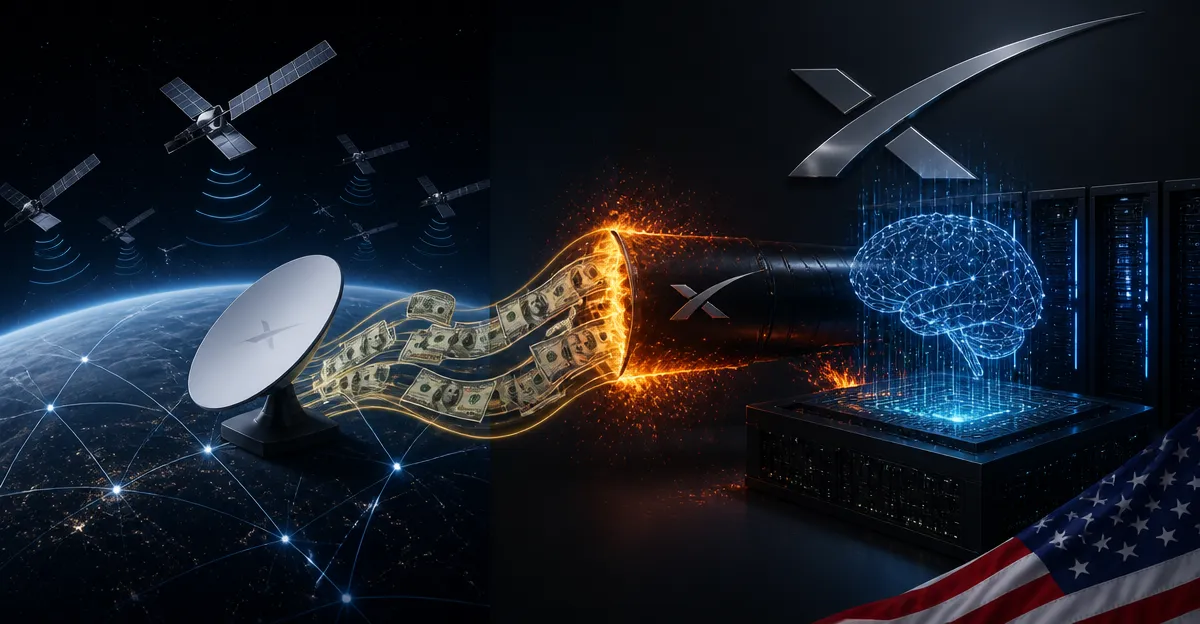
August 5, 2026, (Inside AI) — SpaceX has morphed into an AI infrastructure provider, burning through cash from its Starlink internet service to fund orbital data centers, according to its first public earnings report. The shift marks a strategic pivot for the company, now leveraging satellite revenue to chase the booming demand for AI compute in space.
Starlink’s soaring revenue is the financial engine behind this transformation. The earnings reveal that profits from the satellite internet constellation are being channeled directly into developing space-based data centers designed to process AI workloads. This move positions SpaceX at the intersection of two high-growth sectors: satellite communications and artificial intelligence infrastructure.
Joey Roulette, Reuters U.S. Business of Space Correspondent, broke down the numbers. He noted that the earnings report shows a company in transition. SpaceX is no longer just a rocket builder and launch provider. It is now betting big on becoming a backbone for AI computation beyond Earth’s atmosphere.
Starlink’s Cash Fuels Orbital AI Gambit
The financial details show Starlink’s revenue is being consumed by the AI data center project. While exact figures on investment were not disclosed, the earnings highlight a significant allocation of capital. SpaceX’s ability to self-fund this venture through Starlink’s growing subscriber base gives it a unique advantage over competitors who must rely on external financing.
Industry analysts have long speculated about the potential for space-based data centers. The advantages include abundant solar power, natural cooling from the vacuum of space, and the ability to bypass terrestrial real estate constraints. SpaceX’s existing Starship launch system could provide the heavy-lift capability needed to deploy such infrastructure at scale.
However, the technical challenges are immense. Maintaining AI hardware in orbit requires robust radiation shielding, reliable thermal management, and low-latency connectivity. SpaceX’s experience with Starlink’s satellite network may provide a foundation, but adapting that technology for high-density compute nodes is a different engineering problem entirely.
The company’s pivot also raises questions about competition. Terrestrial data center giants like Amazon Web Services and Microsoft Azure are expanding their AI cloud offerings. But SpaceX’s orbital approach could offer lower latency for certain applications if positioned in low Earth orbit, potentially disrupting the market for edge AI computing.
Can Orbital Data Centers Overcome Latency and Reliability Hurdles?
One critical factor is network performance. SpaceX’s Starlink already operates over 5,000 satellites, providing a mesh network that could be upgraded to handle data center interconnects.
But reliability remains a concern. Space hardware is notoriously difficult to repair. SpaceX would need to design modular, replaceable units that can be swapped out via robotic missions or returned to Earth on Starship flights. This adds complexity and cost that terrestrial data centers avoid.
The earnings report did not detail timelines or specific customer commitments. However, Roulette’s analysis suggests that SpaceX is already in talks with major AI firms. The allure of space-based AI processing could attract companies looking to differentiate their services or meet sustainability goals by using solar-powered compute.
SpaceX’s entry could accelerate innovation in orbital computing, much as it did with reusable rockets.
Yet, the financial strain is evident. Starlink’s profitability, once seen as a path to funding Mars missions, is now being redirected. This shift may test investor patience if the AI infrastructure play does not yield quick returns. SpaceX’s public filing now opens it to quarterly scrutiny, making transparency around this strategy essential.
Roulette emphasized the transformative nature of the earnings report. It signals that SpaceX sees AI not just as a tool for autonomous rocket landings, but as a core business line. The success of this venture could redefine the economics of space commercialization and AI hardware deployment.